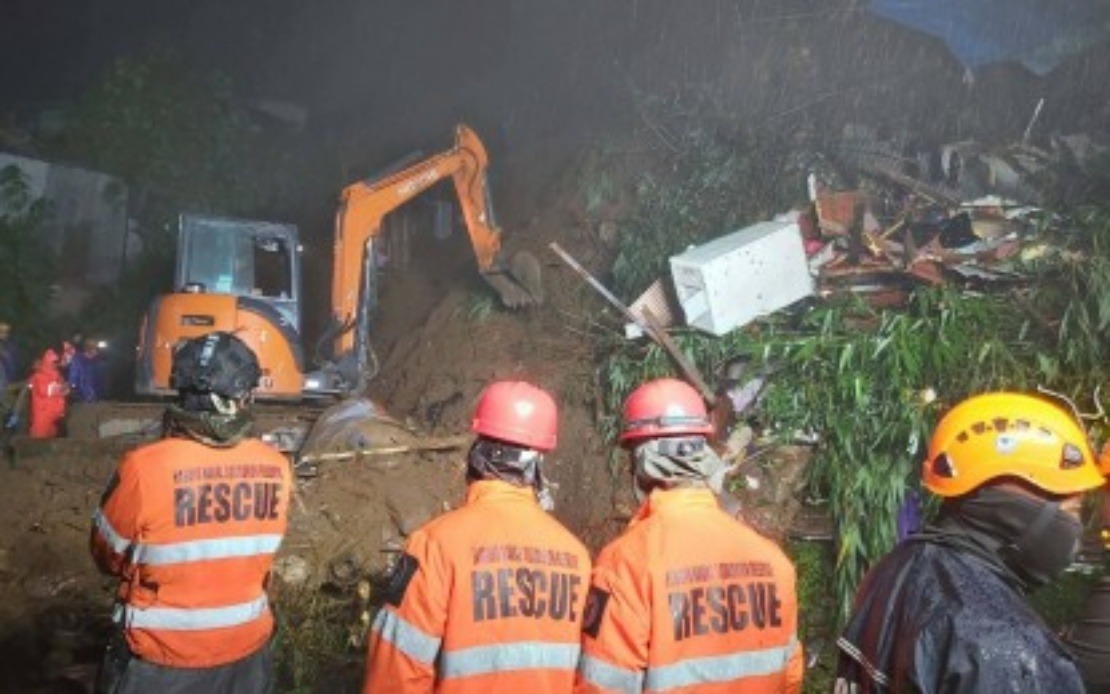
The Philippines is confronting a humanitarian crisis as consecutive tropical disturbances and seasonal monsoon activity have claimed 19 lives and displaced millions across the archipelago. The Office of Civil Defence confirmed the mounting casualty toll and scale of displacement on Tuesday, underscoring the vulnerability of Philippine communities to the intense weather systems that regularly sweep through Southeast Asia during the typhoon season. With over two million people affected and emergency shelters straining to accommodate tens of thousands of families, the disaster highlights the region's ongoing struggle with climate-related hazards and the preparedness challenges facing developing nations in the Pacific Ring of Fire.
According to Diego Mariano, public information officer at the Office of Civil Defence, the verified fatalities stem from Tropical Depressions Luis and Maymay as well as the persistent southwest monsoon. The death toll concentrated heavily in the Cordillera Administrative Region, particularly Benguet province, which accounted for 12 of the 19 recorded deaths. The remaining casualties occurred in Rizal, located in the Calabarzon region east of Manila, and Batangas, both areas susceptible to flooding and landslides during heavy precipitation events. This geographic distribution reflects how mountainous and low-lying terrain amplifies the destructive potential of tropical weather systems.
Beyond the fatalities, the disaster has inflicted considerable personal suffering across affected communities. The OCD documented 15 individuals sustaining injuries, with the majority concentrated again in Benguet's mountainous terrain where four additional people remain missing. The disappearances in Benguet and Batangas suggest that rescue operations continue and that some victims may still be trapped beneath debris or swept into waterways. The injury count also included cases in Ilocos Sur, Rizal, and Cavite, indicating that the impact zone extended across multiple island regions and geographic zones.
The territorial scope of this disaster encompasses virtually every major region of Luzon and extends into the Visayas. The affected zones include the Ilocos Region in the northwest, Cagayan Valley in the northeast, Central Luzon surrounding the capital, the Bicol Region to the southeast, Western Visayas, Zamboanga Peninsula in Mindanao, Calabarzon south of Manila, the Cordillera Administrative Region in the highlands, the National Capital Region itself, and Mimaropa. This sprawling impact demonstrates how weather systems of sufficient intensity can disrupt livelihoods, commerce, and daily life across an entire nation simultaneously.
The scale of population displacement reflects the severity of conditions faced by ordinary Filipinos. Approximately 646,676 families, totalling 2,270,862 individuals, have been directly affected by the weather disturbances. Of these, nearly 95,000 people representing approximately 26,174 families have been compelled to seek refuge in emergency evacuation centres. The establishment of 919 such facilities across the affected regions represents a massive mobilization of resources by the national and local governments to provide temporary shelter, clean water, sanitation, and basic food supplies to the homeless.
Physical destruction compounds the humanitarian challenge. The OCD confirmed that 639 residential structures sustained damage from the inclement weather, while 45 houses were completely destroyed. For Filipino families, particularly those living in informal settlements or older structures with minimal resilience to extreme weather, the loss of shelter creates immediate and acute hardship. The reconstruction timeline for damaged homes, particularly in remote areas of the Cordillera Region or Bicol, can stretch across months or years, forcing prolonged dependence on government assistance.
The economic toll extends far beyond residential losses. Critical infrastructure supporting commerce, transportation, and essential services sustained an estimated PHP1.46 million in damage, equivalent to approximately RM97,000. This includes roads, bridges, water systems, and communication networks that the entire population depends upon for normal economic functioning. Damage to the agricultural sector reached PHP135.33 million, a significant blow to a predominantly rural nation where farming remains the primary livelihood for millions. The agricultural losses threaten food security and rural income for the remainder of the agricultural cycle, potentially necessitating imports or price increases that reverberate through the broader economy.
The timing of these disasters during the southwest monsoon season reflects the Philippines' position within the broader monsoon circulation patterns affecting Southeast Asia. The southwest monsoon, known locally as the habagat, typically produces heavy rainfall across western and southwestern sections of the archipelago from May through September. When enhanced by tropical depressions such as Luis and Maymay, which develop within the monsoon circulation itself, the combined effect creates particularly intense precipitation events capable of triggering flash floods and landslides. Climate scientists warn that changing atmospheric conditions may be intensifying these phenomena.
For Malaysia and other regional nations, the Philippine disaster serves as a sobering reminder of shared vulnerabilities within maritime Southeast Asia. The region's equatorial and tropical position exposes all ASEAN members to similar typhoon and monsoon hazards. The Philippines, Indonesia, and Thailand all experience comparable death tolls and economic losses from such events annually. The Philippines' experience offers lessons in disaster preparedness, early warning systems, evacuation procedures, and post-disaster reconstruction that have relevance across the region.
The immediate response capacity of the Philippine government and civil defence apparatus faces considerable strain accommodating 95,000 displaced persons while simultaneously managing rescue operations, medical services, and damage assessments across ten regions. The coordination challenges mount when considering that affected areas range from densely populated regions near Manila to remote mountain municipalities with limited road access. International humanitarian assistance from ASEAN neighbours and other partners may prove essential in sustaining relief operations and accelerating recovery.
Looking forward, the Philippines faces the typical challenge of balancing immediate humanitarian response with long-term resilience building. Previous disasters have demonstrated that communities living in hazard-prone areas require sustained investments in early warning systems, shelter improvements, infrastructure hardening, and livelihood diversification. The agricultural damage particularly demands attention, as rural communities with limited financial reserves struggle most acutely to recover from crop losses.

