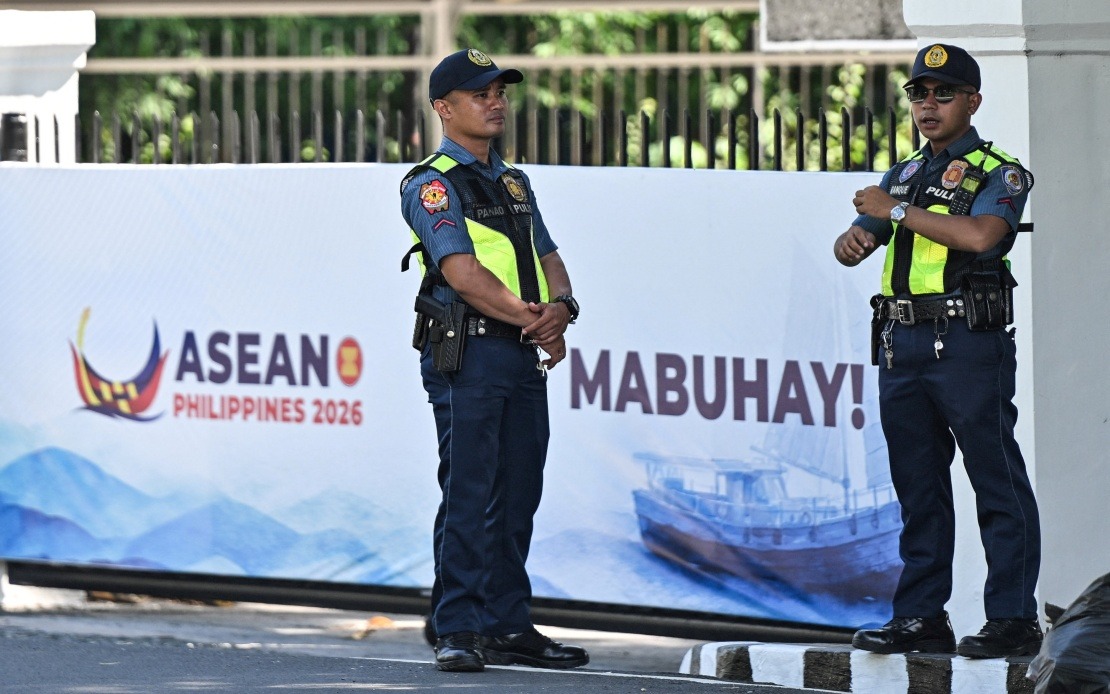
The Philippines assumes the spotlight this week as it convenes the 59th ASEAN Foreign Ministers' Meeting, a pivotal gathering running through July 24 that will shape the regional bloc's approach to mounting security challenges and cross-border cooperation. The four-day forum represents a critical moment for Southeast Asia to reaffirm its collective voice on issues ranging from territorial disputes to humanitarian concerns, even as global tensions create pressure on member states to take firmer stances.
According to Foreign Affairs Assistant Secretary and ASEAN Spokesperson Dominic Xavier Imperial, the meetings are designed to capitalise on momentum established over the previous seven months while deepening ASEAN's institutional identity. This framing reflects the organisation's continuous challenge: maintaining unity and relevance as member states navigate competing interests with powerful neighbours and dialogue partners. The gathering opens with a focus on practical deliverables that span security architecture, human rights frameworks, and strategic partnerships—each essential to ASEAN's credibility as a stable and principled regional actor.
The week commenced with the 16th face-to-face interface between ASEAN Foreign Ministers and the ASEAN Intergovernmental Commission on Human Rights, signalling Manila's intent to position human rights at the centre of regional discourse. This engagement underscores an often-overlooked tension within ASEAN: the bloc's commitment to non-interference in internal affairs versus its formal pledges to promote fundamental freedoms and protect vulnerable populations. By hosting this interface, the Philippines is subtly raising the profile of human rights discussions without explicitly challenging the sovereignty concerns that have historically constrained ASEAN's ability to address member state abuses.
Another key early session addressed the Southeast Asia Nuclear Weapon-Free Zone Commission, where ministers reviewed the 2023–2027 action plan and examined potential accessions to its Protocol. This mechanism, long a cornerstone of ASEAN's security identity, reflects the region's effort to construct a non-militarised geopolitical space distinct from the great power competition unfolding in adjacent waters and airspace. The discussions carry heightened significance given concerns about nuclear proliferation in Asia and the implications of advancing military capabilities among dialogue partners and regional powers.
When the formal 59th AMM convenes on Tuesday, foreign ministers and diplomatic representatives will review progress across ASEAN's three community pillars—political-security, economic, and socio-cultural—while assessing ties with external partners. This comprehensive review enables member states to calibrate their collective positions on everything from trade integration to security dialogues with India, the United States, China, Russia, Japan, South Korea, Australia, New Zealand, the United Kingdom, and the European Union. The breadth of this engagement reflects ASEAN's desire to remain relevant to all major powers rather than aligning exclusively with any single bloc.
Two significant outcome documents are expected to receive adoption during the formal sessions. The 59th AMM Joint Communiqué will serve as ASEAN's authoritative statement on regional positions and international developments, functioning as both a policy document and a diplomatic signal to the wider world. Equally important are the Guidelines on the Modalities for Engagement of ASEAN with High Contracting Parties to the Treaty of Amity and Cooperation in Southeast Asia, a Philippine initiative that creates structured pathways for countries lacking formal ASEAN partnerships. These guidelines operationalise the TAC—ASEAN's foundational peace treaty—as a living diplomatic instrument rather than a historical artefact, potentially expanding ASEAN's influence over states seeking closer regional ties.
Post-Ministerial Conferences scheduled for Wednesday will bring ASEAN face-to-face with its primary dialogue partners, providing opportunities to address immediate regional and global concerns. For Malaysia and other Southeast Asian nations, these sessions offer crucial moments to convey the region's perspective on geopolitical developments while managing relationships with powers whose strategic interests sometimes conflict with ASEAN preferences. The format allows both structured dialogue and informal exchanges that often shape policy thinking among foreign ministers.
Thursday's agenda intensifies with three overlapping forums: the 27th ASEAN Plus Three meeting, the 33rd ASEAN Regional Forum, and the 16th East Asia Summit. These stacked sessions reflect the multiple layers of regional architecture through which Southeast Asia attempts to manage its security environment. The APT format includes China, Japan, and South Korea, making it particularly relevant to discussions about economic integration and supply chain resilience. The ARF and EAS engage broader Asia-Pacific powers, reinforcing ASEAN's centrality to regional order while acknowledging that security challenges transcend the ASEAN ten.
A bilateral meeting between Philippine Foreign Affairs Secretary Ma. Theresa Lazaro and Chinese Foreign Minister Wang Yi carries outsized significance given the fraught state of Philippines-China relations. Imperial's comments suggest this engagement will address both bilateral matters and China's impact on regional stability, a formulation that permits discussion of sensitive issues—presumably including the South China Sea—without framing them as confrontational. For Malaysian observers, such diplomatic choreography illustrates how ASEAN members must balance maintaining channels with major powers while raising concerns about their regional conduct.
The Myanmar crisis and South China Sea territorial disputes are poised to dominate ministerial conversations throughout the week. On Myanmar, Imperial confirmed that engagement extends beyond the State Administration Council to include other stakeholders, suggesting ASEAN is attempting to navigate a deeply fractured political landscape while promoting the Five-Point Consensus on restoring civilian rule. This reflects ASEAN's persistent struggle to influence Myanmar's trajectory without mechanisms powerful enough to compel compliance or change. The Code of Conduct negotiations in the South China Sea represent an even more fraught challenge, with claimant states, China, and external powers harbouring divergent visions of what a functional arrangement should entail.
The ministerial week concludes on Friday with commemorative activities marking the Treaty of Amity and Cooperation's fiftieth anniversary, a symbolic reminder of ASEAN's founding commitment to peaceful dispute resolution and respect for sovereignty. This celebration arrives at a moment when those principles face serious testing from multiple directions: internal disputes over Myanmar, maritime conflicts in the South China Sea, and external powers seeking to position ASEAN within broader strategic competition. The TAC's longevity suggests the bloc's diplomatic architecture possesses durability, yet the gathering itself demonstrates how much work remains to translate enduring principles into effective mechanisms for managing contemporary threats and opportunities.
For Malaysia and the broader Southeast Asian region, the 59th AMM and related meetings represent both an opportunity and a sobering reminder of the constraints on collective action. The Philippines' chairmanship prioritises dialogue, structured engagement, and incremental progress on complex issues—an approach that reflects ASEAN's core operating logic but also its limitations. Whether these meetings produce outcomes sufficient to address the security dilemmas and institutional challenges confronting the region will determine whether ASEAN emerges from 2024 with renewed capacity to shape its own destiny or whether external powers continue to define the terms of Southeast Asian development.

