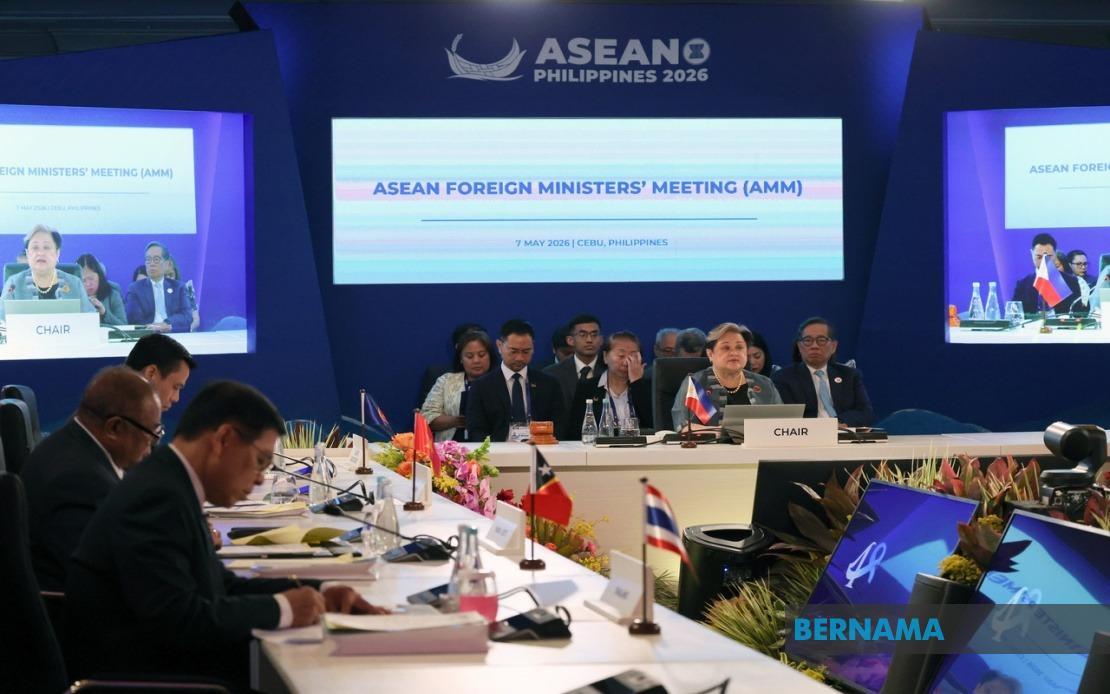
The Philippines has signalled a pragmatic shift in how ASEAN should pursue its Myanmar peace strategy, arguing that the bloc's foundational framework remains valid but requires implementation methods that respond to the rapidly changing situation on the ground. While reaffirming commitment to the Five-Point Consensus as ASEAN's core peace mechanism, Philippine Foreign Affairs Secretary Ma. Theresa P. Lazaro has indicated that member states are increasingly pushing for a more flexible operational approach that can yield tangible results in a conflict that has resisted previous diplomatic efforts.
The Five-Point Consensus, adopted in April 2021 immediately after Myanmar's military coup, established ASEAN's baseline position on what resolution should encompass: ceasing all violence, fostering inclusive dialogue among conflicting parties, deploying an ASEAN Special Envoy to mediate, ensuring humanitarian assistance reaches affected populations, and maintaining active engagement with all stakeholders. Yet nearly three years into the Myanmar crisis, with the military junta remaining entrenched and armed resistance movements gaining ground, the consensus approach has struggled to translate these principles into meaningful progress.
Lazaro's emphasis on "intentional actions shaped by realities" reflects growing acknowledgment within ASEAN that the original framework, while symbolically important, may require reimagined tactics. Several ASEAN leaders have begun questioning whether the existing approach can produce the de-escalation and dialogue that the framework envisions. This internal reassessment matters because it signals that member states, particularly the Philippines as current Chair, recognise that rigid adherence to a three-year-old agreement risks rendering ASEAN's mediation efforts increasingly irrelevant to a conflict that has evolved significantly.
Myanmar's participation in ASEAN forums remains conditional and limited, with the country's political representatives barred from attending summits since the February 2021 coup. Instead, non-political military figures represent Myanmar at high-level meetings, a compromise that underscores ASEAN's awkward balancing act between maintaining Myanmar's membership while expressing disapproval of the coup. Lazaro's comments suggest that any restoration of full representation would require demonstrable progress on the consensus framework's core objectives—particularly genuine de-escalation and dialogue, rather than merely cosmetic improvements.
The annual ASEAN Leaders' Review mechanism provides the vehicle through which member states evaluate Myanmar's compliance and the consensus's relevance. This structured assessment process allows ASEAN to maintain flexibility without appearing to abandon its stated principles. By framing implementation adjustments as responsive to evolving circumstances rather than as capitulation or fundamental policy revision, the Philippines is attempting to bridge the gap between ASEAN's public commitment and the practical limitations its members face in influencing Myanmar's military government.
For Southeast Asia's broader stability, this recalibration carries significant implications. Malaysia's earlier statement that the bloc was exploring new approaches to strengthen consensus implementation reflected broader regional concern that ASEAN's one-size-fits-all diplomatic model struggles with Myanmar's internal complexity. The military junta, the civilian National Unity Government operating in exile, the armed People's Defence Force, and numerous ethnic armed organisations each have distinct interests and leverage points that a generic consensus framework cannot adequately address.
The Philippines' position acknowledges an uncomfortable reality: ASEAN's consensus culture, which prioritises unanimity and non-interference, works poorly when one member is undergoing violent internal conflict involving multiple competing power centres. A truly pragmatic approach would require ASEAN to differentiate between engaging the military government on humanitarian matters, supporting the opposition through careful diplomatic channels, and recognising the legitimacy claims of armed resistance movements—distinctions the current framework struggles to accommodate.
Malaysia's commitment to engaging all stakeholders simultaneously—the military government, the National Unity Government, the People's Defence Force, and ethnic armed groups—illustrates the diplomatic complexity that implementation flexibility must navigate. This multi-track approach suggests that ASEAN members are gradually accepting that peace in Myanmar cannot emerge from a single negotiating channel but requires parallel conversations with entities that currently view each other as illegitimate or hostile.
The humanitarian assistance pillar of the consensus has proven particularly difficult to operationalise in a conflict where the military government controls territory and resources while armed groups operate in areas beyond junta reach. Practical flexibility on this front might mean accepting that ASEAN cannot distribute aid uniformly across Myanmar but must work through multiple channels and local networks, potentially including groups the military would designate as terrorists. This represents the kind of ground-based adjustment that Lazaro's framework envisions.
For Malaysia and other ASEAN members, the Philippines' position offers diplomatic cover to gradually reorient engagement toward more achievable, incremental outcomes rather than the comprehensive political transformation the original consensus theoretically requires. Rather than viewing the Five-Point Consensus as having failed, member states can characterise adjusted implementation as honouring its spirit while accepting the constraints of Myanmar's current political environment. This framing preserves ASEAN's collective identity while permitting individual members greater operational freedom.
The challenge ahead involves maintaining this balancing act as Myanmar's conflict deepens. If violence escalates significantly or the military government becomes even more intransigent, ASEAN's flexibility risk becoming indistinguishable from acquiescence. Conversely, if sustained engagement produces unexpected breakthroughs in dialogue or de-escalation, the pragmatic approach could be vindicated as the necessary precondition for eventual political settlement. The Philippines' emphasis on ground realities suggests ASEAN is preparing for a long conflict that may require sustained, patient diplomacy rather than the rapid resolution the original consensus implied.

