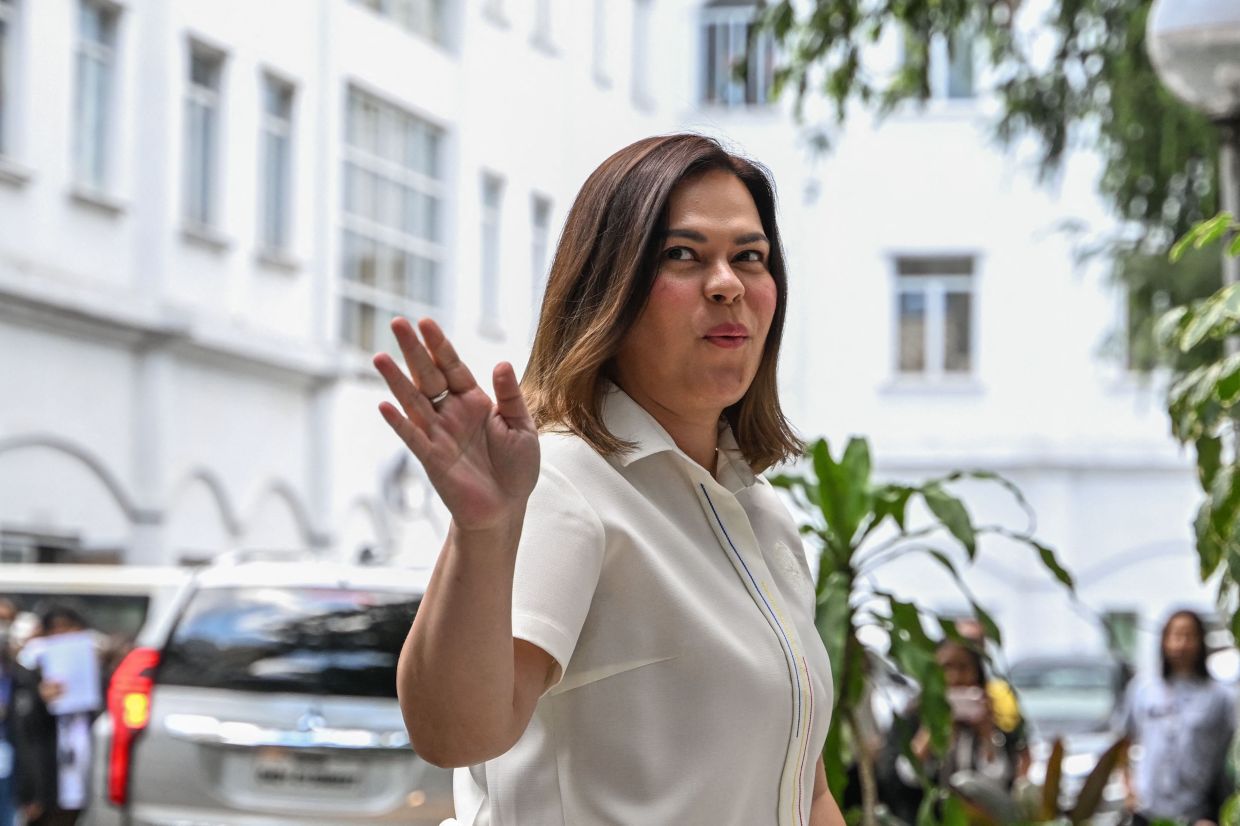
The Philippine government has officially sanctioned Vice President Sara Duterte's extended absence from the country throughout the month of July, a decision confirmed by Malacanang on Tuesday as her impeachment trial continues in Manila. Palace press officer Claire Castro announced that President Ferdinand Marcos Jr had granted approval for the vice president's foreign sojourn, which commenced on July 16 and is scheduled to conclude on July 31. The authorisation represents a notable development in the unfolding political situation surrounding Duterte, who faces ongoing impeachment proceedings at a particularly sensitive juncture in her tenure.
Duterte's itinerary encompasses a substantial portion of Western Europe and the Middle East, with her travels taking her through Qatar, Germany, the United Kingdom, Northern Ireland, and the Netherlands. The official characterisation of the journey as a "personal trip" distinguishes it from official state business, suggesting a distinction between her movements and formal diplomatic engagements. The breadth of her itinerary and duration of her absence underscores the complexity of the current political environment, where the vice president maintains the ability to undertake significant international travel whilst facing serious constitutional challenges at home.
The timing of Duterte's absence coincides with a critical phase of her impeachment trial, raising questions about the mechanics of governance and procedural adaptations within the Philippine political system. The vice president's presence in The Hague, according to her defence spokesperson lawyer Michael Poa, reflects a personal engagement with matters concerning her immediate family. Her father, former President Rodrigo Duterte, has been detained in the Dutch capital since March 2024 as he awaits trial proceedings scheduled for November 30 before the International Criminal Court, a development that substantially contextualises her European presence.
The detention of Rodrigo Duterte in The Hague remains one of the most consequential developments in recent Philippine political history, marking an unprecedented scenario in which a former sitting president faces prosecution by an international tribunal. The charges against the former leader centre on crimes against humanity, specifically allegations relating to his classification as an indirect co-perpetrator in extrajudicial killings perpetrated during his administration's contentious anti-drug and anti-criminal campaigns. These operations spanned the period from 2011, when Duterte served as Davao City mayor, through to 2019, encompassing both his mayoral tenure and his presidency from 2016 to 2022.
The International Criminal Court's intervention in Philippine domestic affairs through the arrest and detention of Duterte represents a significant assertion of international criminal justice mechanisms in the Southeast Asian context. The March 2025 arrest, executed by Philippine authorities acting on an ICC warrant, demonstrated the reach of international legal frameworks and the complications they introduce for national sovereignty considerations. For Malaysian observers, the case illustrates the intricate balance between respecting international law and managing domestic political sensitivities, issues that resonate within Southeast Asia's broader geopolitical and institutional landscape.
Sara Duterte's impeachment proceedings, occurring whilst her father faces ICC prosecution, add layers of complexity to Philippine political discourse. The simultaneous pressures on both the former president and his daughter reflect underlying tensions within the administration and broader political constituencies. Her continued ability to travel internationally whilst facing domestic impeachment charges demonstrates the separation of powers within the Philippine constitutional framework, though it simultaneously raises questions about the political implications of such absences during critical trial phases.
The approval granted by President Marcos Jr through the Office of the Executive Secretary indicates a formal administrative process governing vice-presidential international travel, even amid controversial circumstances. This procedural regularity suggests that despite the extraordinary political conditions, constitutional mechanisms continue to operate according to established protocols. The contrast between the ordinariness of the administrative process and the extraordinariness of the political context illuminates the functioning of Philippine governance structures under considerable strain.
For Southeast Asian observers, the Philippine situation underscores the complex interplay between domestic political conflicts and international legal mechanisms in the region. The ICC's involvement in prosecuting a former Southeast Asian leader establishes a precedent with implications across the region, particularly for nations grappling with questions of accountability for past governance practices. Malaysia, having itself navigated transitions of political leadership and experienced international scrutiny of domestic matters, observes these developments within a framework of regional awareness about sovereignty and international intervention.
The logistical and diplomatic dimensions of managing a vice presidential absence during trial proceedings reveal the operational complexities of governance under political duress. The palace's formal confirmation of travel plans through official press channels suggests a deliberate effort to maintain transparency regarding the vice president's whereabouts and movements, potentially as a means of managing public perception and media narratives surrounding her impeachment situation.
Duterte's defence team, through spokesperson Poa's confirmation of her Hague location and assertion of her imminent return, provides a structured narrative regarding her engagement with the ongoing trial process. The statement that she would return soon indicates an acknowledgment of trial obligations and suggests that her absence, whilst extended, carries defined temporal boundaries aligned with procedural requirements. This framing attempts to position her international engagement within the broader context of her remaining trial responsibilities.
The convergence of familial obligation, international legal processes, and domestic political accountability in the Duterte situation creates a uniquely complex political moment for the Philippines. Sara Duterte's journey to support her father whilst facing her own impeachment trial encapsulates the intersection of personal and political dimensions that characterise the contemporary Philippine political environment. For the region, these developments serve as a study in how democratic societies manage simultaneous crises affecting political leadership.

