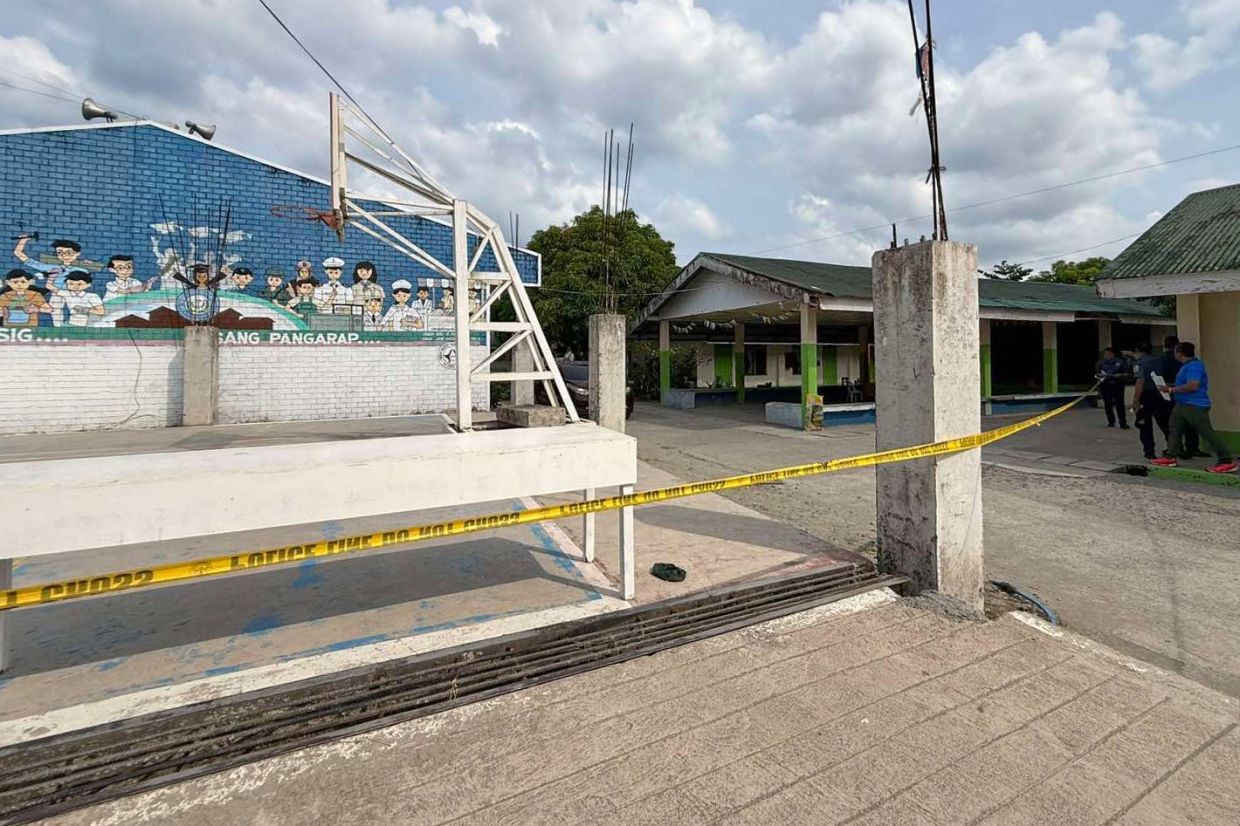
A 14-year-old Grade 10 student at Tolosa National High School in Leyte has been taken into custody after Philippine police discovered threatening messages posted on social media targeting her own school. The arrest follows a tip provided by Senator Bam Aquino and comes in the aftermath of a deadly shooting at San Jose National High School in Tacloban City that claimed three young lives and injured at least 20 others. Philippine National Police – Criminal Investigation and Detection Group operatives apprehended the minor following the discovery of the inflammatory social media post, which was uploaded late Wednesday evening and promised violence against the school community.
Interior Secretary Jonvic Remulla disclosed the details during a press briefing at Camp Crame, revealing the disturbing nature of the threat posted across multiple Facebook accounts allegedly created by the student. The messages read: "Hello. Send this to your friends. Yo, from Tolosa, prepare yourselves, especially to you, as you owe me. Get ready. I will disrupt the school. You won't know me, but you will recognise me. There is no time nor day. Be prepared for whoever gets shot or stabbed. We don't care. Good luck to you at Tolosa National High School." The explicit references to shooting and stabbing, combined with the vague but menacing timeline, triggered an urgent investigation that ultimately identified the suspect through social media analysis and information provided by concerned individuals.
Authorities determined that the minor had created multiple Facebook accounts to amplify her threat across a wider audience, a tactic that escalated the seriousness of the case and suggested premeditation. However, investigators discovered that the accounts and their associated posts had been deleted by the time authorities made contact with the student and her family. Remulla noted that the minor displayed hesitance and an unwillingness to cooperate during questioning, citing fear of potential consequences. Her parents further complicated the investigation by declining to provide additional information when contacted by the Tolosa Municipal Police Station, creating an initial wall of silence that slowed the police response.
Despite the gravity of the threat and its timing, the authorities were constrained by Philippine juvenile justice laws. The Department of Social Welfare and Development received custody of the minor from police, and she was subsequently released because she could not be formally charged under Republic Act No. 9344, the Juvenile Justice and Welfare Act. This legislation, while designed to protect minors from the full weight of the criminal justice system, created a situation where authorities could apprehend and question the suspect but lacked legal mechanisms for prosecution. The constraint reflects a broader tension in Philippine law enforcement between addressing serious threats from minors and adhering to child protection statutes.
Following deeper investigation into the student's motivations and circumstances, police investigators concluded that personal and family issues likely contributed to the threatening posts. Remulla explained that upon engagement with the girl's family, authorities determined the threat had been effectively neutralised and was no longer active. Critically, investigators found no evidence suggesting an organised plan to carry out the threatened violence, nor did they uncover any indication that other individuals were involved in crafting or disseminating the threat. Most significantly, neither the minor nor her family members had access to firearms or other weapons that would have enabled them to execute the violent scenario she had described online.
The discovery that the Tolosa student, like the perpetrators of the Tacloban City shooting, was an avid player of GoreBox has prompted renewed scrutiny of the violent video game and its potential influence on young people in the Philippines. The game, which features graphic depictions of gore and violence, has become a focal point in discussions about whether digital media may be desensitising minors to violence or potentially inspiring real-world attacks. Following the Monday shooting incident at San Jose National High School in Tacloban City, the Cybercrime Investigation and Coordinating Centre implemented a temporary ban on GoreBox, a significant regulatory action that signals government concern about the game's role in perpetuating violence among youth.
The Tacloban City shooting that preceded the Tolosa threat occurred when two students, aged 14 and 15, opened fire at San Jose National High School, leaving three of their classmates dead and wounding at least 20 others. The incident shocked the Philippines and brought urgent attention to school safety, youth mental health, and the potential influence of violent media on adolescent behaviour. The rapid succession of violence—from the Monday shooting to the Wednesday threat—created a palpable sense of crisis within Philippine education circles and prompted parents and administrators nationwide to reassess security protocols and warning systems.
Remulla's statement that the Tolosa student "was possibly influenced by a recent shooting in San Jose National High School" suggests that the initial attack may have served as a catalyst or template for subsequent threats, even from individuals not directly involved in the original incident. This pattern of copycat threats following high-profile school violence is a documented phenomenon in criminology and has prompted law enforcement agencies worldwide to implement coordinated communication strategies designed to prevent sensationalisation of attacks. In the Philippine context, where social media penetration is high among young people and online connectivity facilitates rapid spread of information, the risk of inspired threats escalates significantly in the days and weeks following a major incident.
The case reveals critical vulnerabilities in how authorities identify and respond to online threats from minors, particularly in scenarios where family members are uncooperative or reluctant to engage with authorities. The Tolosa case demonstrates that police can locate and apprehend suspects based on social media forensics and public tips, yet the intersection of juvenile protection laws, family dynamics, and lack of concrete evidence of weapons access creates situations where threats are neutralised through disengagement rather than through formal legal proceedings. This approach may protect young offenders from criminalisation, but it leaves unresolved questions about whether such light consequences adequately deter future threats or whether alternative interventions addressing underlying psychological and family issues would prove more effective.
The broader implications for the Philippines and the Southeast Asian region extend beyond school safety to encompass questions about youth mental health support, the regulation of violent media, and the development of threat assessment protocols appropriate for educational institutions. Regional education ministers and child protection advocates increasingly recognise that addressing school violence requires integrated approaches combining mental health services, family intervention, media literacy, and proportionate security measures rather than enforcement alone. As schools in the Philippines and across Southeast Asia grapple with how to balance openness and safety, cases like the Tolosa student's threat underscore the urgency of developing comprehensive prevention frameworks that identify at-risk youth before they escalate from digital declarations of violence to actual attacks.

