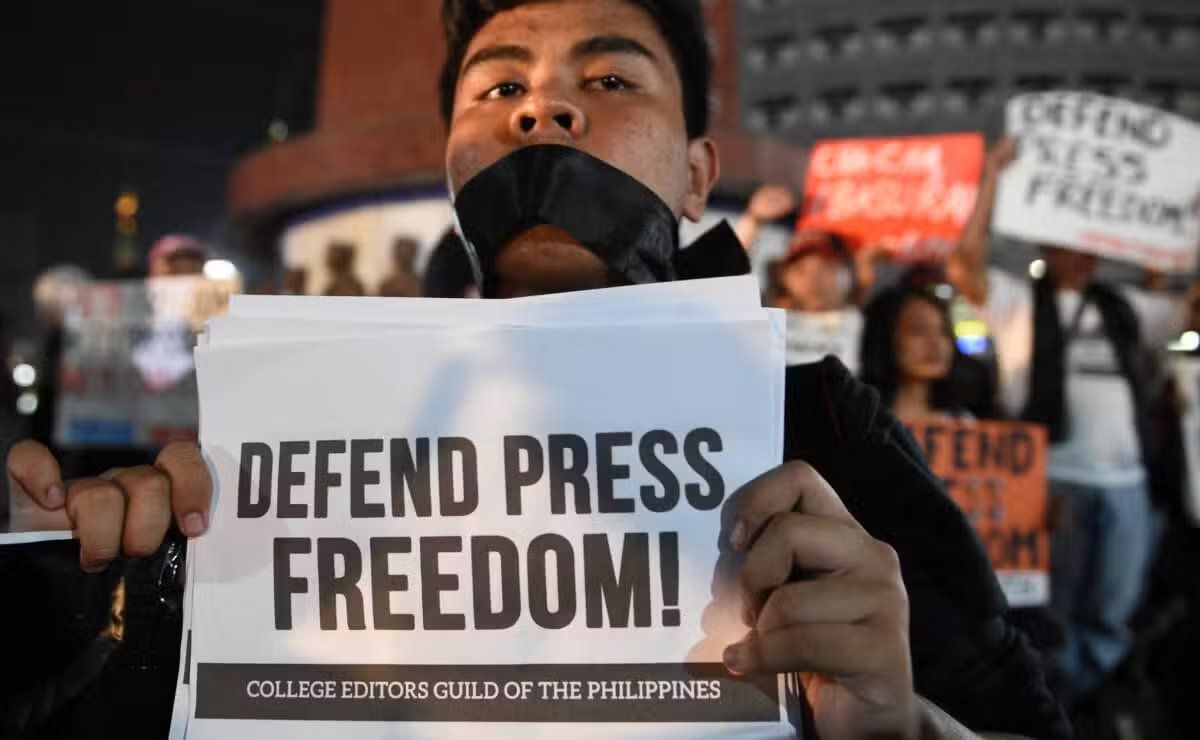
The landscape for journalism in the Philippines has grown increasingly perilous, with the National Union of Journalists of the Philippines documenting approximately 260 attacks against media practitioners since President Ferdinand Marcos Jr. assumed office more than four years ago. Yet this troubling aggregate obscures a more nuanced and concerning reality: the heaviest toll falls not on journalists employed by the nation's major media conglomerates, but on those working for smaller community outlets, campus publications and alternative news platforms scattered across the archipelago.
According to NUJP records, more than 180 of these documented cases targeted media workers employed by local newspapers, provincial radio stations, and independent news organisations. This distribution reveals a structural vulnerability within the Philippine media ecosystem. Journalists at community level often operate with shoestring budgets, minimal staff support, and institutional arrangements that cannot afford the legal defence infrastructure available to their counterparts in major newsrooms. The risks they undertake—libel suits, cybercrime charges, physical intimidation—frequently far exceed the modest compensation these positions provide.
Jay Lavapiez, station manager of Baskog Radyo in Roxas City, Capiz, exemplifies the predicament facing provincial journalists. His experience illuminates why community journalism presents particular dangers in a context where local power structures remain largely unchallenged by established media. Working outside Metro Manila means operating in environments where journalists often lack institutional safeguards, where the subjects of their reporting are frequently neighbours or local acquaintances, and where officials they scrutinise wield considerable influence over their immediate communities. Despite these constraints, Lavapiez and colleagues like him continue pursuing stories that major media outlets overlook or consider insufficiently profitable.
The personal stakes became evident when Lavapiez survived an assassination attempt last June. Two unidentified men on a motorcycle blocked his vehicle and fired four rounds from a 9 mm pistol—a stark reminder that press freedom in certain Philippine provinces extends beyond lawsuits and online harassment. This incident followed a pattern of legal harassment initiated against Lavapiez and his wife, India, beginning in April when the NUJP documented multiple cyberlibel and defamation cases filed against them and their staff across Manila, Muntinlupa, and Capiz. These suits originated after the couple reported on alleged abuse and corruption involving a cemetery owned by a local official.
The couple's experience reflects a broader strategy employed against inconvenient community journalists: the weaponisation of the legal system. Lavapiez explained that when journalists question people in power, the retaliatory arsenal includes libel complaints, cybercrime prosecutions, online harassment campaigns, intimidation, threats, and when necessary, armed violence. Philippine criminal law provides multiple avenues for those wishing to silence critical reporting, and provincial media workers often lack the financial and legal resources to mount effective defences. The cumulative effect discourages coverage of local corruption and abuse.
For provincial journalists, the economic dimension adds another layer of vulnerability. Salaries at community radio stations and local publications remain modest, creating an untenable calculus where modest compensation cannot possibly justify the physical danger and legal jeopardy inherent in rigorous local reporting. Lavapiez observed that financial necessity forces many community journalists to navigate this dangerous terrain with minimal reward. Unlike their metropolitan counterparts who might relocate or change beats after experiencing threats, provincial journalists face a different reality: their communities are their homes, and their audiences are their neighbours.
The tragedy of community journalist RJ Ledesma exemplifies the ultimate consequences of this vulnerability. Ledesma, who reported on renewable energy projects and their impact on agricultural communities in Negros Occidental, was killed in April during a military operation in Toboso. He was among 19 people killed in what a fact-finding mission condemned for serious violations, including allegedly indiscriminate military fire despite clear visibility of the operational area. Ledesma's death underscores how community journalists lack not only legal and financial protection but sometimes state protection itself when their reporting intersects with sensitive state operations or local power dynamics.
Lavapiez articulated the philosophical foundation driving community journalism despite these formidable obstacles: the conviction that somebody must ask uncomfortable questions when public resources are involved and ordinary citizens feel unheard. This motivation transcends financial incentive; it reflects a civic commitment rooted in proximity. Community journalists understand their mandate as fundamentally different from metropolitan journalism because their reporting directly affects people they know and places they inhabit. This proximity generates both moral urgency and unique vulnerability.
The irony that Lavapiez highlighted captures the structural paradox: the closer journalists are to their communities, the more vulnerable they become precisely because their location, workplace, residence and identity are known to those they scrutinise. This familiarity eliminates the anonymity or distance that might provide security in other contexts. A journalist at a major Manila daily operates within an institution, with colleagues present and some degree of organisational protection. A provincial radio broadcaster operates often alone or with minimal staff, visible and accessible to local interests uncomfortable with critical reporting.
What makes the current situation particularly concerning for regional observers is the pattern's implications for Southeast Asian press freedom broadly. The Philippines' experience demonstrates that press attacks often concentrate among the economically vulnerable—community journalists without institutional support, minority language media, and independent operators without deep financial reserves. This targeting strategy proves effective precisely because these outlets lack resources for legal defence and sustained advocacy. As Malaysia's media environment similarly includes numerous community and alternative outlets, understanding Philippine pressures on this tier of journalism offers cautionary lessons about structural vulnerabilities in Southeast Asian media ecosystems.
Lavapiez's final statement articulated the fundamental demand animating Philippine community journalists: not special treatment, but merely the elementary freedom to work without threats, harassment, criminal prosecution or physical harm for asking legitimate questions. This basic assertion of press freedom rights reflects the desperation of a profession under siege. In the provinces and smaller cities where they operate, community journalists have become essential information conduits, yet they remain among the most exposed and least protected practitioners of their profession throughout the archipelago.
The NUJP's documentation serves as more than statistical accounting; it represents a reckoning of whose freedom is most imperilled when state and non-state actors move against the press. Behind each documented case stands a journalist, a newsroom struggling with inadequate resources, and communities whose access to truthful information about local power, corruption and development remains constrained. Until provincial journalists receive institutional, legal and physical protection commensurate with the risks they assume, the democratic foundations of Philippine local governance will remain compromised.

