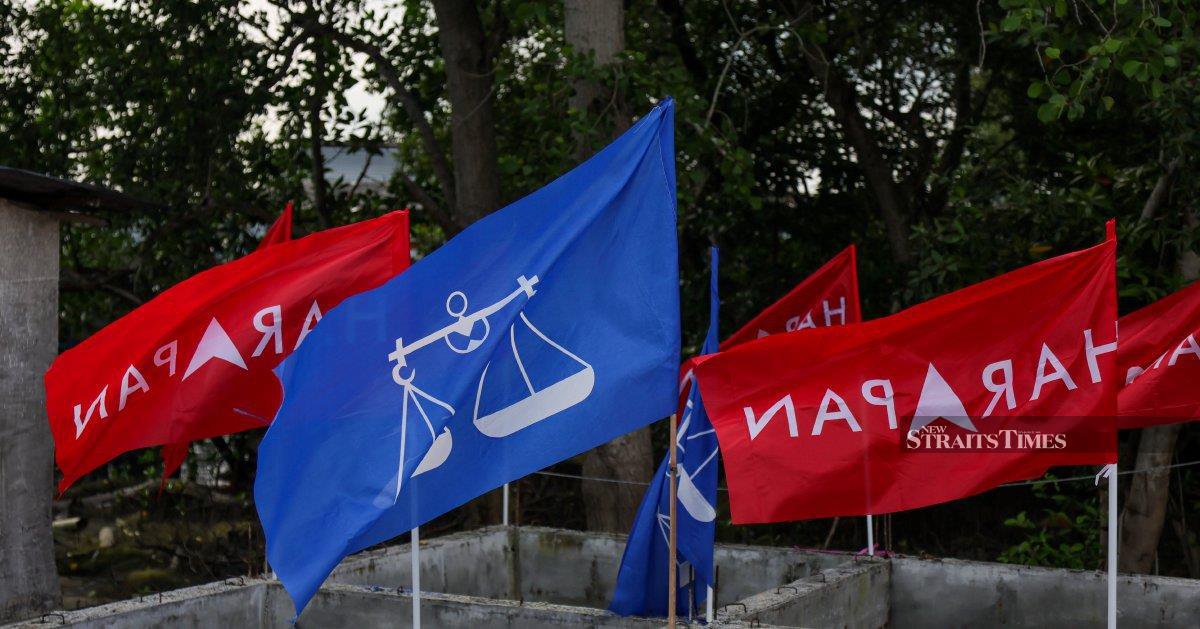
The unity government's fragile political balance has come under fresh strain after Pakatan Harapan's youth coalition issued a stark ultimatum: all Barisan Nasional ministers and deputy ministers must leave the Cabinet immediately. The demand stems from what PH youth leaders characterise as a fundamental breach of the unity government's founding principles, specifically regarding BN's open electoral cooperation with Perikatan Nasional in the upcoming Johor and Negri Sembilan state elections.
This intervention by the PH youth movement signals deepening frustration within the coalition's younger leadership tier about the trajectory of federal politics. The call represents more than routine political posturing; it reflects genuine anxiety that the unity government—already a delicate alliance of ideologically diverse parties—risks fragmenting through incremental compromises at state level. By publicly naming Cabinet-level resignations as their demand, PH youth has escalated beyond advisory suggestions into confrontational territory, forcing senior party leaders to respond.
The underlying grievance centres on what PH views as contradiction in BN's positioning. While participating in a federal unity government with PH, Barisan Nasional is simultaneously aligning with Perikatan Nasional in state-level contests. From PH's perspective, this dual engagement suggests BN is hedging its bets rather than fully committing to the unity government project. The electoral cooperation with PN—a coalition that includes the Islamist Parti Islam Se-Malaysia—arguably contradicts the moderate, multiethnic platform that the unity government was supposed to represent following the 2022 federal election.
Malaysia's coalition politics have become increasingly complicated since PH and BN formed their unprecedented partnership in late 2022. The arrangement was never intended as a permanent merger but rather a pragmatic accommodation to prevent governmental deadlock. Yet three years of cohabitation have created recurring friction points, particularly when state-level interests diverge from federal alignments. Johor and Negri Sembilan represent critical tests, as both states have historically been BN strongholds, creating obvious incentives for the coalition to seek winning combinations.
For Barisan Nasional, the situation presents genuine complexity. State politics operate under different logic than federal governance, and BN's electoral calculus at state level may legitimately differ from its federal coalition strategy. PN's inclusion in state-level contests might reflect BN's assessment of local voter preferences or intra-state political realities rather than ideological drift. Nevertheless, from PH's vantage point, such distinctions amount to mere justification for what feels like coalition infidelity.
The timing of PH youth's intervention carries significance within the broader political calendar. State elections typically precede federal realignments, and parties' performances in these contests directly influence their bargaining power in subsequent federal arrangements. If BN performs strongly in Johor and Negri Sembilan, particularly through cooperation with PN, such success could embolden BN to pursue more independent federal positioning. Conversely, PH views early pressure—including youth wing demands—as potentially constraining BN's strategic options before voting begins.
This confrontation also reveals generational dynamics within Pakatan Harapan itself. Youth wings typically operate with greater rhetorical freedom than their parent parties' official machinery, allowing them to articulate hardline positions that senior leadership might moderate for diplomatic reasons. By having youth wings voice this ultimatum, PH's senior echelon can gauge the political temperature without officially committing the party to such an uncompromising stance. Should Cabinet resignations prove unachievable, PH leadership can frame it as youthful overreach rather than party failure.
The regional implications deserve consideration for Malaysian politics watcher. Southeast Asia's broader democratic landscape increasingly features coalition governance, and Malaysia's experiment in managing multiple coalition frameworks simultaneously could offer instructive lessons—whether positive or cautionary. If the unity government unravels, it may reflect coalition governance's inherent fragility when partners harbour divergent long-term interests. Alternatively, if Malaysian parties develop mechanisms for managing such tensions, it could demonstrate that multiparty cooperation is sustainable despite tactical divergences.
For Barisan Nasional specifically, the pressure introduces difficult choices. Acquiescing to PH youth demands would represent an unprecedented capitulation to pressure from a junior coalition partner. Ministers and deputy ministers resigning would weaken BN's federal representation and seemingly validate the accusation that BN has betrayed coalition principles. However, defying these demands risks poisoning relationships essential for the unity government's continued functioning, potentially accelerating its collapse.
The issue also touches on broader questions about coalition discipline and member party autonomy. Can parties simultaneously participate in coalitions while pursuing independent electoral strategies at subnational levels? How much coordination should partners impose on one another? These questions lack clean answers, and Malaysia's political experience suggests different parties resolve them differently depending on circumstances and power dynamics.
What remains unclear is whether this PH youth intervention represents genuine pressure from younger party members frustrated with coalition compromises, or whether it serves as convenient pressure theatre enabling senior PH leadership to extract concessions from BN during concurrent negotiations. Either interpretation suggests coalition governance requires constant management and occasional public confrontation to maintain stability.

