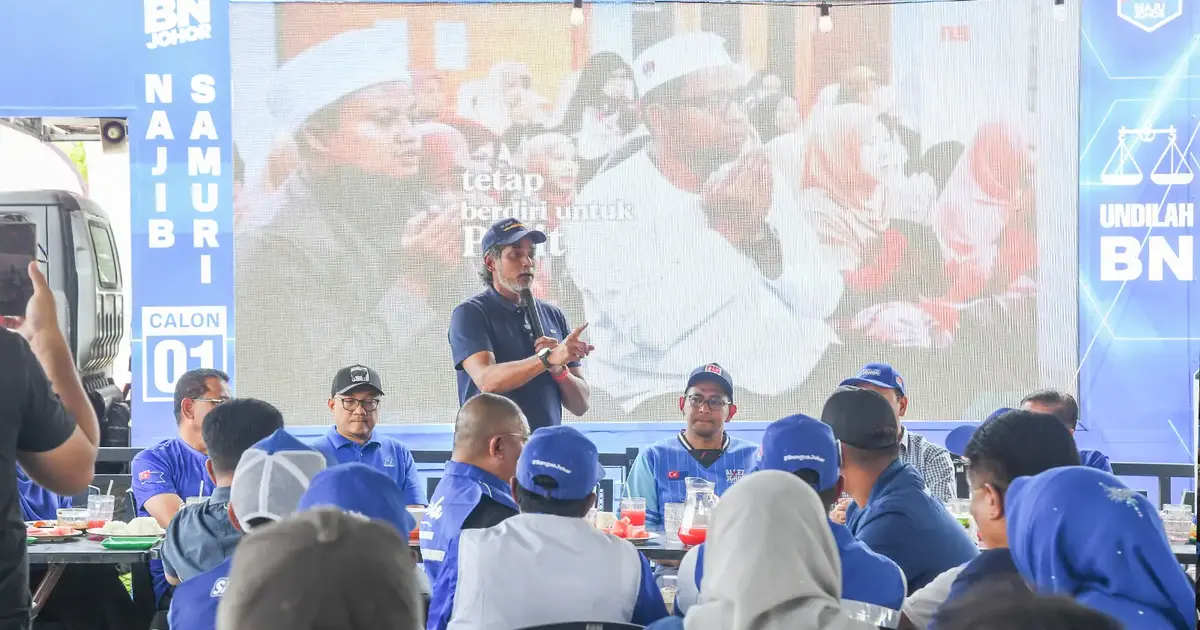
Khairy Jamaluddin, the former Umno Youth chief, has injected a new condition into the unfolding political discourse in Johor by suggesting that Pakatan Harapan must elevate its engagement by fielding its prospective menteri besar candidate if it genuinely seeks a debate with Onn Hafiz Ghazi, the Johor Barisan Nasional chairman. The requirement essentially sets a threshold for what Khairy considers a meaningful exchange of ideas at the appropriate organisational level, reflecting broader strategic calculations within state politics.
The statement carries significant weight given Khairy's pedigree within Umno's youth movement and his continued influence within wider party circles. By positioning the debate condition around candidate parity, he effectively signals that BN views any engagement with the opposition as a matter requiring comparable standing. This framing has become increasingly common in Malaysian politics, where opposition parties must demonstrate institutional maturity through formal nominations before engaging in high-level political contests.
Johor remains strategically crucial for both Barisan Nasional's federal ambitions and the broader opposition's regional strength. The state has consistently voted for BN in recent elections, but demographic shifts and urban migration patterns have created pockets of opposition support, particularly in younger constituencies. Any menteri besar race would hinge on which coalition successfully mobilises these shifting voter segments whilst retaining traditional support bases.
Pakatan Harapan's position in Johor presents a complex strategic puzzle. The coalition must balance the impulse to engage substantively with BN's messaging against the risk of legitimising Onn Hafiz's leadership before formal elections occur. If PH rushes to nominate a menteri besar candidate simply to satisfy Khairy's precondition, it may inadvertently crystallise internal party negotiations prematurely or reveal tactical divisions within its component parties. Conversely, declining such a debate might appear evasive to voters seeking genuine policy dialogue.
The timing of Khairy's intervention suggests tactical calculation within Umno's broader positioning. By establishing this prerequisite, Khairy subtly elevates Onn Hafiz's stature whilst simultaneously testing whether PH possesses sufficient internal consensus to name a single prospective leader. This serves multiple purposes: it demonstrates BN's confidence in its current Johor management, it creates a potential excuse if no debate materialises, and it potentially exposes any cracks within PH's coalition structure.
For Malaysian and Southeast Asian readers observing state-level politics, this dynamic illustrates how Malaysian electoral contests operate within multiple layers of organisational protocol and symbolic jockeying. Debates rarely occur on equal footing; they instead become negotiated theatre where both sides leverage procedural conditions to claim advantage. The question of whether PH names a menteri besar candidate becomes not merely a procedural matter but a revealing test of internal cohesion.
Onn Hafiz has consolidated power as Johor's chief minister whilst serving as BN's regional figurehead. His tenure has focussed on economic development and infrastructure projects intended to deepen BN's electoral support. Any debate would likely centre on these development narratives against PH's governance critiques and reform promises. The choice of who represents PH in such an encounter would thus carry substantial implications for how the coalition's policy positions get articulated.
Regionally, Johor's political trajectory influences broader Southeast Asian political dynamics. As Malaysia's southernmost peninsular state, it maintains significant trade and connectivity links with Singapore. Political stability and clear governance frameworks affect business confidence and investment patterns throughout the region. A robust debate between genuinely competitive political forces could theoretically strengthen democratic participation, though equally, if such exchanges devolve into performative confrontation, they may reinforce voter cynicism.
Khairy's intervention also reflects generational shifts within Umno itself. As a younger-generation Umno leader, he has positioned himself somewhat differently from older party hierarchies, yet his statement maintains traditional party protocol around organisational standing and hierarchical engagement. This suggests that even within Umno's evolving leadership, certain institutional norms remain sacrosanct.
The practical question facing PH is whether nominating a menteri besar candidate serves its strategic interests at this juncture. Early nomination risks signalling weakness through premature crystallisation of factional preferences. Yet avoiding the debate invitation might allow BN to frame PH as unwilling to engage substantively on Johor's future. This bind reflects the asymmetric power dynamics within Malaysian state politics, where incumbent administrations enjoy structural advantages in setting terms of engagement.
Looking forward, how PH responds to Khairy's challenge will carry symbolic weight beyond Johor's borders. Other opposition-held and contested states will observe whether PH can forge internal unity around candidate selection and whether public debate formats generate meaningful policy discussions or merely reinforce partisan positioning. The answer may well determine trajectories for multiple upcoming state contests.

