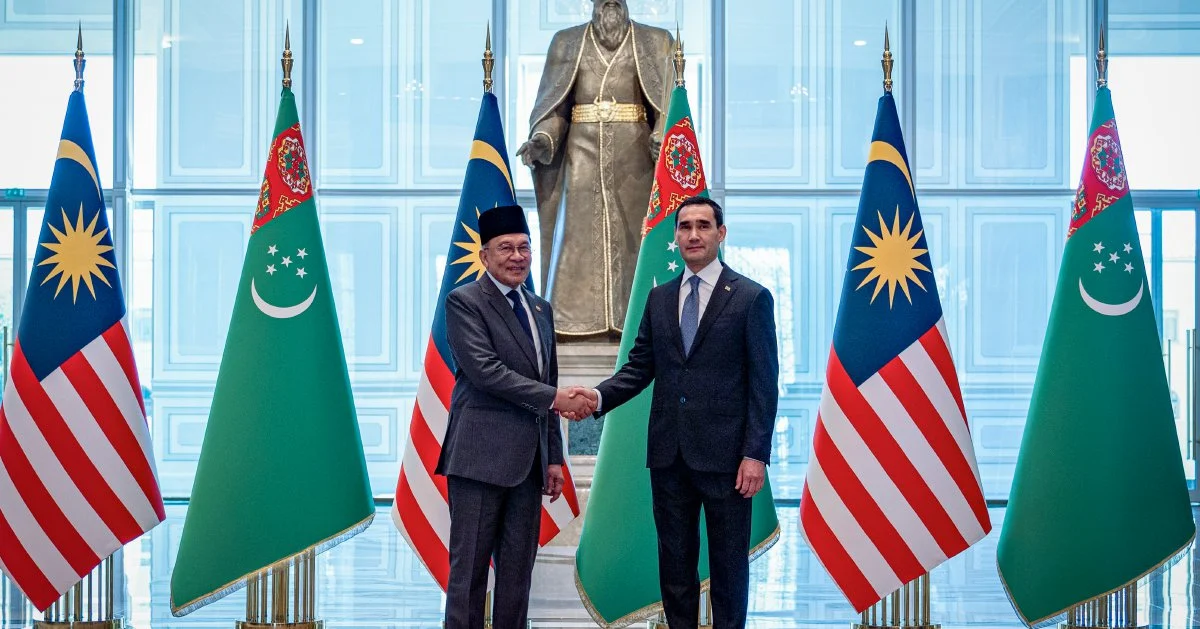
Petronas has positioned itself as a linchpin connecting Malaysia to Turkmenistan's energy sector, leveraging its operational expertise and regional presence to forge deeper ties between Kuala Lumpur and Ashkhabad. The momentum follows Prime Minister Datuk Seri Anwar Ibrahim's recent official visit to the Central Asian nation, signalling a broader strategic realignment that extends well beyond petroleum and gas ventures alone.
Turkmenistan, sitting atop the Caspian Sea with substantial reserves of oil and natural gas, has long remained somewhat isolated on the global energy stage due to geopolitical considerations. Malaysia's engagement through Petronas offers Turkmenistan a gateway to Asian markets and investors, while simultaneously providing Malaysia with direct access to energy resources at a time when regional competition for fuel security intensifies. For Petronas, the expanded mandate in Turkmenistan represents a logical extension of its Central Asian strategy, building on decades of operational knowledge across different geological and regulatory environments.
The timing of the prime minister's diplomatic mission reflects deliberate positioning within Malaysia's evolving foreign policy architecture. By elevating Malaysia-Turkmenistan relations through high-level engagement, the government acknowledges that energy cooperation increasingly underpins bilateral relationships in the 21st century. Petronas serves as both commercial executor and diplomatic instrument, translating government-to-government commitments into tangible business opportunities that generate employment, technology transfer, and fiscal revenues for both nations.
For Malaysian stakeholders, Turkmenistan's energy sector offers substantial investment potential. The country's proven gas reserves rank among Central Asia's largest, yet production remains constrained by limited market access and international partnerships. Petronas brings not only capital but also technical proficiency in exploration, production, and downstream operations accumulated across multiple jurisdictions. This expertise proves invaluable in unlocking stranded reserves and modernising infrastructure that has sometimes suffered from underinvestment.
The bilateral energy framework extends implications throughout Southeast Asia and beyond. Malaysia's success in penetrating Central Asian energy markets potentially establishes a template for other regional players seeking to diversify supply chains away from traditional Middle Eastern sources. Additionally, deepening ties with Turkmenistan positions Malaysia as a credible interlocutor between Asia and Central Asia, a geopolitically significant role given current great-power competitions for regional influence.
Petronas's operational footprint in Turkmenistan demonstrates how national oil companies function beyond profit maximisation, serving as vehicles for statecraft and economic diplomacy. The company's existing projects provide leverage for expanding commercial relationships while simultaneously supporting Malaysian foreign policy objectives. This alignment between corporate strategy and national interest creates compound benefits, where business success directly translates into enhanced diplomatic standing.
From Turkmenistan's perspective, partnering with Petronas addresses longstanding challenges in monetising energy reserves. The Central Asian nation has pursued diversification strategies to reduce dependence on traditional partners, viewing Asian investors and operators as valuable counterweights. Malaysian involvement particularly appeals because it brings Southeast Asian market access without the political baggage that accompanies partnerships with certain other major powers.
The broader economic implications warrant careful attention. Energy cooperation between Malaysia and Turkmenistan could stimulate ancillary industries including engineering services, equipment manufacturing, and financial services. Malaysian service providers may find opportunities supporting Petronas operations across the Caspian region, creating employment domestically whilst building export capabilities. Universities and research institutions might similarly develop collaborations, strengthening human capital exchanges.
Looking forward, the strategic partnership framework likely encompasses agreements extending beyond immediate energy projects. Joint ventures in petrochemicals, infrastructure development, and technology sharing probably feature in preliminary discussions, with formal announcements potentially following as relationships consolidate. Petronas's role as facilitator positions the company to capture value across multiple business segments whilst contributing to Malaysia's broader economic objectives.
The geopolitical dimensions merit consideration as well. Malaysia's engagement with Turkmenistan subtly signals the nation's commitment to maintaining constructive relationships across the Islamic world, from Southeast Asia through South Asia, Central Asia, and into the Middle East. This geographical reach enhances Malaysia's diplomatic flexibility and economic diversification strategies during an era of shifting global alignments.
Challenges certainly exist. Turkmenistan's governance structures sometimes complicate foreign operations, requiring patient navigation of bureaucratic complexities. Currency controls, regulatory transparency, and contract enforcement have occasionally troubled international operators, though these issues typically yield to sustained engagement and mutual commitment. Petronas's accumulated experience managing operations across diverse regulatory environments provides valuable preparation for such obstacles.
The Malaysia-Turkmenistan energy partnership ultimately reflects rational economic complementarity overlaid with strategic political considerations. Petronas transforms these elements into operational reality, converting diplomatic initiatives into business ventures that generate returns for shareholders whilst advancing Malaysian national interests. As Central Asian energy becomes increasingly central to global energy security discussions, Malaysia's deepening presence through Petronas ensures the nation remains a relevant participant in shaping regional energy dynamics.

