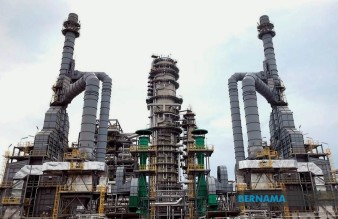
Malaysia's planned petroleum reserve must be understood not as a standalone measure but as a single pillar within a comprehensive economic security framework that addresses vulnerabilities across multiple critical sectors. This perspective fundamentally reframes Prime Minister Datuk Seri Anwar Ibrahim's proposal to establish a strategic oil stockpile, shifting the discussion from energy-focused policy to integrated risk management. IPPFA Sdn Bhd director of investment strategy and country economist Mohd Sedek Jantan argues that future economic shocks may originate from entirely different sources than energy disruptions, requiring Malaysian policymakers to adopt a more expansive and anticipatory approach to national resilience.
The economist emphasises that mere accumulation of reserves, however substantial, cannot deliver genuine economic security without corresponding attention to food systems, supply chain diversification, and critical resource access. This observation carries particular weight for Malaysia, a nation highly vulnerable to import dependencies and exposed to volatile global commodity markets. Stockpiling strategies function most effectively when coordinated with broader structural reforms, supply-chain reorganisation, and strategic partnerships rather than implemented in isolation. The measure of success should therefore transcend the straightforward metric of barrels stored and instead focus on whether the initiative meaningfully strengthens Malaysia's capacity to absorb and recover from geopolitical and economic disruptions that may strike from unexpected directions.
Food security merits equivalent priority to energy resilience in Malaysia's long-term planning, particularly given the nation's reliance on imports for numerous essential food commodities and agriculture inputs. Global food supply disruptions directly threaten inflation rates, compress household purchasing power, and create social stability risks that can undermine broader economic objectives. A petroleum reserve, while supporting manufacturing and industrial activity through reliable energy provision, leaves Malaysia exposed to food-price shocks and nutritional security vulnerabilities that could simultaneously trigger economic damage. An integrated strategy would therefore address production capacity, storage infrastructure, import diversification, and domestic agricultural development across food sectors with the same strategic attention devoted to energy stocks.
Critical minerals and semiconductor supplies represent emerging vulnerability points that deserve inclusion in Malaysia's economic security calculus. These sectors underpin modern manufacturing, digital infrastructure, and clean energy transitions, yet global supply chains remain concentrated and susceptible to geopolitical manipulation. Malaysia's position as a semiconductor manufacturing hub makes stability in component supplies and raw materials essential to maintaining competitive advantage and export revenue. Tomorrow's crisis may originate from restrictions on rare earth elements, semiconductor precursors, or advanced materials rather than from petroleum shortages, a possibility that demands forward-looking strategic planning and diversified sourcing arrangements.
Mohd Sedek advocates for establishing a strategic petroleum reserve explicitly tethered to a flexible national risk management framework capable of evolving as threats emerge. Rather than rigidly focusing on petroleum quantities, policymakers should first establish clear purpose statements defining whether reserves exist to manage genuine supply emergencies or to influence market pricing. The distinction matters profoundly, as conflating these objectives invites poor fiscal stewardship and undermines credibility. A strategically sound reserve programme would maintain sufficient scale to cushion genuine disruptions whilst remaining transparent about its commercial logic and public-resource justification.
The implementation framework demands rigorous cost-benefit analysis encompassing reserve size, financing mechanisms, storage facility capacity, and governance arrangements. These decisions cannot rely on intuition or precedent alone but require detailed modelling of scenarios, storage costs, financing implications, and opportunity costs measured against alternative investments in resilience. A petroleum reserve funded through unsustainable mechanisms or poorly designed governance structures could become a fiscal liability rather than a strategic asset, diverting resources from higher-impact initiatives. Transparency in decision-making and regular reassessment of reserve adequacy against evolving threats ensures public accountability and enables timely adjustments.
Malaysia can extract valuable lessons from Japan's approach to strategic reserves, which integrates commodity stockpiling with deliberate supply-chain diversification, logistical resilience investments, and coordinated public-private partnerships. Rather than viewing reserves as sufficient protection, Japan treats them as one component within a broader resilience architecture involving supplier relationships, alternative sourcing capabilities, and technological innovations that reduce dependency on vulnerable supply chains. This integrated model produces more robust protection against disruption than reserves alone could achieve, and it addresses systemic vulnerabilities at multiple levels simultaneously.
The proposal arrives at a moment when geopolitical tensions increasingly threaten international trade patterns and supply-chain stability. Several nations have experienced supply shocks spanning energy, semiconductors, and food simultaneously, demonstrating that crises rarely isolate themselves to single sectors. Malaysia's geographic position, export-dependent economy, and reliance on maritime trade routes create particular vulnerability to regional conflicts or supply-route disruptions. A forward-looking economic security strategy must therefore anticipate compound and cascading disruptions rather than planning for isolated commodity shortages affecting one sector at a time.
Digital infrastructure security deserves explicit inclusion alongside traditional commodities within Malaysia's economic security framework. Cyberattacks, digital infrastructure failures, and dependencies on foreign technology platforms increasingly pose national-level risks equivalent to physical supply disruptions. A comprehensive strategy would address digital sovereignty, data security, critical technology dependencies, and infrastructure resilience with the same thoroughness applied to petroleum and food systems. This holistic approach recognises that modern economies integrate physical and digital systems such that disruption in either domain cascades across all others.
Building political support for an integrated economic security strategy requires articulating its cost-effectiveness and demonstrating how multi-sectoral resilience protects growth, employment, and social stability more effectively than sector-specific approaches. Policymakers must resist the temptation to treat reserves as quick fixes whilst neglecting the structural reforms and supply-chain investments that underpin genuine resilience. The petroleum reserve, should it proceed, should be explicitly positioned as complementary to broader initiatives addressing food security, technological independence, and supply-chain diversification. This framing transforms a resource-management discussion into a comprehensive national development strategy with durable political appeal and measurable contribution to long-term prosperity.

