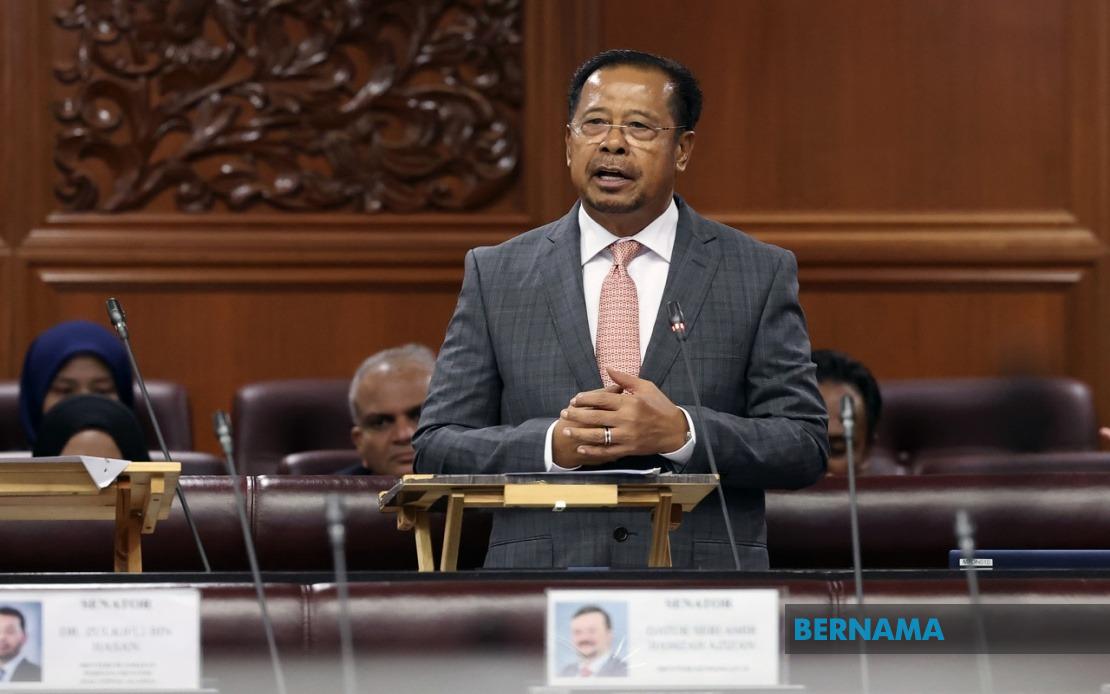
The Ministry of Energy Transition and Water Transformation (PETRA) has announced plans to undertake an extensive 12-month research initiative focused on formulating a comprehensive Industrial Water Reclamation Policy. This strategic move reflects the government's growing recognition that Malaysia must transition towards more sustainable water management practices amid rising demand from both urban and industrial consumers. Deputy Minister Datuk Seri Abdul Rahman Mohamad revealed the timeline during parliamentary proceedings in the Dewan Negara, signalling the administration's commitment to addressing long-term water security challenges that have become increasingly acute across the region.
The proposed policy framework is designed to provide clear guidance to diverse industrial sectors on incorporating reclaimed water into their operations. Industries targeted under this initiative include the food and beverage manufacturing sector, rapidly expanding data centres, semiconductor producers, and public cleaning service providers. Each of these sectors represents significant water consumers, yet many of their applications do not necessarily require treated water meeting drinking-water quality standards. By redirecting reclaimed water towards these lower-grade applications, Malaysia can theoretically redirect high-quality freshwater supplies towards domestic consumption, creating a more rational distribution of resources across the economy.
The rationale underlying this policy shift extends beyond mere efficiency considerations. PETRA has positioned water reclamation as a cornerstone of the government's broader water security agenda, particularly as climate variability and population growth place mounting pressure on conventional water sources. Deputy Minister Rahman explained that channelling reclaimed water into industrial use represents a pragmatic response to these systemic pressures, reducing strain on rivers, reservoirs, and groundwater systems that supply the nation's primary drinking water infrastructure. This approach aligns Malaysia with international best practices observed in water-stressed regions, where industrial reclamation has become standard practice rather than an exceptional measure.
The contemplated research programme will traverse multiple technical and policy domains to ensure robust implementation mechanisms. According to Rahman, the study encompasses detailed technical assessments examining treatment capabilities and infrastructure requirements, alongside legal analyses that will clarify regulatory frameworks and institutional responsibilities. Financial and economic analyses will evaluate cost structures, pricing mechanisms, and investment returns, critical factors in determining whether industries will voluntarily adopt reclaimed water systems or require incentive structures. This multidisciplinary approach reflects recognition that policy success depends not solely on environmental soundness but equally on economic viability and institutional clarity.
A particularly important dimension involves establishing and monitoring reclaimed water quality standards. The study will investigate appropriate regulatory mechanisms to ensure that treated wastewater meets safety thresholds for intended industrial applications without unnecessary over-treatment that would inflate costs and energy consumption. This aspect proves especially consequential given that Malaysia currently operates without a unified framework governing reclaimed water quality for industrial purposes, creating potential inconsistencies across different treatment plants and usage contexts. Establishing science-based standards will provide certainty to both regulators and industry participants regarding acceptable quality parameters.
PETRA has adopted a collaborative stakeholder engagement strategy rather than imposing a top-down policy framework. The ministry is conducting consultations with state governments, ensuring that water policy respects federalism and incorporates regional variations in water availability and industrial composition. Water operators managing treatment facilities and distribution networks have also been invited to contribute technical insights and operational perspectives. Indah Water Konsortium (IWK), the quasi-governmental entity responsible for sewerage infrastructure across much of Malaysia, represents a critical consultation partner given its direct involvement in wastewater treatment and reclamation. Industry players themselves are being consulted to understand operational requirements, cost sensitivity, and readiness to adopt reclaimed water technologies.
This consultative approach carries particular importance in Malaysia's context, where water management traditionally involves coordination across federal, state, and local authorities with varying institutional capacities and priorities. Securing state government buy-in proves essential, as many states maintain significant discretionary authority over water resources and have sometimes pursued parochial interests over national efficiency goals. By integrating state perspectives during the research phase rather than presenting a finished policy, PETRA aims to build political consensus and facilitate smoother implementation when the policy eventually materialises.
The initiative addresses a recognised gap in Malaysia's water management framework. While the country has developed sophisticated systems for treating drinking water and managing wastewater for environmental protection, it has not systematically developed pathways for industrial water recycling. This represents a missed opportunity given that industrial water consumption constitutes roughly one-third of total national demand, and a substantial proportion of this water involves low-grade applications amenable to reclaimed sources. Neighbouring Singapore, operating under more severe water constraints, has pioneered extensive industrial reclamation systems from which Malaysia can potentially learn implementation lessons.
The semiconductor and data centre sectors hold particular significance within this policy framework, as they represent Malaysia's emerging high-technology manufacturing base and key employment engines in targeted regional development zones. Both sectors consume enormous quantities of water for cooling and processing purposes, yet face no inherent requirement for drinking-quality standards. By enabling these sectors to transition towards reclaimed water, Malaysia can simultaneously reduce freshwater extraction pressures and enhance industrial competitiveness through lower operational costs. This becomes especially consequential as the region competes with alternative investment destinations for technology manufacturing capacity.
The food and beverage manufacturing sector likewise consumes substantial water quantities, though safety considerations necessarily apply to products intended for human consumption. The policy study will need to distinguish carefully between direct product applications, where reclaimed water quality standards must remain stringent, and ancillary uses such as cleaning, cooling, and steam generation, where less stringent treatments suffice. This sectoral complexity underscores why a comprehensive study spanning 12 months proves necessary rather than attempting to rapidly codify rules across diverse industrial contexts.
Beyond immediate policy development, this initiative signals a broader philosophical shift in how Malaysian policymakers conceptualise water resources. Rather than viewing water solely as a renewable resource to be extracted from natural sources, the policy framework increasingly recognises water as a material flowing through integrated cycles encompassing treatment, use, and reuse. This circular economy orientation mirrors global sustainability trends and positions Malaysia to leverage technological innovations in water treatment and recycling that continue accelerating internationally.
The implementation timeline remains fluid pending research completion, but Deputy Minister Rahman's parliamentary statement indicates that PETRA envisages policy rollout occurring within approximately 12 to 18 months from the announcement date. This timeline allows sufficient research depth while maintaining momentum on an issue recognised as increasingly urgent. Subsequent phases will likely involve detailed infrastructure assessments, cost-benefit analyses at individual industrial sites, and pilot programmes demonstrating viability before full national deployment across diverse industrial ecosystems.

