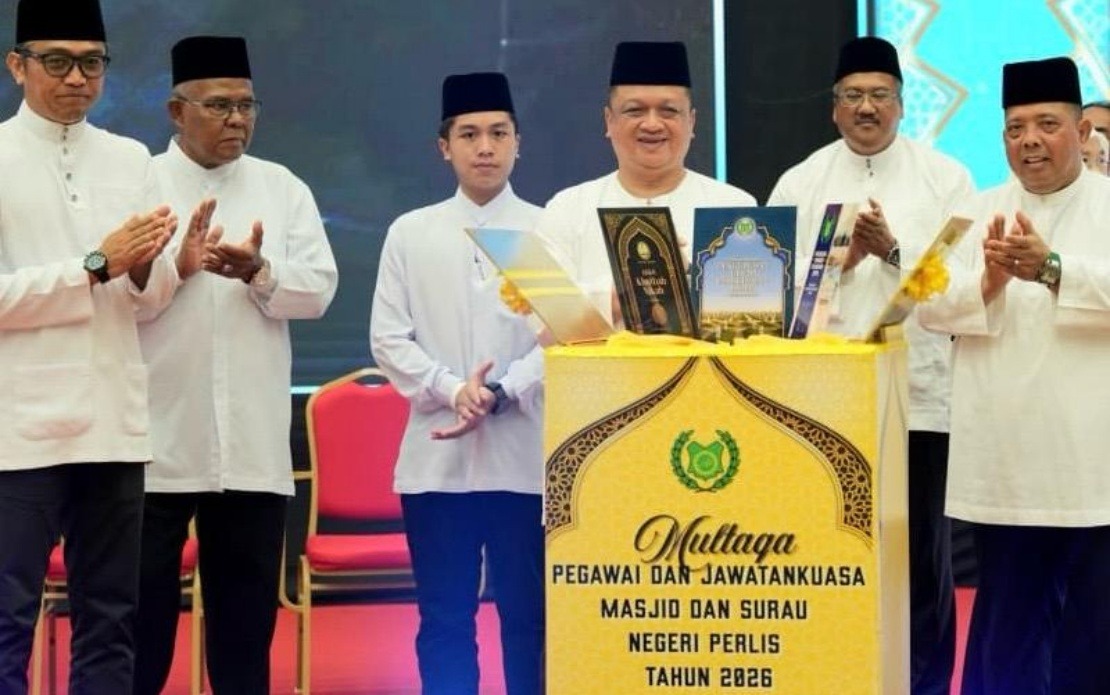
The Raja Muda of Perlis, Tuanku Syed Faizuddin Putra Jamalullail, has made a direct appeal to mosque and surau management committees across the state to demonstrate unwavering integrity and professionalism in their operations. Speaking at the 2026 Perlis State Mosque and Surau Officers and Committees Multaqa Programme in Kangar, the royal patron stressed that those entrusted with the stewardship of these religious institutions carry a significant responsibility that extends well beyond routine administrative functions.
The emphasis on accountability and systematic management reflects broader concerns about institutional governance within Malaysia's Islamic religious framework. Tuanku Syed Faizuddin Putra noted that officers and committee members throughout Perlis must demonstrate thorough understanding of the directives established by the Perlis Islamic Religious and Malay Customs Council (MAIPs) and the Perlis Islamic Religious Affairs Department (JAIPs). This dual-pronged regulatory framework ensures that religious institutions operate within parameters that balance Islamic principles with state legislation, creating a coherent institutional environment.
Efficient administration of community religious affairs depends critically on the willingness of mosque and surau committees to embrace standardised procedures and maintain consistent work practices. By adhering to established guidelines, these institutions can deliver services that align with both Islamic law and state regulatory requirements. The Raja Muda's intervention suggests that inconsistencies in practice across different localities may have prompted the need for renewed emphasis on compliance and professionalisation within the religious administrative apparatus.
This year's multaqa programme addresses three substantive areas that directly affect daily religious life for Perlis's Muslim population. The Guidelines for the Management of Muslim Cemeteries in Perlis establish formal procedures for burial grounds, recognising that cemetery management involves not only logistical concerns but also significant cultural and religious sensitivities. Simultaneously, the Guidelines for the Mosque Management Division provide a comprehensive framework for institutional operations, encompassing financial management, maintenance protocols, and community engagement. The Procedures for Managing Marriages and the Role of Jurunikah (marriage officials) in Perlis establish standards for one of the most significant life events within Muslim communities, where administrative accuracy and ethical conduct carry profound implications for individuals and families.
The expansion of this year's multaqa to incorporate surau committees alongside mosque officials represents a meaningful acknowledgement of these smaller prayer spaces' complementary role within the religious infrastructure. Suraus, typically neighbourhood-level prayer facilities, often serve communities in areas where larger mosques may be less accessible. By including surau committees in the training and coordination programme, the Perlis Islamic Religious Affairs Department recognises that effective religious administration requires integrated oversight across all tiers of institutional provision.
Tuanku Syed Faizuddin Putra articulated a vision of mosques and suraus as modern religious institutions that transcend their traditional function as places of worship. Contemporary Muslim communities increasingly expect these facilities to operate with the transparency and professional standards characteristic of well-managed organisations. This expectation reflects broader societal shifts toward accountability in public and quasi-public institutions, alongside changing demographics where younger generations possess greater awareness of institutional governance standards.
The multaqa serves as a crucial conduit for translating state religious policy into practical implementation across diverse local contexts. Rather than relying solely on written directives or sporadic communications, this gathering platform enables face-to-face dialogue between religious administrators and institutional managers, clarifying policy intent and addressing implementation challenges. For mosque and surau committees operating in various towns and villages throughout Perlis, such direct engagement with state religious authorities provides opportunity to resolve ambiguities and align local practices with overarching policy objectives.
Responsiveness to community needs emerges as a central theme in the Raja Muda's vision for religious institutional management. As Malaysian society continues evolving, Muslim communities increasingly expect their religious institutions to address contemporary concerns ranging from youth engagement to women's participation in institutional life. Mosques and suraus that combine rigorous adherence to Islamic principles with sensitivity to current communal needs will strengthen their relevance and effectiveness. This balancing act requires both principled commitment to religious fundamentals and thoughtful reflection on how traditional institutions can remain vital within changing social contexts.
The emphasis on transparent, integrity-driven management carries particular significance in the Malaysian context, where institutional trust remains crucial for social cohesion. Religious institutions occupy distinctive positions within communities, combining spiritual authority with administrative responsibilities over resources and programmes. When governance lapses occur within these institutions, consequences extend beyond administrative inefficiency to potentially undermine public confidence in religious leadership more broadly. By prioritising integrity and professionalism, the Perlis religious administration sends a signal that accountability standards apply equally to faith-based institutions.
Implementing consistent state policies and regulations throughout Perlis requires more than issuing guidelines from religious administrative headquarters. The multaqa programme recognises that successful policy translation depends on the commitment and capacity of committee members working in varied local circumstances. By gathering these individuals, providing training, and facilitating their direct engagement with policy makers, the programme creates conditions for more effective dissemination and contextually-appropriate implementation of state directives across different communities.
The Raja Muda's intervention reflects a broader trend across Malaysian state governments toward strengthening governance frameworks within religious institutions. As these bodies manage increasingly substantial resources and provide services affecting larger portions of the population, professional standards and transparent accountability mechanisms become essential. Perlis's initiative may serve as a model for other states contemplating similar programmes to enhance institutional capacity within their religious administrative structures, contributing to a more professionalised Malaysian Islamic institutional landscape.

