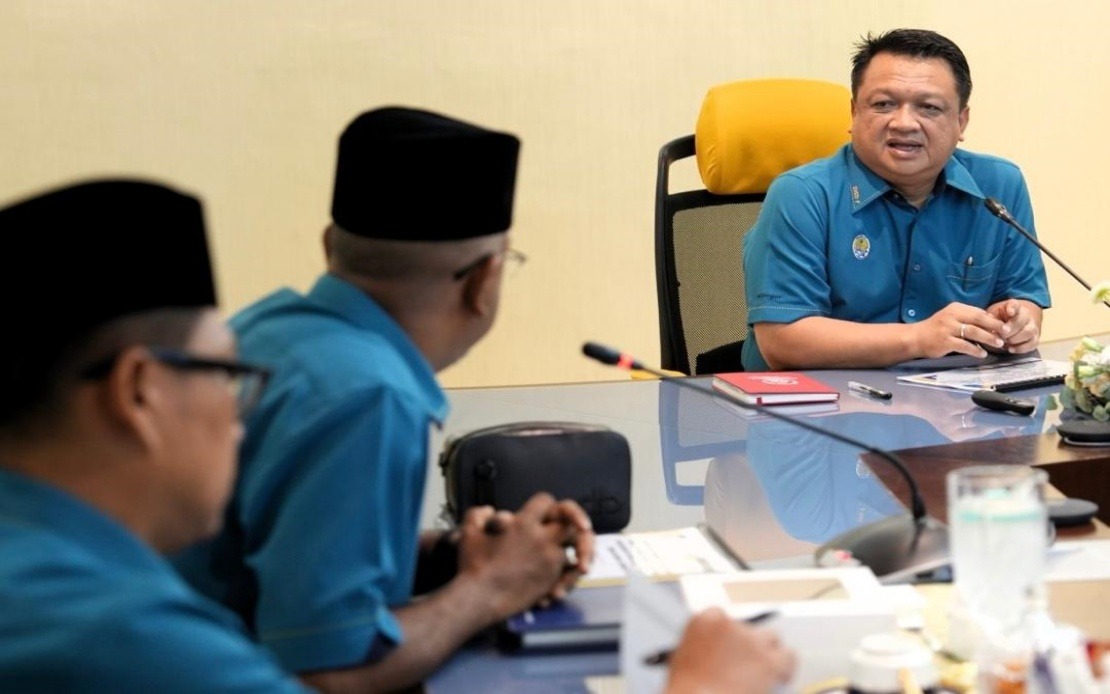
The Raja Muda of Perlis, Tuanku Syed Faizuddin Putra Jamalullail, has put forward an ambitious vision for his state to function as the nation's leading experimental zone for green development policies. Speaking during an audience with Kangar Municipal Council officials at the Arau Royal Gallery, His Royal Highness outlined a comprehensive roadmap that positions Perlis as a potential trailblazer in Southeast Asia's broader sustainability transformation. The proposal draws strategic advantage from the state's geographical and administrative compactness, characteristics that historically enable faster policy implementation and measurable outcomes compared to larger jurisdictions.
The core ambition centres on achieving zero-carbon status, a milestone that would signal Perlis's alignment with international climate commitments while demonstrating the practical feasibility of such transitions within a Malaysian context. By targeting full utilization of renewable energy sources—particularly solar and biomass technologies—alongside sophisticated waste management infrastructure, the state could establish a replicable model for other regions contending with similar development challenges and environmental pressures. This approach carries particular significance for Southeast Asian nations evaluating pathways toward climate resilience without sacrificing economic growth.
Kangar Municipal Council President Affendi Rajini Kanth presented the Green City Action Plan, a strategic policy document developed through collaborative partnerships involving the Ministry of Economy, the IMT-GT Joint Business Council, ICLEI (Local Governments for Sustainability), and the Asian Development Bank. The GCAP received municipal approval on February 10 and now serves as the operational blueprint for orchestrating Perlis's transition toward environmentally sustainable urban development. The international pedigree of this framework underscores how Perlis engages with global best practices rather than operating in isolation, positioning the state within transnational sustainability networks that facilitate knowledge exchange and technical capacity-building.
The action plan identifies five catalyst projects designed to accelerate transformation across multiple sectors. Solar photovoltaic installations represent the most immediately visible intervention, targeting government buildings, public facilities, and private structures to democratize renewable energy access across institutional and commercial landscapes. This distributed approach differs from concentrated solar farms, instead embedding clean energy generation throughout the urban fabric in ways that enhance public awareness and normalise renewable technology adoption among citizens and business operators.
A Low Carbon Transport Plan addresses mobility, historically a challenging sector for decarbonization efforts. Complementing this initiative, the creation of Micro-Mobility Zones and Non-Motorised Transport facilities recognises that transportation transformation requires more than electric vehicle incentives—it demands infrastructure redesign that prioritizes pedestrians and cyclists. These interventions directly impact daily quality of life while reducing emissions, making sustainability tangible rather than abstract for ordinary residents.
Solid waste management receives dedicated attention through an 80-tonne-per-day Material Recovery Facility designed to boost recycling rates and resource recovery efficiency. This facility addresses a persistent challenge across Malaysia where waste infrastructure often lags behind generation rates, creating environmental liabilities in landfills. By establishing advanced sorting and processing capacity, Perlis positions itself to achieve circular economy principles that retain material value rather than treating waste as end-of-life disposal.
Water security, increasingly critical across Southeast Asia as climate patterns shift unpredictably, features prominently through comprehensive rainwater harvesting systems. Rather than relying exclusively on conventional water supply networks, distributed rainwater capture creates resilience against supply disruptions while reducing pressure on aquifers and surface sources. This infrastructure investment acknowledges that sustainability encompasses resource management beyond energy and waste, addressing interconnected environmental systems holistically.
Disaster preparedness constitutes an essential but frequently overlooked dimension of sustainable development. The proposed Perlis State Disaster Management Plan and strengthened Integrated Command Centre recognise that climate-resilient communities must anticipate and respond to extreme weather events, floods, and other environmental hazards. This integration of disaster management within sustainability frameworks reflects evolving understanding that genuine resilience demands proactive preparation rather than reactive emergency response.
The GCAP explicitly aligns with Malaysia's national sustainable development goals and greenhouse gas emission reduction commitments, embedding Perlis's initiatives within broader governmental climate action. This vertical integration ensures policy coherence between state-level experimentation and federal-level climate strategy, preventing the fragmentation that sometimes occurs when local initiatives operate disconnected from national frameworks. For Malaysian readers, this alignment indicates that Perlis's transformation receives legitimacy and potential resource support from federal authorities, enhancing implementation feasibility.
Affendi's articulation of the plan emphasises balanced development across economic, social, and environmental dimensions—a crucial framing that sidesteps false choices between growth and conservation. Many Southeast Asian communities remain sceptical of sustainability rhetoric perceived as restricting economic opportunity, particularly in developing states. By demonstrating that green development can simultaneously create employment, enhance quality of life, and protect environmental assets, Perlis potentially shifts regional conversation away from sustainability as constraint toward sustainability as competitive advantage.
For neighbouring states and ASEAN partners, Perlis's experimental status carries instructive value. Malaysia's devolved federal structure means individual states maintain considerable autonomy in implementing environmental policies, creating natural laboratories for testing innovations. If Perlis successfully achieves zero-carbon status or substantially advances renewable energy penetration, other states gain concrete evidence that such transitions remain feasible within Malaysian governance contexts and economic conditions. This demonstration effect extends beyond Malaysia, offering Southeast Asian peers insight into how compact jurisdictions navigate green transformation.
The involvement of international development partners—particularly the Asian Development Bank—reflects how Perlis positions itself within global sustainability networks rather than pursuing insular development. Technical support, financing mechanisms, and knowledge-sharing relationships with ADB and ICLEI enhance implementation capacity while connecting Perlis to international best-practice repositories. For Malaysian stakeholders, this cosmopolitan approach signals that state-level ambition need not operate independent from global institutions and expertise.
The Raja Muda's endorsement provides crucial political legitimacy for sustainability initiatives that sometimes face resistance from constituencies prioritizing short-term economic returns. Royal patronage of environmental goals strengthens institutional commitment and signals that green development represents legitimate state priority rather than technocratic imposition disconnected from traditional leadership. This dynamic proves particularly significant in Malaysian political culture where royal institutions command considerable social authority.
Perlis's demographic and economic scale—relatively small and economically modest compared to developed states like Selangor—might conventionally suggest limited capacity for ambitious innovation. However, this constraint potentially becomes advantage, enabling comprehensive implementation of coordinated policies across reasonably compact populations and administrative structures. Success within Perlis demonstrates scalability toward larger, more complex jurisdictions, whereas failed experimentation in economically marginal contexts proves less costly than failure within economically vital states. This risk calculus makes Perlis strategically appropriate for ambitious testing.

