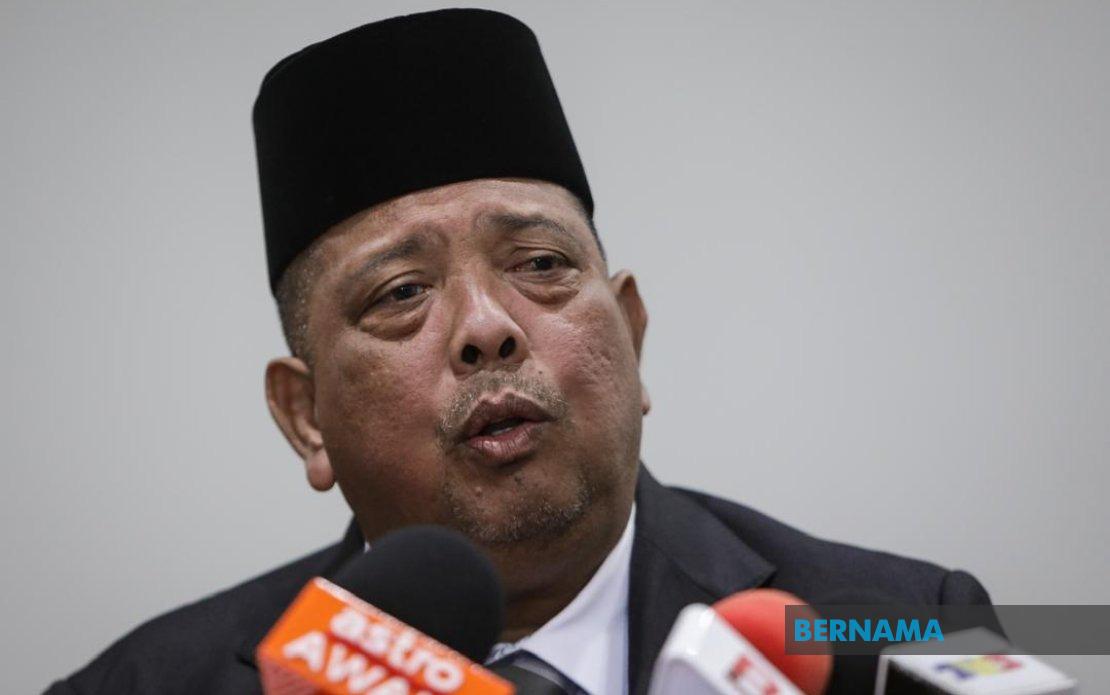
Perlis Menteri Besar Abu Bakar Hamzah has resigned from his position on Parti Pribumi Bersatu Malaysia's Supreme Leadership Council, a move he announced during a welcoming ceremony for Thai delegates in Kangar on July 9. The resignation letter was submitted to Bersatu's central leadership the previous week, though Abu Bakar clarified that he retains his roles as Perlis state chief and Kangar division chief within the party, maintaining his grassroots presence even as he steps back from the apex of party hierarchy.
Abu Bakar's decision reflects a deliberate prioritisation of his state-level responsibilities over national party structures. With roughly one year remaining in the current Perlis state legislative assembly term, the Menteri Besar faces considerable pressure to deliver on economic development goals and attract foreign investment. The timing is significant given that the state will likely approach fresh elections, making this period crucial for demonstrating administrative competence and securing tangible achievements that could influence electoral fortunes.
The nature of his departure hints at the inherent tensions between party politics and executive governance in Malaysia's federal system. Serving on a party's supreme council demands regular participation in strategic discussions, policy formulation, and internal party management—commitments that can prove incompatible with the daily operational demands of running a state. Abu Bakar's explicit acknowledgement of this conflict suggests a recognition that divided loyalties ultimately serve neither the party nor the state effectively.
The restoration of the Kuala Perlis-Satun ferry service, which formed the backdrop for his announcement, underscores the type of regional cooperation initiatives that now command his full attention. The cross-border link, suspended during the COVID-19 pandemic, reopening represents a tangible win for border communities and regional economic connectivity. Such practical projects—attracting investors, facilitating cross-border commerce, and meeting state-level performance benchmarks—now constitute Abu Bakar's stated focus as he approaches the conclusion of his tenure.
Significantly, the Raja of Perlis had already weighed in on the matter at the opening of the state legislative assembly on June 3, when Tuanku Syed Sirajuddin Jamalullail decreed that Abu Bakar should be afforded space to continue leading without interference. This royal intervention suggests that concerns about the Menteri Besar's ability to govern effectively amid competing demands had already surfaced within state circles. The ruler's public backing appears to have created the political space for Abu Bakar to make his own adjustment to party commitments.
The move also carries broader implications for party cohesion within Perlis. Notably, Sena assemblyman and state executive councillor Datin Marzita Mansor has similarly stepped back from her Bersatu Supreme Leadership Council position, according to Abu Bakar's comments. While Marzita could not be reached for immediate confirmation, her parallel decision suggests a coordinated approach among Perlis's Bersatu leadership to recalibrate their priorities, or possibly reflects pressure from the centre to consolidate leadership positions within the state structure.
For Bersatu at the national level, such departures by state-level leaders warrant attention. While Abu Bakar and Marzita remain party members and retain their state positions, their withdrawal from the highest party council suggests either a strategic reordering of responsibilities or potential friction between national party demands and state governance realities. Whether similar moves occur elsewhere in Bersatu's regional structure could indicate emerging patterns in how the party balances centralised decision-making with ground-level administration.
The resignation also reflects Malaysia's evolving approach to separation of powers and the distinction between party office and government office. In practice, however, these roles remain intertwined, with politicians often navigating complex expectations to maintain party relevance while delivering on state promises. Abu Bakar's explicit choice to deprioritise party hierarchy in favour of state administration represents a pragmatic recalibration rather than an ideological statement, yet it underscores the genuine difficulty of managing dual responsibilities when resources—particularly time and attention—are finite.
Looking ahead, Abu Bakar's decision to concentrate on his final year as Menteri Besar will likely shape how observers evaluate his tenure. His emphasis on investor attraction and key performance indicators signals an administration focused on measurable outcomes rather than political manoeuvre. Whether this concentrated effort yields visible improvements in Perlis's economic trajectory during the next twelve months could significantly influence the state's political dynamics as the next electoral cycle approaches.
The move also positions the Menteri Besar as someone willing to make tough choices about institutional priorities—a quality that might resonate with voters concerned about state development. As Perlis navigates ongoing challenges and opportunities in areas ranging from cross-border trade to industrial development, Abu Bakar's undivided attention may prove more valuable than ceremonial participation in national party structures.

