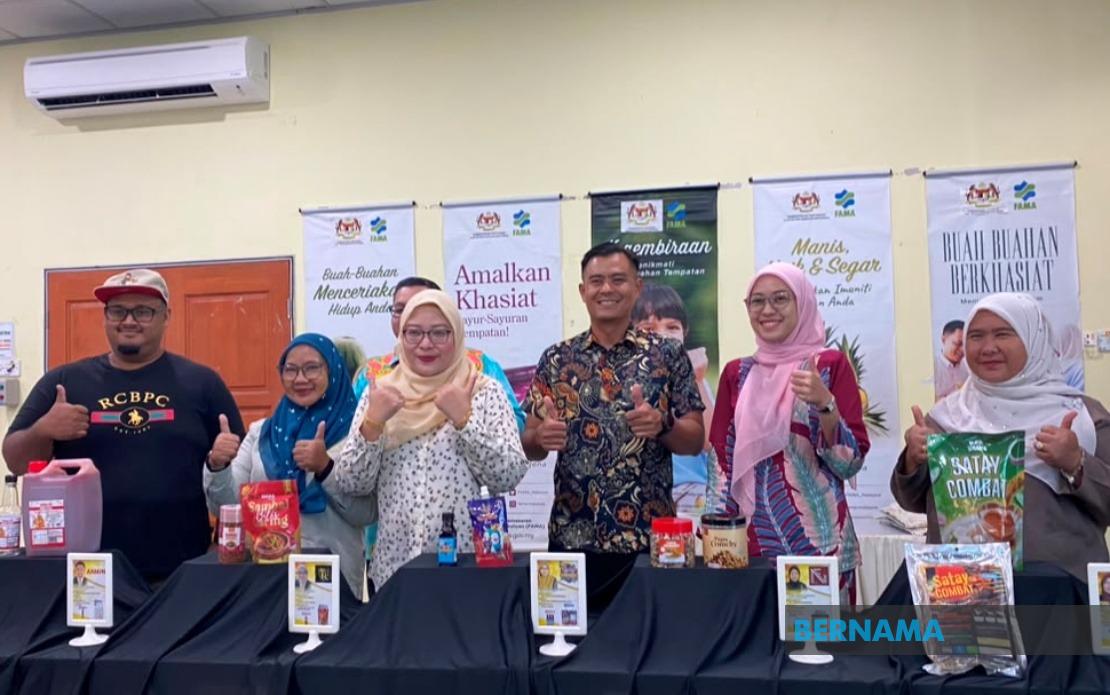
The Perlis branch of the Federal Agricultural Marketing Authority (FAMA) has moved to strengthen the state's agro-food sector by channelling RM510,500 in financial support to nine entrepreneurs operating within the Agro-Food and Agro-Based Industry (IMAT). The grants, announced at the FAMA Perlis office in Kangar, represent part of a broader strategy to enhance product competitiveness and expand market access for local enterprises in an increasingly challenging commercial environment.
According to FAMA Perlis director Mohd Anzara Azizan, the allocation was distributed across four distinct grant categories designed to address different stages of business development and marketing challenges. The Agro-Tourism Grant received the largest share at RM392,000, reflecting a strategic focus on experiential agriculture as a growth avenue for the region. Additional support included RM83,500 for the Product Image and Packaging Improvement Grant, RM25,000 for the KSHOPPE Outlet Improvement Grant, and RM10,000 for the Marketing Equipment Support Grant. This diversified approach allows FAMA to target specific bottlenecks that entrepreneurs face when seeking to scale operations.
The grants serve as a practical intervention in a critical area for Malaysia's rural economy. Perlis, as a smaller state with significant agricultural heritage, relies heavily on IMAT entrepreneurs to diversify income streams beyond traditional commodity production. By providing targeted financial assistance, FAMA addresses a systemic challenge facing small and medium enterprises in the agricultural sector: the difficulty of investing in modernisation, branding, and market infrastructure without straining cash flows. The Product Image and Packaging Improvement Grant, presented during the announcement, exemplifies how foundational support can unlock broader commercial potential by ensuring that products meet contemporary consumer expectations regarding presentation and brand positioning.
Mohd Anzara outlined the broader rationale for FAMA's interventions, emphasising that the grant distribution represents a deliberate effort to sustain entrepreneurial momentum while improving marketing effectiveness. In an era where local products must compete with imported alternatives and e-commerce platforms, the ability to communicate value through professional packaging and consistent branding has become essential. The grants are positioned as tools to help entrepreneurs remain competitive by enabling investments they might otherwise postpone or abandon due to capital constraints.
The Image Improvement Grant specifically operates under the IMAT Market Development and Product Matching Project, a multi-tiered initiative designed to support enterprises at different stages of maturity. By targeting Stage One through Stage Three SMEs, the programme acknowledges that growth barriers differ across the entrepreneurial lifecycle. Early-stage businesses require foundation-building support, while more established operations may need assistance optimising distribution networks or entering new market segments. This differentiated approach increases the likelihood that allocated resources produce meaningful outcomes.
Performance data released by FAMA Perlis suggests that the authority's support mechanisms are generating measurable results. The 319 IMAT entrepreneurs registered with FAMA in Perlis achieved combined sales of RM4.8 million as of the announcement date, representing a 30 percent year-on-year increase. This growth trajectory indicates that grant recipients and beneficiaries of FAMA guidance are successfully translating support into improved market performance. The scale of improvement suggests that the barriers these entrepreneurs face are not insurmountable but rather respond favourably to targeted intervention.
Mohd Anzara attributed the sales growth partly to FAMA's ongoing monitoring of market conditions and pricing strategies. The authority's engagement extends beyond one-time grants to include continuous advisory support, helping entrepreneurs maintain price competitiveness while safeguarding profit margins. This dual focus prevents a common pitfall in subsidy-based programmes: that recipients remain dependent on external support rather than developing sustainable competitive advantages. By combining financial assistance with market intelligence and pricing guidance, FAMA works to create self-sufficient businesses capable of thriving independently.
The broader context for these grants reflects Malaysia's wider recognition that agricultural diversification and value-added agro-processing are critical to rural development and food security objectives. As the nation seeks to reduce reliance on commodity exports and expand domestic agro-food manufacturing, state-level interventions like those administered by FAMA Perlis provide essential scaffolding. For a state like Perlis with limited industrial bases and population, channelling investment toward entrepreneurs capable of creating employment and generating export revenue through processed or specialty agro-products represents strategic economic development.
FAMA's grant portfolio, now comprising nearly nine distinct support mechanisms, offers considerable flexibility for entrepreneurs with different needs and development stages. This diversity of offerings suggests an evolving understanding within the authority of the heterogeneous challenges facing the IMAT sector. Rather than imposing standardised solutions, FAMA has constructed a menu of options allowing business owners to access support aligned with their specific constraints. The willingness to deploy grants across agro-tourism, retail outlet improvements, marketing equipment, and product design indicates recognition that competitiveness requires investment across multiple fronts simultaneously.
Looking forward, Mohd Anzara's observation that many business owners remain unaware of or underutilise available FAMA support programmes suggests untapped potential within Perlis's entrepreneurial community. Expanding awareness and uptake of these nine grant categories could amplify the economic multiplier effects already visible in current performance data. For Malaysian policymakers and regional economic development officials, the Perlis initiative demonstrates how targeted government support, when designed with sufficient flexibility and maintained through consistent oversight, can measurably strengthen sectoral competitiveness.
The RM510,500 distribution is ultimately part of a larger ecosystem FAMA has constructed to nurture agro-food entrepreneurship. By combining financial grants with market monitoring, pricing guidance, and outlet-level infrastructure support, the authority addresses not individual failures but systemic obstacles limiting growth. For Perlis, where agricultural enterprises represent a disproportionate share of economic activity and employment, such support remains vital for sustaining livelihoods and attracting new investment into value-added agricultural sectors.

