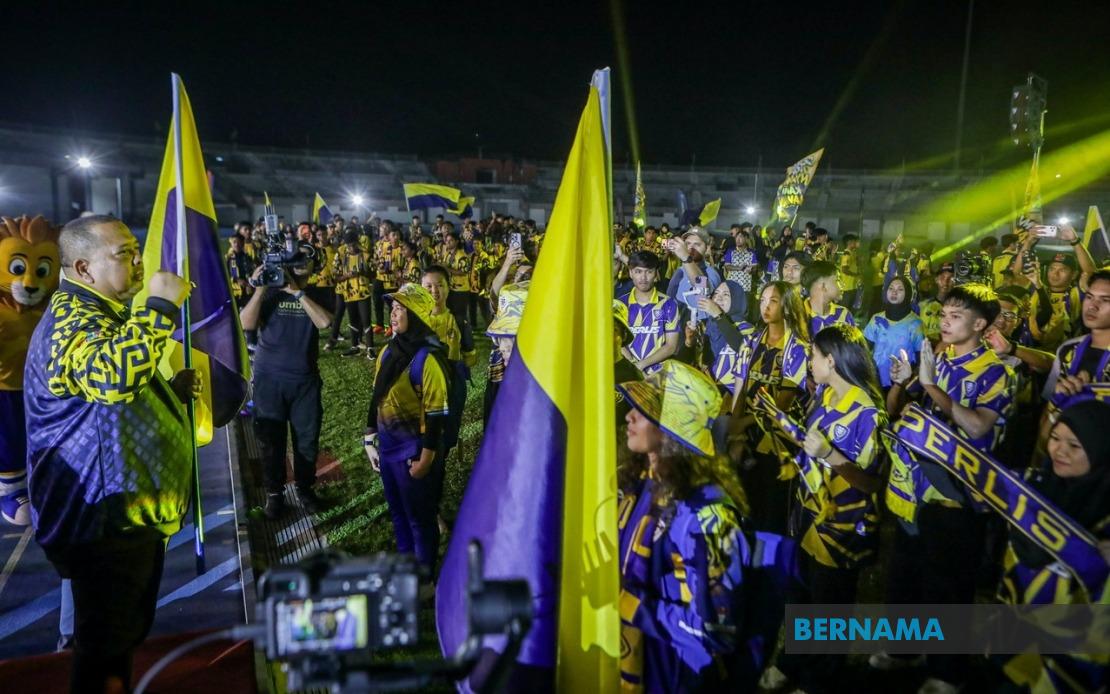
Perlis has recorded its finest performance in the history of the Malaysia Games, securing 17 gold medals at SUKMA 2026 hosted by Selangor. The northern state's contingent returned with a combined haul of 42 medals—comprising 17 gold, seven silver, and 18 bronze—signalling a significant leap in athletic prowess and underlining the state's growing capacity in organised sports development.
Menteri Besar Abu Bakar Hamzah attributed the landmark achievement to a multifaceted approach centred on systematic talent identification and sustained investment in athlete support systems. Speaking at a press conference in Kangar following an Exco meeting at Kompleks Seri Putra, Abu Bakar emphasised that the result validates years of collaborative effort involving state government bodies, coaching staff, sports associations, and the State Sports Council. The breakthrough reflects a strategic pivot toward prioritising athletic excellence rather than viewing sports as an ancillary concern in state development planning.
Among the standout performances at SUKMA Selangor 2026 were Perlis athletes who rewrote the games' record in the shot put competition, demonstrating technical refinement and training rigour in a traditionally underexplored discipline for the state. Equally notable was the weightlifting contingent's sweep of the overall championship at the games, establishing Perlis as a force in strength disciplines and offsetting the perception that northern states lag behind more resourced counterparts in certain sporting domains.
These achievements hold particular resonance for a state that has historically occupied the lower rungs of the SUKMA medal tables. Perlis, with a population of roughly 280,000, faces inherent constraints in athlete recruitment and resource allocation compared to larger states. The 17-gold performance therefore underscores the efficacy of targeted investment rather than population scale as the determining factor in games success. This model carries implications for other smaller states navigating the competitive landscape of Malaysian sports.
The Menteri Besar outlined the government's forward strategy, prioritising sustained development across five interconnected pillars: talent identification and nurturing, high-performance training programmes, coaching infrastructure, sports science integration, and comprehensive athlete welfare provision. This holistic framework suggests a departure from ad hoc approaches toward systematic planning aligned with international best practices. The inclusion of sports science signals recognition that marginal gains in training methodology, nutrition, and recovery protocols can compound into podium finishes.
Abu Bakar noted that athlete incentive schemes are under active discussion, with formal awards ceremonies anticipated following the conclusion of Para SUKMA Selangor 2026. The decision to tie recognition ceremonies to Para SUKMA outcomes reflects broader inclusivity trends in Malaysian sports governance, where disability sports are gaining parity in planning and budgetary allocation. Financial incentives serve a dual function: rewarding current athletes while signalling to younger cohorts that sporting excellence translates into tangible economic benefit, thereby stimulating grassroots participation.
The Perlis result also reflects a maturing ecosystem where coaching recruitment extends beyond state borders. Regional coaches with expertise in specific disciplines are increasingly deployed to smaller states, democratising access to world-class mentorship previously concentrated in larger sporting hubs like Selangor, Kuala Lumpur, and Penang. This redistribution of coaching talent through federated support systems has enabled peripheral states to compete on more equal footing.
SUKMA's biennial cycle creates natural inflection points for strategic reassessment. Perlis' performance at the 2026 iteration positions the state as a potential contender for future games, particularly if current momentum sustains and younger talent pools are systematically developed. The achievement also carries political implications, validating state government sports investments and providing positive narrative fodder during election cycles, though this must be balanced against genuine commitment to long-term athlete development beyond electoral considerations.
Regionally, Perlis' breakthrough adds texture to the broader SUKMA narrative. While larger states maintain dominance in aggregate medal counts, the northern state's performance demonstrates that competitive diversity remains possible within Malaysia's federal sports framework. This contrasts with entrenched hierarchies in some other regional sporting competitions, where a handful of powerhouses typically monopolise medals. The Perlis case suggests that deliberate policy intervention can rebalance competitive outcomes.
Looking ahead, the sustainability of this performance hinges on institutional continuity and budget security. Should successive state administrations maintain commitment to sports development infrastructure, Perlis could establish itself as a consistent mid-tier performer. Conversely, if resources are redirected toward competing political priorities, the 2026 achievements risk becoming a statistical anomaly rather than the foundation for sustained excellence. The coming years will test whether state-level sports ambitions translate into durable systemic change.

