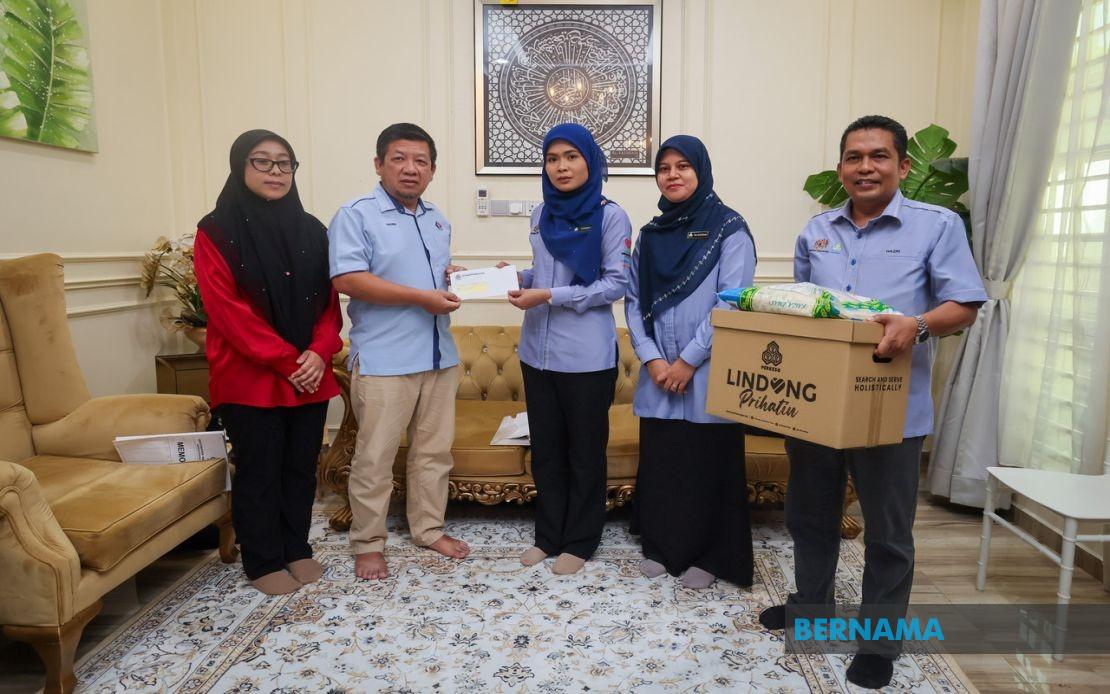
The Social Security Organisation (PERKESO) has delivered nearly RM3.5 million in social security assistance to Kelantan's workforce and their dependants during the opening half of 2024, underscoring the critical role played by Malaysia's statutory body in protecting workers against employment-related hardships. Speaking in Pasir Mas, the organisation's state deputy director Nor Aziemah Ismail revealed the comprehensive scope of support extended across multiple benefit schemes, demonstrating PERKESO's multi-layered approach to worker protection in one of Malaysia's east coast states.
The largest portion of these distributions—RM2.388 million—came through the Temporary Disablement Benefit scheme established under the Employees' Social Security Act 1969. This particular benefit category addresses a widespread vulnerability among Malaysia's working population by providing income replacement when workplace accidents render workers temporarily unable to perform their job duties. The significance of this figure suggests that occupational injuries remain a persistent challenge in Kelantan's diverse employment landscape, spanning manufacturing, agriculture, construction, and services sectors that characterise the state's economic profile.
Beyond temporary disablement support, PERKESO channeled RM73,000 in Dependants' Benefit payments to surviving family members of workers whose deaths resulted directly from employment-related accidents. While modest in quantum compared to the disablement scheme, this benefit category addresses the often-catastrophic financial consequences that employment fatalities impose on households suddenly stripped of primary breadwinners. For Malaysian families typically dependent on single incomes, such payments serve as crucial bridging support during the immediate aftermath of workplace tragedies.
The Funeral Benefit scheme emerged as another significant component of PERKESO's Kelantan disbursements, with nearly RM1 million distributed to families of deceased workers during the same period. Each eligible claim receives a standardised payment of RM3,000, a figure calibrated to cover essential funeral-related expenses without requiring prolonged bureaucratic processing. PERKESO's commitment to approving such claims within 24 hours—provided documentation is complete—reflects recognition that bereaved families face time-sensitive financial pressures and cannot afford delays in accessing critical support.
An increasingly important dimension of PERKESO's Kelantan operations involves the 24-Hour Employment Injury Scheme, a relatively modern enhancement that extends protection beyond traditional working hours. This scheme acknowledges the reality that work-related injuries sometimes occur outside the immediate workplace environment, during periods when employees are engaged in activities connected to their employment or broader livelihood concerns. The scheme's conception reflects evolving understanding of occupational risk in contemporary Malaysia, where employment-related injuries cannot be neatly compartmentalised into factory hours or office time.
During the first half of 2024, PERKESO Kelantan approved nine claims under this 24-hour scheme, disbursing RM1,300 in sick leave benefit payments. The approved cases illuminate the practical reality of modern work-related hazards: accidents occurred during personal motorcycle convoys and while transporting children to educational tuition classes—scenarios that, while ostensibly private activities, remain employment-adjacent in nature. These approvals signal PERKESO's pragmatic interpretation of workplace injury eligibility, acknowledging that workers' vulnerabilities extend into their broader daily routines.
The data reveals significant implications for Kelantan's workforce and broader Southeast Asian worker protection standards. Malaysia's PERKESO scheme, pioneered during the colonial era and substantially reformed post-independence, represents one of the region's more comprehensive social security frameworks. The Kelantan disbursements demonstrate that this system functions operationally across all Malaysian states, delivering real financial protection to vulnerable populations who might otherwise face catastrophic household financial collapse following employment-related crises.
For Malaysian workers, particularly those in lower-income brackets where employment accidents pose disproportionate household risks, PERKESO's extensive benefit portfolio provides essential safety-net coverage. The organisation's documented efficiency in processing funeral benefit claims—targeting 24-hour approval—acknowledges that financial crises cannot be managed through standard bureaucratic timelines. This operational commitment translates immediate moral concern into tangible administrative practice.
The Kelantan experience also reflects broader national trends in workplace safety and employment risk. That temporary disablement benefits constitute the largest payout category suggests occupational injuries remain sufficiently common to generate substantial aggregate claims. This pattern holds implications for Malaysian employers and policymakers committed to workplace safety enhancement, suggesting that despite regulatory improvements and increased occupational health awareness, workplace injuries continue affecting thousands of Malaysian workers annually.
For regional observers, Malaysia's PERKESO model offers instructive lessons in comprehensive statutory social security provision. The multi-scheme structure—addressing temporary income loss, permanent dependant support, funeral assistance, and extended-hours injury coverage—demonstrates sophisticated risk-stratification. Workers across the region operate with varying levels of formal social security protection; Malaysia's example illustrates how statutory schemes can address multiple vulnerability dimensions through targeted, purpose-designed benefit categories.
The organisation's emphasis on rapid claim processing under funeral benefits particularly merits attention. Many developing economies struggle with administrative bottlenecks that delay essential social assistance precisely when urgent household needs arise. PERKESO's documented 24-hour target represents a concrete operational standard that addresses administrative best-practice principles.
Looking forward, Kelantan's employment landscape will likely continue generating diverse PERKESO claims as the state diversifies its economic base while maintaining traditional sectors vulnerable to occupational hazards. The organisation's demonstrated capacity to process nearly RM3.5 million in benefits during a six-month period suggests that worker protection infrastructure remains adequately resourced to meet current demand levels, though future economic growth and sectoral changes may alter claim patterns and required institutional capacity.

