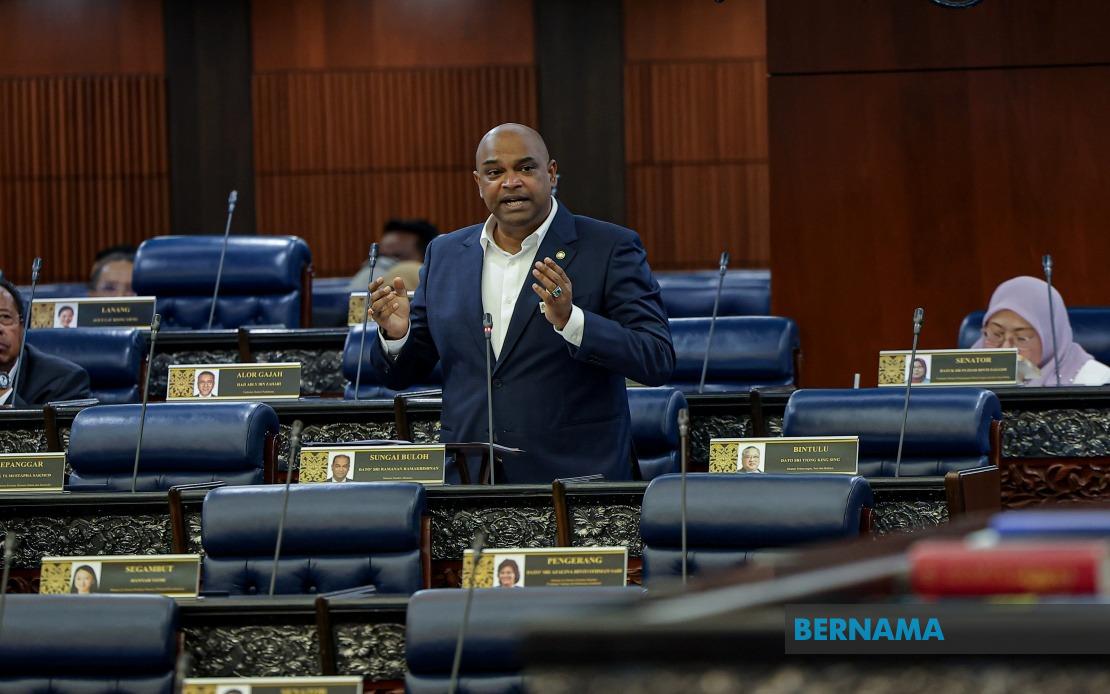
The Social Security Organisation (PERKESO) has demonstrated robust operational performance by maintaining a claims processing compliance rate exceeding 96 per cent throughout the previous financial year, according to confirmation provided to the Dewan Rakyat by Human Resources Minister Datuk Seri R. Ramanan. This achievement signals effective institutional capacity in delivering social security services to Malaysian contributors, a critical indicator for workers relying on the organisation's benefit schemes during periods of financial hardship or incapacity.
The performance gains reflect a deliberate overhaul of service standards initiated last year, when PERKESO introduced a refreshed Customer Charter encompassing the LINDUNG Pekerja, LINDUNG Kendiri and LINDUNG Kasih benefit programmes. These revised standards establish clear processing timelines once applicants submit complete documentation, creating measurable accountability across the organisation's service delivery chain. The specificity of these commitments—ranging from two to three business days depending on claim type—represents a departure from previous operational approaches and aligns PERKESO with international best practices in social security administration.
Processing timelines vary according to benefit category and scheme complexity. Claims for Funeral Benefit and Temporary Disablement Benefit now face a two-day processing window, while more intricate assessments such as Permanent Disablement Benefit, Invalidity Pension, Survivor's Pension and Dependant's Benefit claims are processed within three business days of receiving complete submissions. The recently announced LINDUNG Kerjaya scheme has implemented even tighter standards under its 2025 Customer Charter, with all benefits subject to a two-day processing requirement from the submission date. Notably, PERKESO's performance under this newer scheme reached an exceptional 99.68 per cent compliance rate, suggesting that recent operational refinements have proven effective when implemented systematically.
The organisation's pursuit of compliance excellence has been substantially enabled by comprehensive digitalisation initiatives designed to streamline administrative workflows and reduce processing delays inherent in paper-based systems. The LINDUNG Faedah PERKESO portal represents a central component of this digital transformation, providing contributors with online claim submission capabilities and status tracking. Beyond customer-facing platforms, PERKESO has invested in backend infrastructure improvements through the 1Best system, a comprehensive benefits processing application fully deployed this year to standardise claim assessment protocols and reduce human processing variability. These technological investments directly address a persistent challenge in social security administration: the tension between maintaining rigorous verification standards and delivering timely benefit payments to vulnerable populations.
Complementing technological advances, PERKESO has introduced the PRIHATIN application to enhance accessibility of service information for contributors navigating the increasingly complex landscape of available benefits. The application serves as an information gateway rather than a transactional platform, addressing the widespread challenge of information asymmetry wherein eligible workers remain unaware of available support mechanisms. This recognition that digital transformation extends beyond processing efficiency to encompassing user awareness demonstrates institutional maturity in approaching social protection as a system requiring both administrative excellence and public engagement.
The organisation has simultaneously established the Prihatin Squad (SPP), a dedicated advisory service extending beyond digital channels to provide direct human assistance for contributors, beneficiaries and insured persons. This hybrid approach—combining technological efficiency with personalised guidance—acknowledges that vulnerable populations often require human support navigating bureaucratic procedures. The SPP represents recognition that comprehensive social protection requires both speed and accessibility, particularly for informal sector workers and individuals with limited digital literacy who represent significant portions of PERKESO's beneficiary base across Malaysia.
Accident-related claims have received specific operational attention through the INSPIRE System, which establishes direct linkages between hospital emergency departments and PERKESO's claims assessment units. This integration addresses a particular vulnerability in the previous system whereby coordination gaps between medical facilities and the social security organisation created processing delays precisely when injured workers faced acute financial vulnerability. The system enables real-time information transfer regarding work-related injuries and clinical assessments, substantially reducing the documentary back-and-forth that previously characterised emergency claim processing. For genuine emergency situations, PERKESO has further simplified procedures to ensure benefit disbursement within 24 hours, recognising that injured workers cannot await standard processing timelines.
Fraud prevention mechanisms have evolved to incorporate artificial intelligence capabilities while maintaining human verification safeguards essential to system integrity. PERKESO employs AI-powered preliminary screening to identify potentially fraudulent submissions based on pattern recognition and historical claim data, substantially reducing the volume of claims requiring intensive manual investigation. However, this technological deployment does not replace human verification; rather, AI operates as a first-line screening tool with subsequent manual verification serving as a mandatory quality assurance checkpoint before claim approval. This layered approach reflects mature risk management principles, acknowledging that algorithmic solutions, while powerful, benefit from human contextual judgment particularly in complex or unusual claim circumstances.
The compliance achievements carry significant implications for Malaysia's broader social protection framework, particularly as the nation navigates economic volatility and evolving employment patterns. PERKESO serves as the foundational institution for worker security, and sustained high performance in claims processing directly translates to household financial stability for millions of Malaysian workers and their dependents. The organisation's ability to maintain processing compliance above 96 per cent while simultaneously upgrading digital infrastructure demonstrates that modern social security administration need not compromise between efficiency and accuracy, a lesson relevant as Southeast Asian nations contemplate social protection expansions.
The minister's responses to parliamentary inquiries also underscore PERKESO's responsiveness to institutional accountability mechanisms. The detailed performance metrics, specific processing timelines, and transparent discussion of enhancement initiatives reflect an organisation aware of public scrutiny and oriented toward demonstrating value. For Malaysian workers and dependents relying on PERKESO benefits—whether navigating temporary work disruptions, permanent disability, or survivor pension claims—this performance trajectory suggests a social security institution increasingly capable of delivering both the financial protection and administrative reliability essential to effective social welfare delivery in a developing economy context.

