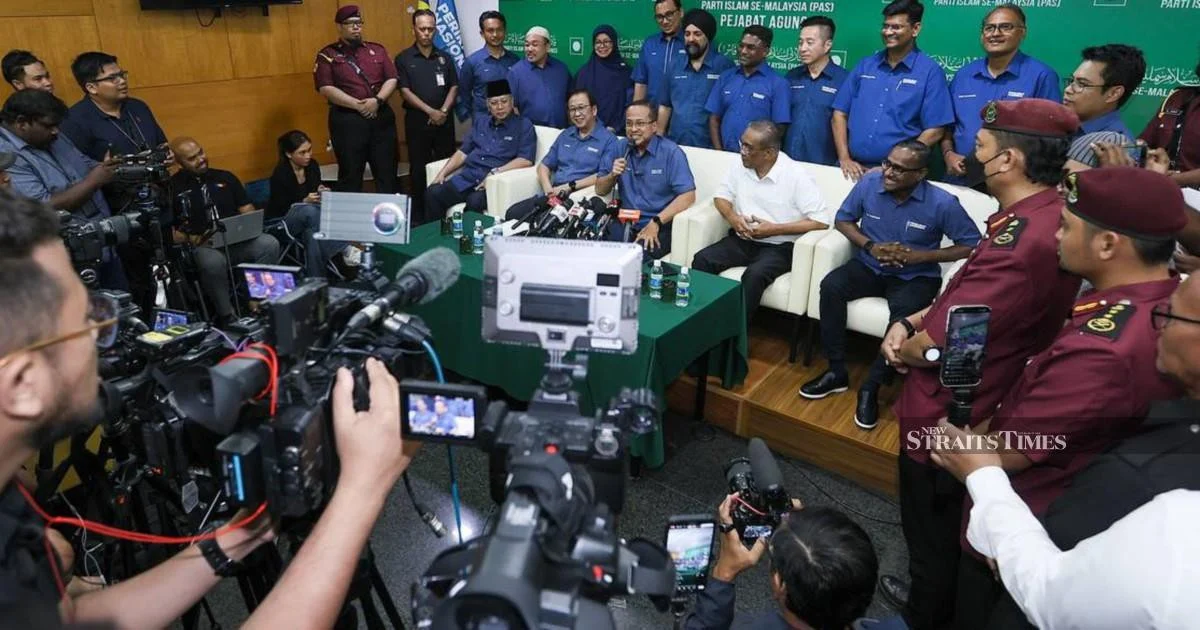
Perikatan Nasional will conclude deliberations on its parliamentary seat distribution for the forthcoming Johor state election during an unscheduled assembly convened in the nation's capital. The coalition's leadership announced the special session to hammer out the contentious allocation process, a development that underscores the intricate negotiations required to maintain unity among its constituent parties before facing voters.
The decision to hold the meeting reflects the challenges inherent in managing a multi-party alliance where each component party seeks to maximise its electoral prospects whilst maintaining coalition cohesion. Johor, Malaysia's second-largest state by population and a significant economic powerhouse, represents strategically crucial electoral territory for PN, making the seat distribution exercise particularly delicate. The final allocation will determine which parties contest which constituencies, a process that inevitably generates internal tension as parties compete for competitive seats with higher winning chances.
PN's coalition architecture includes PAS, Bersatu, and several other political entities, each bringing distinct voter bases and regional strengths. In Johor specifically, the coalition must balance the aspirations of multiple stakeholders whilst presenting a unified electoral front to challenge the state's incumbent administration. The seat-sharing arrangement carries significant implications for how effectively PN can mobilise its support base and translate voter sympathy into legislative representation.
For Malaysian observers, PN's management of internal coalition dynamics offers broader insights into contemporary political realignment. Unlike the more established Barisan Nasional framework that developed over decades, PN represents a relatively newer configuration attempting to forge consensus among parties with sometimes divergent ideological orientations and regional power bases. The Johor exercise exemplifies how modern Malaysian coalitions must negotiate both substantive policy differences and tactical electoral considerations.
Johor's political significance extends beyond state-level contests. As a Bumiputera-majority state with substantial urban and industrial areas, Johor serves as a barometer for Malay-Muslim voting patterns and middle-class political preferences. A strong PN performance there could reverberate across other states heading into future national contests, making the coalition's preparation particularly rigorous. Conversely, any public discord during the seat allocation process could undermine PN's presentation as a cohesive alternative government.
The timing of the special meeting suggests that preliminary discussions among party leaders have reached an advanced stage, with outstanding disagreements requiring final arbitration at the highest levels. Such gatherings typically occur when informal consultations have resolved most contentious issues, with the formal assembly serving to ratify agreements and provide legitimacy to compromises that may have disappointed particular stakeholders. This procedural approach allows individual parties to claim they fought for optimal outcomes while ultimately accepting coalition-determined allocations.
Seat allocation processes generate particular sensitivities because they fundamentally determine individual politicians' electoral prospects. Members who receive competitive seats gain platforms for re-election and potential advancement, whilst those assigned marginal constituencies face steeper climbing odds. Party leaders must therefore balance rewarding party veterans and prominent figures with investing in new candidates and geographical areas where coalition expansion appears possible. These calculations become exponentially more complex in multi-party coalitions where decisions reflect bargaining between distinct organisational hierarchies.
For PN's leadership, the Johor allocation represents more than tactical positioning. It signals whether the coalition can function effectively as a coordinated political force capable of subordinating individual party interests to collective strategic objectives. Successful resolution builds confidence for future cooperation, whilst public discord risks undermining the coalition's credibility during campaigns when unified messaging becomes essential. PN's ability to manage this process therefore carries implications far beyond immediate seat distribution.
Regionally, PN's Johor performance affects Southeast Asian political dynamics more broadly. Malaysia's electoral outcomes influence perceptions across the region regarding Islamic party trajectories, coalition viability, and the broader question of how plural democracies manage multi-party competition. International observers often examine Malaysian coalition negotiations as case studies in how diverse parties navigate shared governance challenges, making PN's internal processes worthy of analytical attention beyond domestic audience.
The special meeting's outcome will likely remain largely internal to PN, with public announcements limited to final seat distributions without detailed negotiation records. This opacity partly reflects Malaysian political culture, where coalition negotiations often remain deliberately obscured from public scrutiny. However, subsequent candidate announcements and campaign dynamics will reveal whether the allocation generated significant resentment among marginalised parties or individuals, providing external indicators of coalition health.
As PN moves toward the Johor election, the coalition faces the fundamental challenge confronting all political alliances: balancing internal satisfaction with external electoral effectiveness. Overly generous allocations to particular parties might satisfy internal stakeholders but dilute the coalition's overall competitiveness by fielding less-proven candidates in winnable seats. Conversely, ruthlessly optimal candidate selections might generate internal grievances that fester throughout the campaign. The special meeting represents PN's attempt to navigate these impossible tensions.