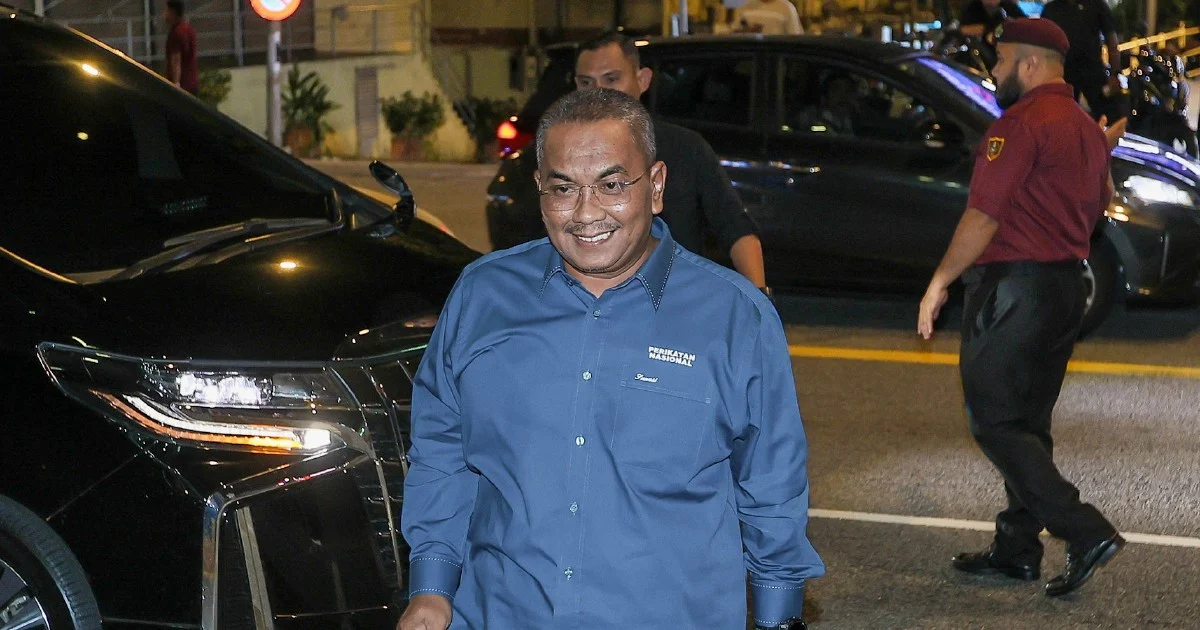
Perikatan Nasional will mount its campaign in the upcoming Johor state election under its distinctive party logo rather than borrowing the Barisan Nasional emblem, according to the coalition's election chief Datuk Seri Muhammad Sanusi Md Nor. The statement amounts to a clear rebuttal of circulating speculation about potential tactical collaborations or symbolic realignments ahead of the contest. The PN election director's remarks signal the coalition's intention to project a unified identity independent of its larger rival, setting the tone for how the party plans to position itself to voters in Malaysia's second-largest state.
The clarification arrives amid ongoing political manoeuvring in Johor, where the balance of power between competing coalitions has remained volatile since the 2018 general election upended Malaysia's political landscape. Rumours suggesting cross-coalition arrangements—whether formal alliances or tactical logo-sharing—have periodically surfaced across Malaysian political circles, reflecting the fluid nature of state and federal politics. By making his statement explicit, Sanusi has sought to anchor expectations about PN's electoral strategy and preempt further conjecture that might complicate the coalition's messaging or confuse voters about its identity and direction.
Johor holds particular strategic weight within Malaysia's political system. As the country's most populous state and a longstanding BN stronghold until recently, the electoral outcome there can materially influence the broader trajectory of federal politics. For Perikatan Nasional, establishing a clear, independent brand presence in the state election becomes essential to consolidating support and differentiating itself from the established machinery of Barisan Nasional, which retains significant organisational reach and traditional voter loyalty across many constituencies. The insistence on using PN's own symbol underscores the coalition's confidence in its own platform and organisational capacity.
The distinction between logos may appear symbolic, yet it carries substantive political weight in Malaysia's electoral environment. Visual identity and party branding significantly influence voter perception, particularly in states where multiple coalitions compete for the same demographic segments. By campaigning under its own banner, PN signals autonomy and prevents potential voter confusion about whether the election represents a genuine three-cornered contest or a realignment of existing political forces. This becomes especially relevant given the historical dominance of BN in Johor, where residual affinity for the traditional coalition still influences portions of the electorate.
Sanusi's emphatic dismissal of collaboration rumours also reflects broader strategic calculations within PN's leadership. The coalition, which has governed several states and holds significant federal parliamentary seats, has sought to establish itself as a viable alternative to both BN and the opposition Pakatan Harapan. Deploying a distinct electoral identity in Johor aligns with this positioning, allowing PN to compete on its own terms without appearing to piggyback on BN's institutional advantages or legacy. The stance simultaneously protects PN from criticism that it lacks independent political substance or relies excessively on established parties' infrastructures.
For Malaysian and Southeast Asian political observers, the Johor election represents a crucial test case of coalition dynamics in the region's largest Muslim-majority democracy. Malaysia's multiparty, multilevel federal system creates complex incentive structures where local state contests intersect with national political trajectories. Johor's electoral outcome will likely shape not only state governance but also reverberate through federal coalition calculations ahead of the next general election. PN's choice to contest independently rather than merge its identity with BN suggests confidence that it can mobilise sufficient voter support through its own organisational networks and policy positions.
The emphasis on electoral independence also carries implications for coalition arithmetic more broadly. If PN and BN do not formally coordinate campaign symbols or messaging, voters may perceive them as distinct competitive entities rather than partners in an informal understanding. This could fragment the non-Harapan vote if both coalitions field overlapping candidates, or conversely, may clarify voter choice by presenting distinct platforms. The PN election director's statement thus represents more than administrative clarification—it signals the coalition's strategic vision for how it wishes to contest and potentially govern in Johor.
Johor's political dynamics have shifted markedly over recent electoral cycles, with different coalitions achieving ascendancy at various points. The state's ethnic and religious diversity, combined with significant urban and rural constituencies, creates a complex electorate requiring tailored appeals. PN's decision to retain its own logo reflects an assessment that its existing brand and coalition identity can resonate effectively with this diverse voter base without requiring external symbolic association. The clarity provided by Sanusi's statement also manages internal expectations within PN's own ranks, ensuring party members and candidates understand the official campaign framework.
Looking ahead, the Johor election will test whether Perikatan Nasional's standalone campaign proves sufficient to translate policy positions and organisational strength into electoral gains. The outcome will likely influence how other coalitions approach future state contests and whether alternative arrangements might be negotiated in different contexts. For now, PN has firmly committed to defending its distinct political identity, rejecting the shortcut of association with BN's established machinery in favour of demonstrating independent viability in one of Malaysia's most competitive electoral battlegrounds.