Financial hardship remains a significant barrier to educational advancement across Malaysia, particularly for families with limited means. Perak's Menteri Besar Scholarship addresses this challenge directly, offering tangible relief to qualifying students while simultaneously fostering an environment conducive to academic achievement. The programme's impact extends beyond individual beneficiaries, reflecting broader efforts to democratise access to quality education throughout the state and reduce disparities between urban and rural learning outcomes.
Yoong Lam, a 20-year-old graduate of Sekolah Menengah Kebangsaan Sultan Yussuff who achieved a perfect 4.00 cumulative grade point average in the Sijil Tinggi Persekolahan Malaysia examination, exemplifies how targeted financial support translates into measurable success. Her monthly allocation of RM1,200 addresses immediate educational expenses—school fees, academic reference materials, and supplementary tuition—while simultaneously reducing pressure on her self-employed father, the family's sole income earner. As the eldest of two children, Yoong Lam's success demonstrates how strategic investment in education can yield returns that extend beyond individual achievement to strengthen household financial stability.
The scholarship's versatility proves particularly significant for students pursuing diverse educational pathways. Muhammad Haziq Hafit, aged 19 and a Sijil Tinggi Agama Malaysia achiever from Al-Ulum Al-Syar'Iyyah Religious Secondary School in Bagan Datuk, received RM1,000 to prepare for university entrance, with plans to study education at the University of Malaya. His peer, Muhammad Taufiq Ikwan Mohammad Asri, similarly utilised the same grant to fund preparations for continuing studies in Egypt. These examples reveal how the scheme accommodates students across different academic tracks and ambitions, whether pursuing conventional tertiary pathways or international educational opportunities.
Menteri Besar Datuk Seri Saarani Mohamad highlighted significant recent academic achievements in Perak, noting that the state achieved an average grade point of 4.49 for 2025 Sijil Pelajaran Malaysia results—the strongest performance recorded over thirteen years. This milestone represents sustained improvement across three consecutive examination cycles, suggesting that the combination of financial assistance and structural educational reforms produces cumulative, long-term benefits. The consistency of this upward trajectory indicates that policymakers have successfully identified and implemented interventions addressing genuine systemic constraints.
A particularly noteworthy dimension of Perak's success involves the narrowing achievement gap between students in urban and rural contexts. The state recorded only 0.04 points difference between these cohorts in 2025 SPM results, demonstrating that quality education and pathways to excellence have become increasingly equitable across geographical boundaries. For Malaysian policymakers grappling with persistent rural-urban disparities, this metric offers concrete evidence that targeted investment in both infrastructure and student support can meaningfully reduce structural inequalities within regional education systems.
Perak Education Director Zulkafli Mohamed Mokhtar attributed recent improvements partly to the Tuisyen Cikgu Saarani programme, which distributes supplementary reference materials developed specifically for Perak students. Over 63,000 copies of these customised study guides reached secondary students statewide, particularly those requiring additional guidance to master core subjects and examination techniques. The materials were developed by experienced educators following systematic analysis of actual student needs within the state, moving beyond generic textbooks toward contextualised learning resources addressing local curriculum demands.
The programme's scope expanded significantly during 2025, now encompassing students from tahfiz schools and state-funded religious schools previously excluded from this intervention. Approximately 25,000 Sijil Pelajaran Malaysia candidates in 2026 stand to benefit from this broadened distribution, including potential passers enrolled at Sekolah Menengah Tahfiz Darul Ridzuan and Sekolah Menengah Agama Rakyat institutions. This expansion reflects recognition that academic excellence requires systematic support spanning diverse educational institutions and student populations, not merely conventional secondary schools serving majority communities.
The collaboration between Yayasan Perak, the Perak State Education Department, and the Perak Islamic Religious Department demonstrates how structured interagency coordination amplifies programme effectiveness. Rather than operating in isolation, these entities coordinate resource allocation, identify student cohorts requiring intervention, and align materials with religious education curricula. Such horizontal coordination represents best-practice governance in regional education management, offering a replicable model for other Malaysian states seeking to maximise impact from existing budgetary allocations.
Beneficiaries consistently emphasised that while scholarship amounts—ranging from RM1,000 to RM1,200 per semester—are modest compared to major tertiary education grants, their significance for middle-income families cannot be overstated. These sums precisely target the financial gaps most burdensome to families neither poor enough to qualify for maximum federal assistance nor wealthy enough to absorb preparatory costs without sacrifice. For families with multiple children or unstable income streams, such targeted support often determines whether talented students can afford examination preparation, reference materials, and transition expenses to tertiary institutions.
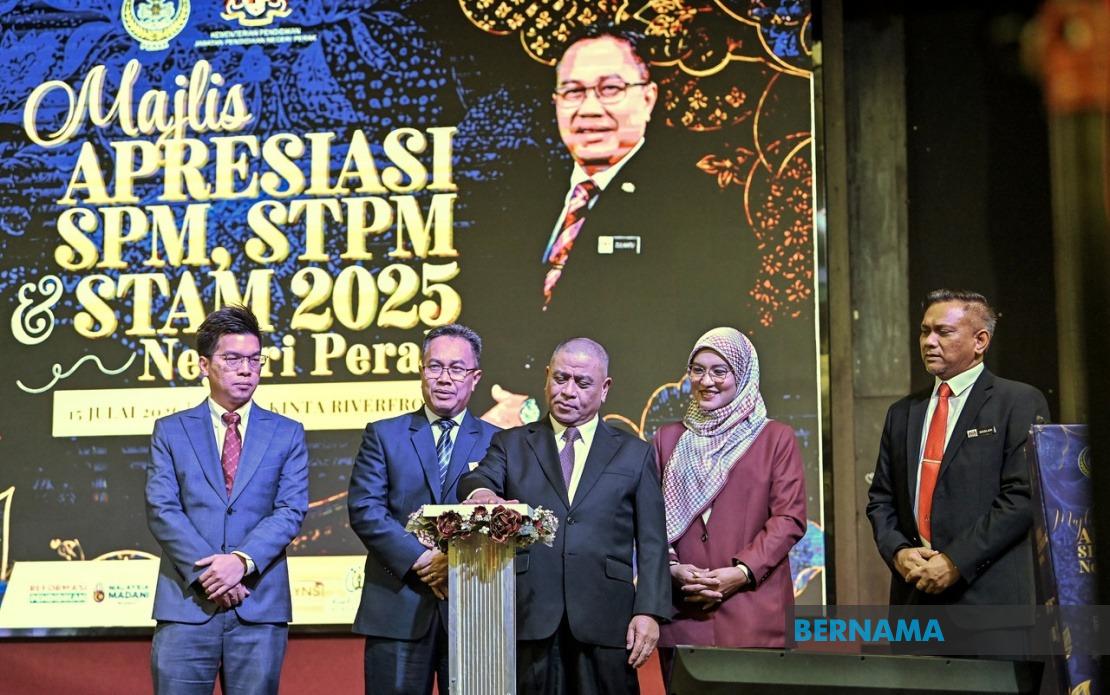
The appreciation ceremony honouring achieving students, attended by Perak Education Director Zulkafli Mohamed Mokhtar and Yayasan Perak General Manager Dr Nasreen Khanum Nawab Zadah Khan, underscores how public recognition complements financial support in motivating sustained academic effort. By celebrating scholarship recipients' achievements at state level, administrators reinforce community messaging that educational investment yields tangible rewards, potentially encouraging additional students to pursue excellence while signalling that the state values and recognises scholarly achievement.
Looking forward, Perak's integrated approach—combining direct financial assistance, tailored learning resources, institutional coordination, and targeted support for underserved student populations—establishes a comprehensive framework addressing education's multiple dimensions simultaneously. Rather than assuming financial constraints alone impede performance, the state's designers recognised that students require simultaneous access to funding, quality materials, and structured guidance. This multifaceted strategy holds relevance for Malaysian policymakers nationwide confronting persistent disparities in student outcomes and opportunities across different communities and regions seeking sustainable educational improvement.

