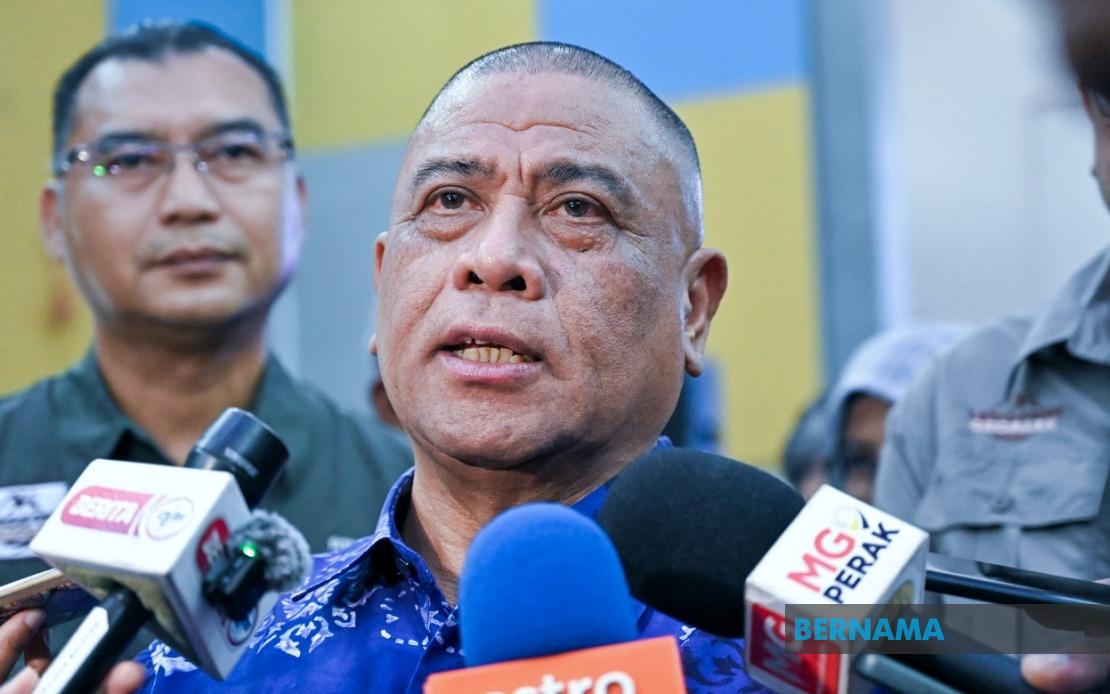
Perak's government leadership has moved to reassure the public that attempts to spread what authorities classify as deviant Islamic teachings remain effectively contained, even as such movements increasingly exploit digital channels and cross-border networks to reach adherents. Menteri Besar Datuk Seri Saarani Mohamad made the statement in Ipoh, emphasising that despite the evolving tactics of groups promoting unorthodox religious interpretations, the state's institutional safeguards are working as intended.
The regulatory framework overseeing religious matters in Perak involves a multi-layered approach, with oversight beginning at the highest political level. Saarani chairs the State Security Committee, which serves as the primary mechanism for tracking developments related to the dissemination of these teachings. This committee receives regular updates from the Perak Islamic Religious Department, known locally as JAIPk, alongside intelligence from the Perak Mufti Department. The arrangement ensures that security concerns connected to religious extremism are treated as part of the broader state security apparatus rather than as isolated religious issues, reflecting the integrated approach authorities view as essential to maintaining social cohesion.
Royal involvement adds another dimension to the institutional response. Sultan Nazrin Shah, in his constitutional role as the head of religion for Perak, maintains awareness of developments in this area through briefings from senior religious officials. Recent consultations between the Deputy Mufti, Datuk Zamri Hashim, and the JAIPk Director, Datuk Harith Fadzilah Abdul Halim, with the Sultan underline the seriousness with which the state's leadership treats the matter and the transparency expected within the religious governance hierarchy.
The operational reality on the ground, according to the Menteri Besar, involves a structured process for managing public concerns. When residents report teachings or practices they believe contradict Islamic orthodoxy, both JAIPk and the Mufti Department investigate these complaints through formally established procedures. Only after such investigations are completed and substantiated do enforcement actions proceed. This phased approach aims to balance the need for swift action against heterodox movements with protections against hasty or unfounded allegations that might unfairly target legitimate religious study groups or scholars with unconventional but permissible methodologies.
At the federal level, the challenge of managing deviant teachings has become a priority area for Malaysia's religious affairs apparatus. Datuk Zulkifli Hasan, who holds the ministerial portfolio for religious affairs within the Prime Minister's Department, has characterised the situation as requiring a coordinated whole-of-government strategy. This language reflects the understanding among senior officials that such movements cannot be effectively countered through religious institutions alone but require input from law enforcement, intelligence agencies, and social welfare bodies working in concert.
The Department of Islamic Development Malaysia, or JAKIM, coordinates with state-level Islamic religious departments to maintain consistent monitoring and enforcement standards across all thirteen states and three federal territories. This federal-state partnership model attempts to create a unified approach to religious regulation while respecting the constitutional autonomy that state governments maintain over Islamic affairs. The coordination becomes particularly important when groups operate across state boundaries or when their propaganda originates from outside Malaysia entirely.
One significant shift in enforcement challenges stems from technological change. Zulkifli highlighted how dissemination methods for heterodox teachings have fundamentally transformed over recent years. Whereas deviant movements once required adherents to attend clandestine gatherings in physical locations, today's groups primarily utilise social media platforms and encrypted messaging applications to spread their doctrines and recruit followers. This digital transition has made detection and monitoring substantially more difficult, as traditional surveillance methods prove inadequate for tracking online activity, particularly when groups deliberately obscure their religious nature by presenting themselves as personal development programmes, charitable organisations, alternative medicine practitioners, or informal Quran study circles.
The strategic masking of religious teachings within secular or wellness frameworks presents a particular difficulty for authorities seeking to identify and counter unorthodox movements. Potential followers may encounter these teachings through platforms ostensibly dedicated to self-improvement or health wellness, discovering only gradually that religious indoctrination forms a core component of the programme. This approach has proven effective at circumventing both government oversight and family-level intervention, as concerned relatives may not immediately recognise religious radicalisation occurring within what initially appears to be a fitness class, meditation programme, or charitable endeavour.
For Malaysian society more broadly, the issue reflects ongoing tensions between religious pluralism and orthodox authority. While Malaysia's constitution grants Islam a special position as the religion of the Federation and grants state rulers authority over Islamic affairs in their domains, the diverse nature of Islamic scholarship and practice globally means that the boundary between acceptable religious diversity and "deviant teachings" requires constant negotiation. Different scholars and movements within Islam hold genuinely different understandings of religious obligations and permissible practices, and Malaysian authorities must somehow distinguish between these legitimate variations and teachings they deem genuinely problematic.
The Perak government's insistence that the situation remains "under control" should be contextualised against periodic arrests and investigations of individuals and groups accused of promoting unorthodox Islamic teachings, suggesting that while authorities claim containment, they continue detecting and addressing what they view as problematic movements. The emphasis on institutional coordination and royal oversight appears designed to project a sense of comprehensive management and legitimate authority responding to a recognised challenge, rather than to suggest that deviant teachings have been entirely eliminated or that concern is unfounded.
The regional context matters as well. Southeast Asian nations including Malaysia have grown increasingly concerned about the transnational movement of religious ideas, particularly as digital networks allow instant cross-border transmission of teachings without traditional gatekeepers. Perak's Menteri Besar's acknowledgment that propaganda attempts cross borders reflects this broader regional challenge. Malaysia's position as a diverse, Muslim-majority nation with significant non-Muslim populations makes its approach to managing religious affairs relevant to neighbouring governments wrestling with similar issues concerning social stability and religious authority.
Looking forward, the effectiveness of Perak's stated approach will likely depend on the extent to which JAIPk and the Mufti Department can develop sophisticated digital monitoring capabilities matching the technological sophistication of groups utilising encrypted platforms and algorithm-driven social media. It will also require ongoing calibration of what constitutes "deviant" teaching versus legitimate religious exploration, an inherently subjective determination that different observers may evaluate differently. The involvement of the Sultan and the emphasis on systematic procedure suggest authorities are attempting to build legitimacy for their interventions through institutional transparency and traditional authority, acknowledging that enforcement efforts lacking public confidence could backfire by driving such movements further underground.

