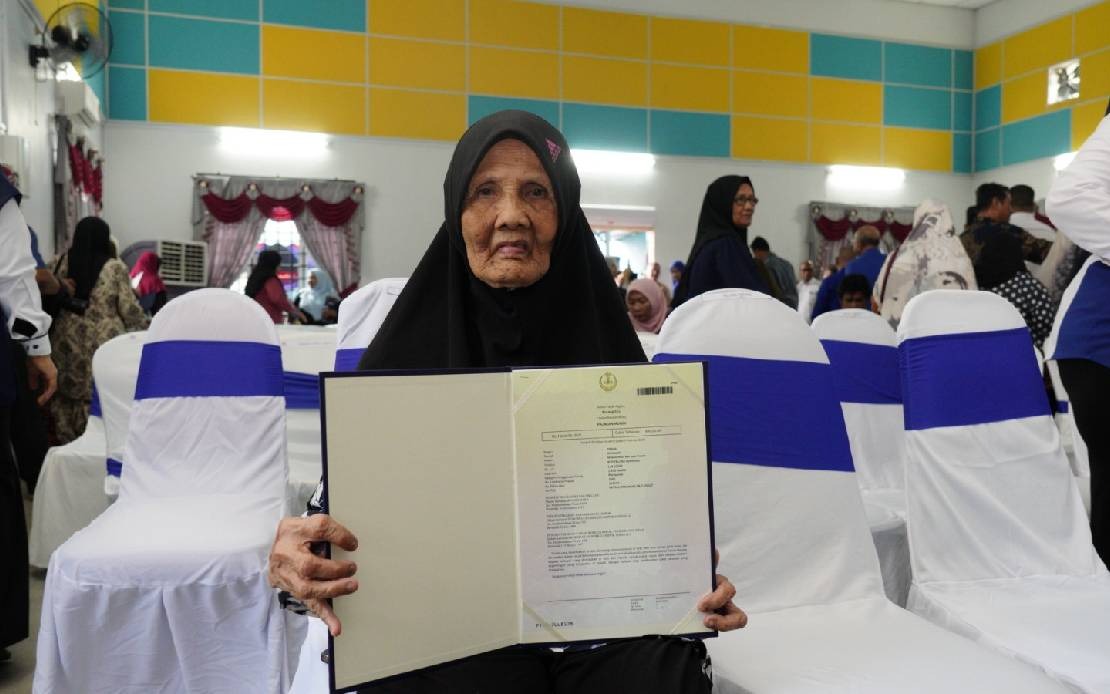
Forty-seven beneficiaries of the FELCRA Berhad Seri Gala Area Village Rearrangement Programme (PPSK) have been formally granted land ownership, signalling another milestone in Malaysia's rural transformation efforts. The ceremony, held in Ipoh on July 14, showcased how targeted land consolidation strategies continue to reshape economic prospects in traditionally marginalised agricultural communities. The event brought together Perak's political leadership and federal rural development authorities to recognise what officials view as a replicable success story for addressing persistent rural-urban disparities across the nation.
Perak Menteri Besar Datuk Seri Saarani Mohamad characterised the FELCRA Consolidation and Rehabilitation (P&P) Programme as among the country's most effective rural development frameworks, citing its multifaceted impact on community wellbeing. Beyond merely allocating land, the initiative has catalysed broader economic activity through job creation, expanded local entrepreneurship, and strengthened community confidence in agricultural viability. The Menteri Besar's remarks underscore a growing recognition within state and federal governments that sustainable rural progress requires more than infrastructure investment—it demands genuine asset ownership that anchors families economically and psychologically to their localities.
The symbolism of granting formal land ownership documents extends beyond administrative procedure, according to state authorities. Officials describe the transfer as a mechanism for restoring dignity and economic agency to rural populations, creating inherited security for future generations and anchoring family prosperity to tangible assets. This emphasis reflects Malaysia's broader policy pivot toward inclusive development, acknowledging that landlessness and insecure tenure have historically undermined rural household resilience and discouraged productive investment in agricultural land. By contrast, documented ownership enables participants to access credit, plan long-term investments, and build generational wealth tied to their holdings.
The FELCRA consolidation approach operates through systematic land development that prioritises economic sustainability over rapid conversion. Previously underutilised parcels have been transformed into consistently productive resources generating stable returns for participants. This careful, methodical approach has demonstrated tangible benefits including enhanced yields, strengthened market access, and improved rural household incomes. The model's effectiveness lies partly in combining technical support with secure tenure, enabling farmers to move beyond subsistence production toward commercial viability while building confidence in their land's intrinsic value.
Perak's expanding role within Malaysia's FELCRA network reflects the programme's scaling potential. Zainal Abidin Alias, FELCRA Berhad's director of participant affairs, noted that the organisation currently oversees nearly 32,000 hectares across almost 20,000 participants nationwide. Perak ranks as the second-largest operational region after Pahang, indicating substantial agricultural restructuring underway in the state. This geographic concentration suggests that land consolidation represents a significant economic lever for Perak's rural development agenda and positions the state as a demonstration site for replicating the model across other states with comparable agricultural populations.
Federal rural development authorities have recently articulated an expanded vision for village advancement that transcends purely physical infrastructure development. Deputy Prime Minister Datuk Seri Dr Ahmad Zahid Hamidi's remarks during the World Rural Development Day 2026 celebration in Jengka, Pahang, reflect this conceptual evolution. Contemporary rural development now encompasses human capital strengthening, local economic diversification, entrepreneurship cultivation, and enhanced community agency in shaping their own futures. This integrated framework acknowledges that roads, schools, and clinics—while necessary—prove insufficient without corresponding investment in economic opportunity and community empowerment.
The grant handover ceremony also featured the inauguration of the Felcra Berhad Seri Gala PPSK Grand Hall, a facility intended to serve as a community hub for knowledge exchange, skills development, and cooperative activities among programme participants. Such physical anchors for community organising can facilitate collective marketing, shared equipment access, and peer learning networks that amplify individual land grants' economic impact. The facility exemplifies how rural development programmes increasingly layer social infrastructure with material asset distribution to maximise multiplier effects across communities.
For Malaysian policymakers, the Seri Gala programme results offer evidence that land consolidation combined with technical support and community organisation can reverse historical patterns of rural economic stagnation. The initiative demonstrates that addressing agricultural sector challenges requires simultaneously tackling tenure insecurity, fragmentation, and limited farmer access to markets and technology. By bundling these elements, FELCRA creates conditions where land ownership translates into sustainable livelihoods rather than remaining merely symbolic.
The broader significance extends to regional development discourse across Southeast Asia, where similar patterns of rural marginalisation persist. Malaysia's systematic approach to land consolidation, coupled with deliberate community empowerment strategies, provides a potential template for neighbouring countries grappling with comparable rural challenges. The Seri Gala outcome—transforming unutilised land into productive family assets while strengthening rural communities—suggests that targeted, integrated rural development remains achievable despite urbanisation pressures and agricultural sector modernisation.
As Malaysia advances toward its stated objectives of bridging development gaps between rural and urban areas, programmes like FELCRA's consolidation initiative take on heightened importance. The ceremony's emphasis on dignity, family security, and legitimate asset ownership reflects an understanding that sustainable rural development ultimately depends on rural residents gaining genuine control over productive resources and their economic futures. Forty-seven families in Seri Gala now hold documented land ownership; the challenge ahead lies in ensuring this foundation translates into secure, generational prosperity that encourages subsequent rural investment and community confidence.

