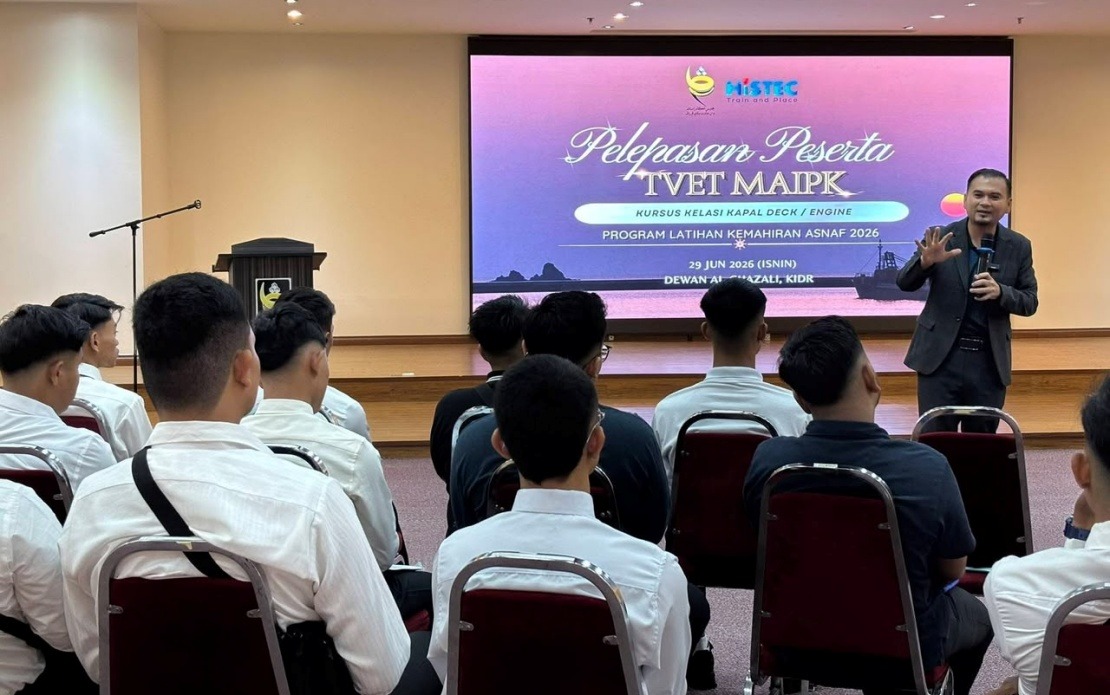
The Perak Islamic Religious and Malay Customs Council (MAIPk) has demonstrated renewed commitment to vocational education by committing RM470,000 to sponsor 25 underprivileged youth through a comprehensive maritime training scheme. The initiative targets asnaf participants for a specialised ship crew course covering both deck and engine operations, representing a significant financial outlay designed to create employment-ready professionals for Malaysia's maritime sector.
At RM18,800 per participant, the investment reflects a deliberate strategy to develop skilled human capital aligned with current industry requirements. This per-person cost encompasses the full scope of professional development, from initial theoretical instruction through to practical competency assessment and formal certification. The council frames this expenditure not merely as a charitable gesture but as a strategic contribution to addressing skills gaps within a crucial economic sector that continues to face workforce shortages.
The three-month training programme will be conducted at the Ranaco Education and Training Institute in Chukai, Terengganu, establishing a structured learning environment where participants will progress through integrated theoretical and hands-on practical modules. The curriculum culminates in professional certification and a seaman's licence—a mandatory credential for anyone seeking employment aboard commercial vessels. This regulatory requirement ensures that graduates emerge with credentials recognised across the maritime industry, eliminating potential employment barriers linked to qualification gaps.
MrIPk's framing of technical and vocational education transcends conventional workforce development rhetoric. The council explicitly positions TVET as a transformative mechanism for socio-economic mobility within underprivileged communities. This perspective carries particular significance across Southeast Asia, where structural inequalities and limited access to quality vocational pathways often constrain social advancement for low-income groups. By anchoring skills training to certified pathways and guaranteed employment, MAIPk addresses both immediate income generation and long-term career trajectory concerns.
The employment assurance component distinguishes this initiative from standalone training programmes. Participating youth will transition directly from course completion into positions within the maritime sector, establishing immediate income streams rather than facing uncertain job-seeking periods. This placement mechanism reduces post-training vulnerability and demonstrates confidence in graduate competency levels. For participants from economically disadvantaged backgrounds, such guaranteed transition eliminates a critical gap between qualification acquisition and labour market entry.
The send-off ceremony at Kompleks Islam Darul Ridzuan in Ipoh, officiated by MAIPk Asnaf Empowerment Division General Manager Amirudin Osman, underscores institutional commitment extending beyond financial allocation. The formal launch suggests sustained organisational investment in programme success, with designated leadership responsible for outcomes monitoring and participant welfare throughout the training period.
This intervention reflects broader regional trends toward TVET prioritisation as an alternative to conventional university pathways. Malaysia's maritime industry operates within a competitive global context, requiring crew members capable of managing increasingly sophisticated vessel systems. Training institutions and industry bodies increasingly emphasise that deck and engine crew positions demand rigorous technical competency rather than general educational credentials, making structured vocational pathways essential for talent pipeline development.
For Malaysian policymakers, the MAIPk initiative exemplifies how religious and cultural institutions can mobilise resources for skills development aligned with national economic priorities. The maritime sector remains strategically important given Malaysia's geographic position and shipping industry significance. Sponsorship models that integrate institutional capacity with government vocational frameworks could be replicated across other sectors facing persistent skill shortages.
The asnaf targeting reflects Islamic welfare principles centring on community uplift and economic participation. This demographic focus addresses documented disparities in vocational training access, where underprivileged groups often lack financial means or information networks to access premium technical programmes. By removing financial barriers, MAIPk creates opportunity structures that would otherwise remain inaccessible to cost-constrained participants.
Within the Southeast Asian context, this initiative contributes to regional shipping labour mobility. Malaysian-trained maritime personnel compete within international crewing markets, with certification standards recognised across multiple jurisdictions. The programme therefore enhances both individual employment prospects and Malaysia's contributions to regional maritime workforce capacity, positioning graduates for positions across ASEAN shipping operations.
The structured employment guarantee component suggests maritime industry engagement in programme design, indicating that training content remains directly aligned with operational requirements rather than generic credentials. This industry involvement ensures curriculum relevance and reduces risks of skills misalignment that sometimes characterise disconnected vocational systems.
Looking forward, the success metrics for this initiative extend beyond simple completion rates. Monitoring participant career progression, salary trajectories, and retention within maritime employment would establish whether the intervention achieves sustainable socio-economic transformation. If outcomes prove positive, institutional scaling of similar models could substantially augment Malaysia's capacity to develop skilled maritime workforces from underutilised demographic pools.

