Perak has set a new investment record by attracting RM15.2 billion in 2025 while simultaneously maintaining a budget surplus for the fourth consecutive year, according to Housing and Local Government Minister Nga Kor Ming. The state also welcomed 10.1 million tourists during the year, figures the minister presented as evidence of the Unity Government's economic management credentials and inclusive governance approach across the northern region.
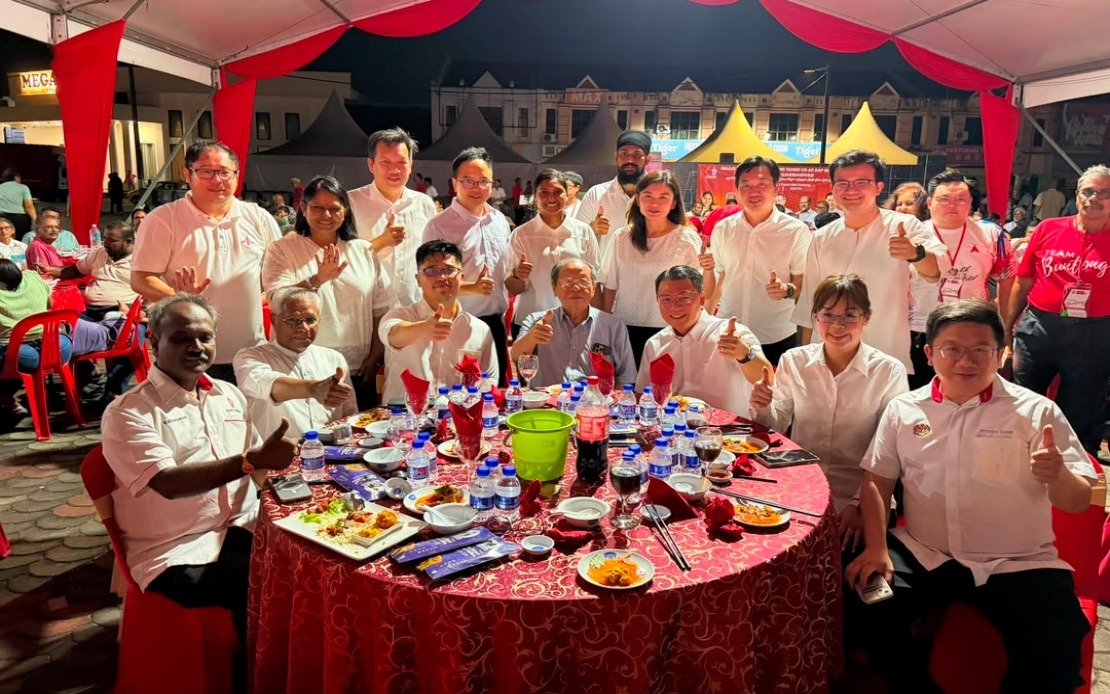
Nga, who serves as DAP deputy national chairman, unveiled these statistics while addressing the party's 60th Anniversary Dinner in Buntong, an event that drew over 1,500 attendees including prominent figures such as veteran politician Tan Sri Lim Kit Siang and several state and federal representatives. The occasion provided a platform to articulate the administration's policy achievements and reinforce its political messaging ahead of ongoing governance cycles in the state.
The RM85 million budget surplus registered for 2025 represents a continuation of fiscal discipline that has now spanned four consecutive years under the current administration. This sustained ability to operate without deficit spending while simultaneously investing in development projects demonstrates a financial sustainability model that contrasts with earlier periods of Perak's governance history, when the state faced considerable fiscal instability and repeated changes in political administration.
The investment figure of RM15.2 billion reflects both domestic and international capital flows into Perak's economy, suggesting that the state's position as a manufacturing and industrial hub continues to attract business confidence. For Malaysia's broader manufacturing sector, which has faced global supply chain uncertainties and competition from other Southeast Asian nations, Perak's performance indicates that certain regions maintain competitive advantages in attracting foreign and local investment.
The tourism arrival figure of 10.1 million visitors annually positions Perak as a significant contributor to Malaysia's national tourism objectives. This volume encompasses both domestic and international travellers and underscores the state's appeal beyond its industrial base, encompassing cultural heritage sites, natural attractions, and heritage towns that draw leisure and business visitors throughout the year.
Nga framed these achievements within the context of the MADANI Economy framework, the government's development philosophy emphasizing inclusive growth that supposedly distributes economic benefits across different demographic groups and geographic regions. According to his interpretation, the combination of substantial investment intake and consecutive budget surpluses alongside these tourism figures demonstrates that inclusive governance and sound economic management need not be mutually exclusive objectives in policy implementation.
The minister specifically highlighted what he characterised as constructive political approaches yielding concrete results for constituents. By placing emphasis on measurable economic metrics—investment flows, tourist numbers, fiscal balance—rather than symbolic gestures or rhetoric, Nga positioned the Unity Government's record as fundamentally performance-based, a framing designed to influence voter perceptions heading toward electoral cycles.
Nga's speech articulated a broader critique of what he termed "outdated politics," making explicit reference to political strategies centred on racial and religious sensibilities. His assertion that the 21st century requires "new politics that builds" rather than "politics that destroys" represented a direct counter-narrative to opposition messaging and reflected ongoing internal debates within Malaysian political discourse regarding governance philosophy and coalition stability.
The institutional reforms referenced by Nga—though not enumerated in detail—allegedly demonstrate government receptiveness to public feedback and commitment to improving bureaucratic responsiveness. This claim touches on a persistent Malaysian governance challenge: the gap between public perception of institutional effectiveness and actual administrative performance, a tension that Nga implicitly acknowledged by cautioning against allowing "perception" to obscure genuine "performance."
For Perak specifically, these figures carry particular significance given the state's history of political turbulence. The state experienced multiple government transitions across 2009 and the early 2020s, periods marked by fiscal strain and policy inconsistency that undermined investor confidence and administrative coherence. The current administration's success in stabilising state finances while simultaneously attracting substantial private investment suggests that political stability itself represents an asset for regional economic development.
The tourist arrivals data also reflects post-pandemic recovery in Malaysia's leisure and hospitality sectors, sectors crucial to state-level economies throughout the Southeast Asian region. For Perak, whose attractions include the Genting Highlands, Ipoh's historical structures, and various rural heritage sites, tourism revenue generation supports employment in communities beyond major urban centres and provides diversification away from purely manufacturing-dependent economies.
For Malaysian policymakers examining regional economic performance, Perak's trajectory offers insights into how consistent administration, prudent fiscal management, and targeted investment in infrastructure and tourism marketing can combine to generate measurable economic outcomes. The state's relative success stands in contrast to other regions where political uncertainty has deterred investment or where fiscal mismanagement has constrained public service delivery capacity.
The minister's emphasis on assessing government performance against actual achievements rather than perception reflects a recognition that Malaysian electoral politics increasingly turns on voter expectations regarding governance quality and material benefits. By quantifying Perak's economic contributions and financial discipline, the administration seeks to anchor public evaluation of its stewardship in concrete metrics rather than ideological positioning, a strategic choice reflecting broader transformations in how Malaysian political parties attempt to build electoral coalitions.

