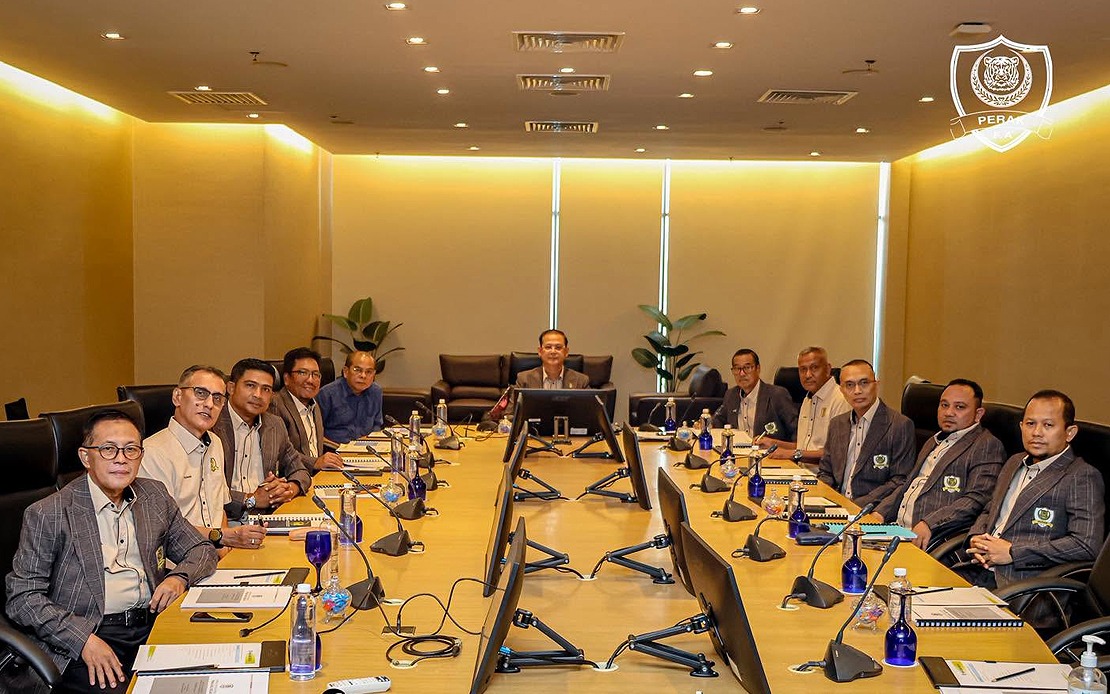
The Perak Football Association has announced plans to recruit a new head coach to lead the state's football team through the 2026-2027 Liga A1 Semi-Pro campaign, marking a significant administrative shift in the regional club's technical leadership. The move stems from a fresh directive issued by the Amateur Football League, which now requires all participating teams to employ a head coach holding an AFC Pro Diploma Coaching License, commonly referred to as a Pro-A qualification. This mandatory upgrade in coaching credentials represents a meaningful step toward professionalising the semi-professional tier of Malaysian football and reflects growing standards across the domestic game.
The new appointee will be selected based on a comprehensive set of criteria extending well beyond mere licensing compliance. According to the Perak Football Association's statement, prospective candidates must demonstrate substantial hands-on experience in grassroots football development and contemporary coaching methodologies. Additionally, the ideal candidate should present a documented history of achievement spanning state, national, and potentially international football contexts. This multi-layered evaluation process signals the association's commitment to appointing someone capable of bridging the gap between semi-professional operations and elite-level football management practices.
The coaching transition follows a reasonably successful tenure by Syamsul Saad, a former footballer who guided Perak to a fifth-place league finish in the preceding campaign. Under Saad's stewardship, the team also achieved respectable performances in knockout competitions, advancing to the semi-finals of the MFL Challenge Cup while simultaneously reaching the quarter-finals of the Malaysia Cup. These accomplishments demonstrate that Perak has maintained competitive standing within Malaysian football's semi-professional structure, though the new licensing requirement suggests the association believes elevated coaching expertise could drive further improvement.
A crucial element of the transition strategy involves retaining the existing coaching support staff rather than implementing a wholesale replacement. The Perak Football Association intends to integrate the incoming head coach with current assistant coaches and technical personnel, creating a collaborative framework designed to enhance overall team operations. This measured approach balances the need for fresh leadership direction with organisational continuity, potentially allowing institutional knowledge and established relationships to persist whilst injecting new tactical insight and professional discipline into the setup.
Player retention forms another cornerstone of Perak's planning for the upcoming season. The association has committed to offering fresh contracts to members of last season's squad who successfully cleared performance evaluations. This strategy provides stability within the squad whilst simultaneously creating scope for selective recruitment and the integration of emerging talent. Such a balanced approach enables Perak to maintain squad cohesion and competitive momentum whilst remaining open to strategic enhancements where performance data indicates opportunity.
Peark's broader football ecosystem encompasses multiple competitive pathways designed to nurture developmental talent. Beyond the Liga A1 Semi-Pro competition, the association will field teams in the Liga A2 Amateur division and the President's Cup, creating overlapping exposure opportunities for promising young players emerging from grassroots programmes. This integrated approach reflects contemporary thinking about talent pathway development, with structured progression enabling young players to gain competitive experience across different competitive levels whilst maintaining engagement with the professional coaching infrastructure.
The state's long-term talent pipeline has generated impressive numbers under this systematic development approach. Perak has successfully cultivated approximately 70 players aged between 18 and 24 through coordinated efforts spanning multiple competition levels. These players have been sourced from grassroots development initiatives including Malaysia Games participation, Liga A1 Semi-Pro involvement, and the specialised Liga Perak Sejahtera 2030 programme. Such productivity in youth player development suggests the state has established genuine structural advantages in identifying and nurturing emerging talent.
The Liga Perak Sejahtera 2030 programme itself warrants attention as a state-specific initiative aligned with broader development planning. This championship operates as part of Perak's wider football strategy and carries implicit connections to the Perak Sejahtera 2030 Plan, the state government's broader socio-economic development framework. By embedding football development within this larger strategic vision, Perak Football Association signals that sport is understood not merely as recreational activity but as a vehicle for youth development, community engagement, and state-level capacity building.
State political support provides crucial backing for these initiatives. Menteri Besar Datuk Saarani Mohamad has been acknowledged for sustained government backing of Perak's football programme, with the association publicly noting his role in enabling competitive positioning within national football. This political-sporting nexus reflects widespread regional understanding that football development requires coordination between administrative bodies, state resources, and sporting organisations to achieve meaningful outcomes.
For Malaysian football observers, Perak's coaching upgrade and systematic development framework merit monitoring as a case study in semi-professional football management. The state's commitment to AFC-credentialled coaching, structured talent pathways, and integrated competition design suggests a coherent philosophical approach to building sustainable competitive advantage. As the 2026-2027 season approaches, the new coaching appointment will provide evidence of whether professionally qualified technical leadership can translate developmental infrastructure into improved on-field performance and accelerated player progression through the state's football system.

