The Perak state government has moved quickly to address the infrastructure crisis facing Kampung Ulu Geruntum in Gopeng, approving a substantial RM500,000 allocation for the construction of a permanent concrete bridge to replace the vital link destroyed during severe flooding last month. The funding decision represents a significant commitment to restoring full normalcy to the village after the catastrophic washout that left residents temporarily cut off from neighbouring communities and essential services.
The catastrophic failure occurred on June 19 when a powerful water surge swept through the area with enough force to demolish the main bridge connecting the village to the outside world. The incident forced more than 50 residents to seek emergency shelter at the Gopeng Town Hall temporary relief centre, highlighting the vulnerability of remote settlements to hydrological events. The sudden severance of road access left villagers isolated at a critical moment, unable to access healthcare, supplies, or conduct normal economic activities.
According to Sandrea Ng Shy Ching, the State Housing and Local Government Committee chairman and Teja assemblyman, construction work on the permanent bridge will commence once remedial efforts currently underway are finalised. This phased approach reflects the practical reality of managing simultaneous recovery operations in a disaster-affected area. The state government recognises that rushing construction could compromise safety standards or create logistical conflicts with ongoing emergency response activities.
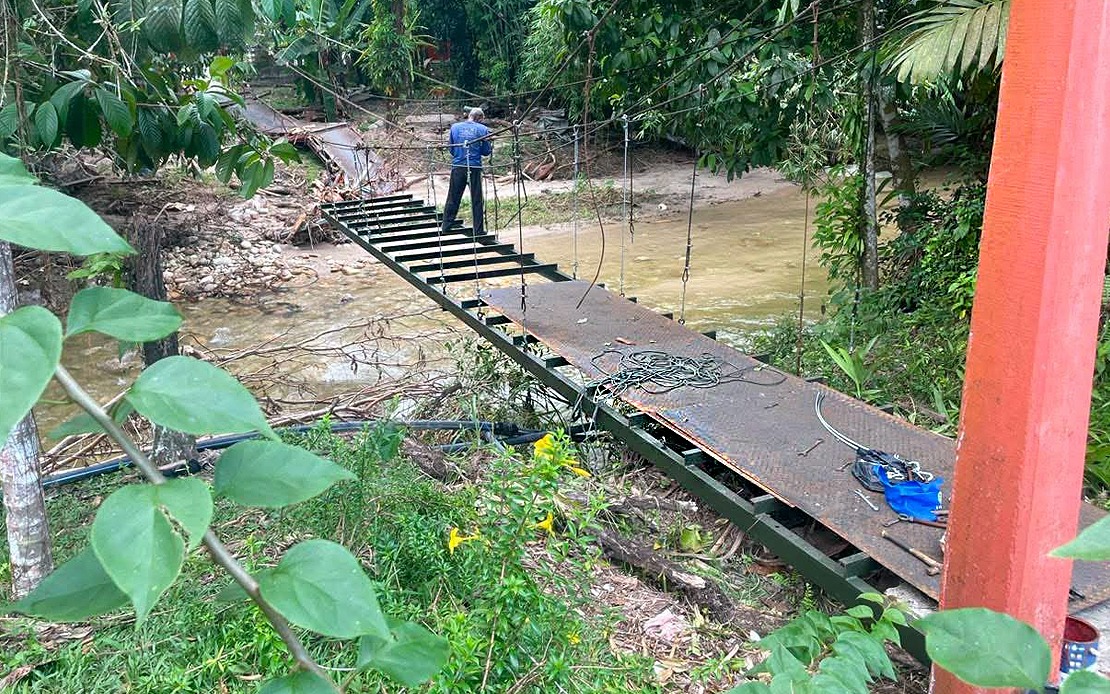
Beyond the main bridge project, the state government has demonstrated comprehensive disaster response through multiple funding streams. An emergency allocation of RM150,000 has been approved specifically for rapid construction of a temporary suspension bridge, intended to restore immediate access and reconnect the isolated area by mid-July. This dual-strategy approach—combining quick-fix temporary infrastructure with planned permanent solutions—addresses both the urgent humanitarian need for restored connectivity and the longer-term requirement for durable infrastructure.
Sandrea also utilised her personal constituency allocation to address an immediate crisis affecting daily life in the village. She approved RM45,000 from her Teja assemblyman funds to repair damaged water pipes and restore the water supply that had been disrupted by the flooding event. This decision underscores how natural disasters often create cascading infrastructure failures beyond the primary damage, affecting utility networks that depend on functional road access for maintenance and repair work. The water system restoration is critical for basic sanitation and health requirements in the post-disaster recovery phase.
The flooding incident at Kampung Ulu Geruntum reflects broader challenges facing rural and semi-rural settlements in Peninsular Malaysia, where geographic isolation and limited infrastructure redundancy can amplify the impact of weather-related disasters. Villages situated in valleys or near waterways face particular vulnerability during monsoon seasons and extreme rainfall events. The speed and severity of the water surge that destroyed the bridge suggests the area experiences significant hydrological stress during peak runoff periods, a factor that must inform the design specifications for the permanent concrete bridge to ensure it can withstand future extreme events.
Pearak's multi-layered response demonstrates evolving state-level disaster management practices in Malaysia. Rather than treating bridge reconstruction as an isolated infrastructure project, state authorities have coordinated relief allocation, emergency connectivity solutions, and utility restoration as integrated components of comprehensive community recovery. This approach recognises that isolated villages depend on multiple interconnected systems, and that restoring one element while others remain damaged prolongs overall disruption and hardship.
The RM500,000 budget for the permanent concrete bridge must account for factors beyond basic construction, including design engineering that incorporates climate adaptation principles, environmental impact mitigation during construction, and specifications that allow the structure to withstand future flooding events of potentially greater severity than the June 19 incident. Tropical regions across Southeast Asia are experiencing increasingly intense precipitation patterns, necessitating infrastructure designed for probable worst-case scenarios rather than historical average conditions.
Residents of Kampung Ulu Geruntum can expect their isolation to end within weeks rather than months, thanks to the mid-July target completion date for the temporary suspension bridge. This interim solution will restore basic connectivity for emergency vehicles, personal transport, and goods movement while the more substantial permanent bridge undergoes detailed design and construction. The suspension bridge serves as a critical buffer, preventing prolonged community fragmentation and associated economic and social disruption.
State Housing and Local Government Committee chairman Sandrea's public statement acknowledging the work of responding agencies reflects an important dimension of disaster management—maintaining community confidence and morale during recovery phases. Residents who witness coordinated governmental response and transparent communication about reconstruction timelines experience greater resilience and faster psychological recovery compared to communities left uncertain about restoration prospects. The stated commitment to expedited work suggests political awareness of the urgency facing affected villagers.
The broader implications for Perak and similar states involve integrating disaster-resistant infrastructure standards into long-term rural development planning. Communities like Kampung Ulu Geruntum represent not merely infrastructure locations but the homes and livelihoods of Malaysian citizens whose vulnerability to natural hazards must inform provincial investment strategies. Future budget cycles should prioritise identifying similar high-risk rural bridges and water systems for preventive upgrades before catastrophic failures occur, reducing the need for emergency post-disaster reconstruction spending.

