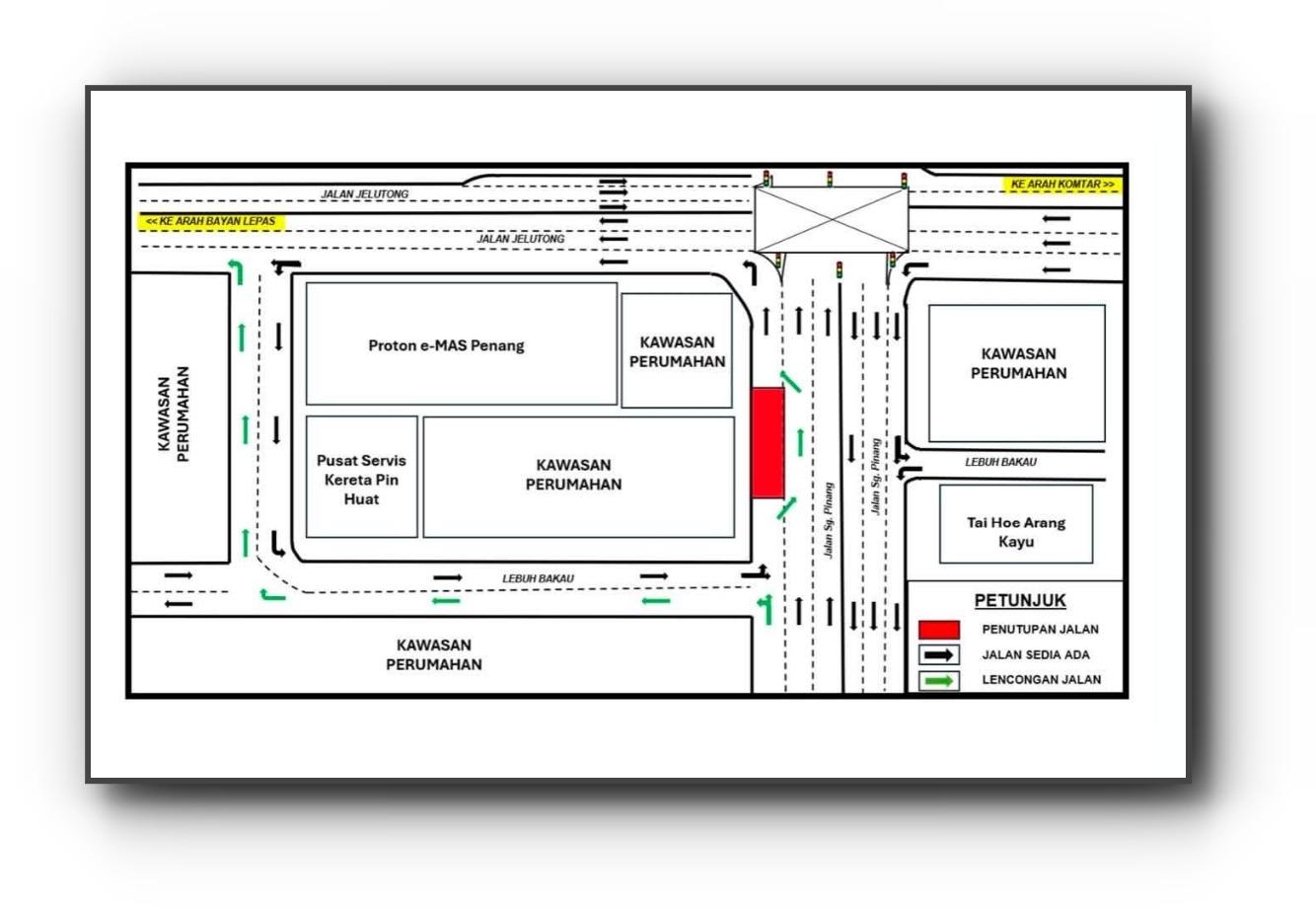
George Town's traffic management faces a temporary challenge as authorities prepare for essential infrastructure maintenance along one of the city's key thoroughfares. Beginning August 28, the leftmost lane of Jalan Sungai Pinang heading towards Jalan Jelutong will be partially closed for a 10-day period to accommodate utility relocation works being conducted by Tenaga Nasional Bhd, the national electricity utility.
Sungai Pinang state assemblywoman Lim Siew Khim announced the closure details through a social media statement, confirming that the 24-hour work schedule will commence at 9 am on August 28 and conclude at 11.59 pm on September 6. The affected section extends between the Lebuh Bakau junction and the Jalan Sungai Pinang-Jalan Jelutong traffic light intersection, creating a significant impact on the daily commute patterns of residents and workers in this densely populated area of George Town.
The decision to implement full-time closure reflects the scale and nature of TNB's utility relocation project, which requires continuous work to minimise disruption over a longer timeframe rather than extending partial closures. This approach is increasingly common in urban infrastructure management across Malaysian cities, where balancing maintenance needs with traffic flow demands careful coordination between utility operators and local authorities.
To mitigate congestion during this period, authorities have designated alternative routing options for affected motorists. Road users heading towards Jalan Jelutong are advised to utilise Lebuh Bakau as a bypass route, effectively redistributing traffic pressure during the 10-day window. The remaining lanes on Jalan Sungai Pinang will remain operational, allowing limited traffic flow through the work zone and preventing complete isolation of the area.
Lim, who chairs the state Social Development, Welfare and Non-Islamic Religious Affairs Committee, has emphasised the importance of road safety awareness during this period. Her public advisory reflects growing recognition among local officials that infrastructure works require community cooperation and vigilance. The assemblywoman's direct engagement with constituents through social media demonstrates modern governance practices in Penang, where transparency about planned disruptions helps residents plan their journeys accordingly.
Comprehensive traffic management measures have been deployed to protect both construction workers and road users navigating the closure zone. Safety signboards will be prominently positioned to alert drivers well in advance of the work area, while traffic cones will demarcate the closed lane boundaries. The presence of trained flagmen at critical junctures will provide real-time traffic direction and facilitate smoother flow through the modified traffic patterns, reducing the likelihood of accidents during this high-risk period.
For residents and businesses along this corridor, the temporary disruption presents planning challenges. The Sungai Pinang area, like many George Town neighbourhoods, relies on efficient road connectivity for commercial operations and daily transportation. Shops, offices, and service providers in the vicinity may experience reduced foot traffic and customer accessibility during the 10-day period, though the clear communication timeline allows businesses to inform patrons of alternative access routes and anticipated delays.
Utility relocation projects of this nature are fundamental to urban infrastructure renewal in Malaysia's rapidly developing cities. As Penang continues its expansion and modernisation, such works ensure that electrical, water, and telecommunications networks remain efficient and safe. TNB's coordinated approach with state government officials in George Town reflects best-practice coordination between utility providers and local authorities, setting a benchmark for similar projects across the Klang Valley and other urban centres.
The closure period, while inconvenient for daily commuters, represents a necessary investment in the city's long-term infrastructure reliability. TNB's commitment to completing this relocation during a concentrated 10-day window, rather than prolonging the disruption, demonstrates efficiency considerations in project management. For Malaysian readers accustomed to infrastructure maintenance affecting major cities, this announcement illustrates how regional authorities communicate and manage such inevitable urban challenges.
Commuters are strongly encouraged to plan ahead and allow additional travel time during the closure period, particularly during peak morning and evening hours. The availability of Lebuh Bakau as a parallel route provides sufficient capacity for redistributed traffic, though congestion on this alternative may occur during rush periods. Workers in the Sungai Pinang industrial and commercial areas should consider adjusted schedules or remote working arrangements if feasible.
As Southeast Asian cities grapple with ageing infrastructure and the demands of growing urban populations, projects like TNB's utility relocation work become increasingly frequent. George Town's experience during this 10-day period will likely inform future planning for similar works, with lessons applicable to Kuala Lumpur, Selangor, and other major Malaysian urban centres facing comparable infrastructure challenges.

