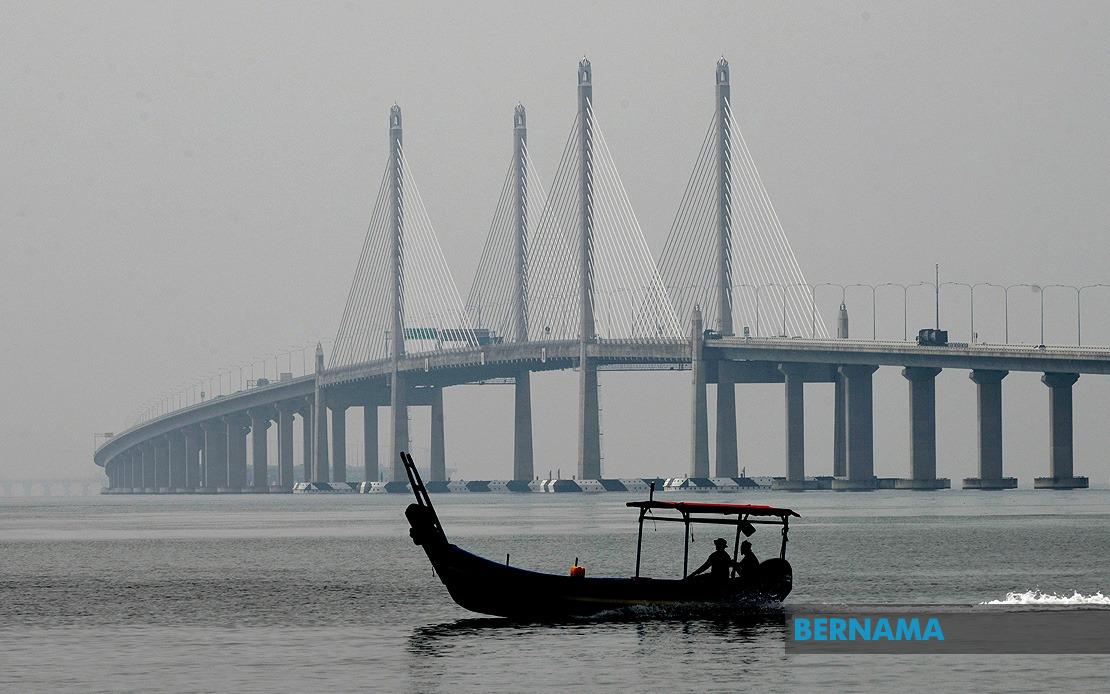
Penang's government is preparing to enter negotiations with fishing and tourism boat operators over restrictions that have disrupted their operations under two of the state's major bridge crossings. Datuk Rashidi Zinol, who chairs the state's Rural Development, Agro-technology and Food Security and Entrepreneurship Committee, confirmed that discussions with all stakeholders will commence next week as officials attempt to craft a response that does not sacrifice security protocols but acknowledges genuine economic hardship in the maritime sector.
The fishing prohibition zones beneath the Penang Bridge and the Sultan Abdul Halim Mu'adzam Shah Bridge have become a flashpoint for competing interests in the state's coastal economy. Both structures have been designated as restricted areas and National Key Points under the Protected Areas and Protected Places Act 1959, meaning their security status is firmly embedded in Malaysian law and international protocol. Yet this legal designation, while necessary for national defence and counter-terrorism purposes, has created immediate friction with communities whose economic survival depends on access to the waters surrounding these vital infrastructure assets.
Boat operators raised the enforcement issue during recent consultations with Rashidi, presenting evidence that the ban has substantially reduced fishing activity and diminished demand for both fishing and tourist boat services. The restriction has created a cascade of economic consequences that extend well beyond the operators themselves. The ripple effects touch suppliers of fishing equipment and gear, ice distributors, food vendors, and numerous small businesses that have historically provided support services to maritime workers. This interconnected network of economic activity, though less visible than the bridge infrastructure itself, represents real livelihoods and household income for families throughout Penang's coastal communities.
The challenge facing state officials is fundamentally about balancing incommensurable priorities. National security interests demand that critical infrastructure remain protected from potential threats, a concern that has only intensified in recent decades. Simultaneously, local economic realities compel policymakers to consider how security measures affect vulnerable populations with few alternative income sources. For many boat operators and their supporting industries, the waters under these bridges represent not a recreational luxury but essential fishing grounds that have sustained their families for generations.
Rashidi's commitment to exploring a "balanced approach" signals that Penang intends neither to abandon security protocols nor to dismiss the concerns of affected communities. This suggests officials will examine whether modified arrangements might accommodate legitimate economic activity while maintaining the protected status of these structures. Possibilities might include designated fishing windows, specific operational zones, or enhanced monitoring systems that allow supervised activity rather than blanket prohibition. Such solutions require technical expertise and careful coordination among multiple agencies, which explains why the discussions will involve relevant parties rather than unilateral government decisions.
The geographic and strategic importance of both bridges to Malaysia's economy amplifies the significance of this local dispute. The Penang Bridge and Sultan Abdul Halim Mu'adzam Shah Bridge form critical transportation links between Penang Island and the mainland, facilitating billions of ringgit in annual trade and commerce. Their designation as National Key Points reflects genuine security concerns, and any policy adjustments must satisfy federal authorities and defence considerations, not merely state-level preferences. This multi-layered governance structure means that negotiations will likely involve federal agencies alongside state government representatives and local stakeholders.
The fishing community's situation reflects broader tensions visible across Southeast Asia, where rapid development, securitization, and national infrastructure expansion frequently displace or restrict traditional maritime livelihoods. Malaysia has experienced similar conflicts at other strategic sites, and how Penang handles this matter may establish precedents for resolving comparable disputes elsewhere. International best practices suggest that successful outcomes typically require genuine consultation with affected communities, transparency about what changes are possible, and creative problem-solving that acknowledges both security imperatives and human costs.
For Malaysian and regional observers, this case study offers insights into governance challenges that extend beyond Penang's immediate situation. As nations throughout Southeast Asia balance development imperatives with security concerns, the question of how to protect critical infrastructure without hollowing out local economies becomes increasingly urgent. The region's fishing communities, already facing pressures from overharvesting, climate change, and competition from industrial-scale operations, have limited capacity to absorb additional restrictions without corresponding support mechanisms or alternative opportunities.
The upcoming discussions will reveal whether Penang's government can move beyond stating commitments to inclusivity and actually deliver policy outcomes that acknowledge the legitimacy of security concerns while creating space for economic activity. Success will require officials to listen substantively to operators' proposals rather than simply explaining why restrictions must remain unchanged. It will also demand honesty about what modifications are genuinely possible given federal constraints and what support mechanisms the state might provide to communities affected by measures that cannot be altered.
The coming week's negotiations represent more than administrative problem-solving. They offer an opportunity for Penang to demonstrate that development, security, and social responsibility need not be mutually exclusive. Whether officials emerge with meaningful compromises or merely reaffirm existing restrictions will carry significant implications for community trust in government institutions and for how maritime workers view their place within Malaysia's broader development narrative. For residents of coastal Penang who depend on fishing and tourism boat operations, the outcomes of next week's discussions will determine whether their concerns found genuine consideration or were merely catalogued and politely dismissed.

