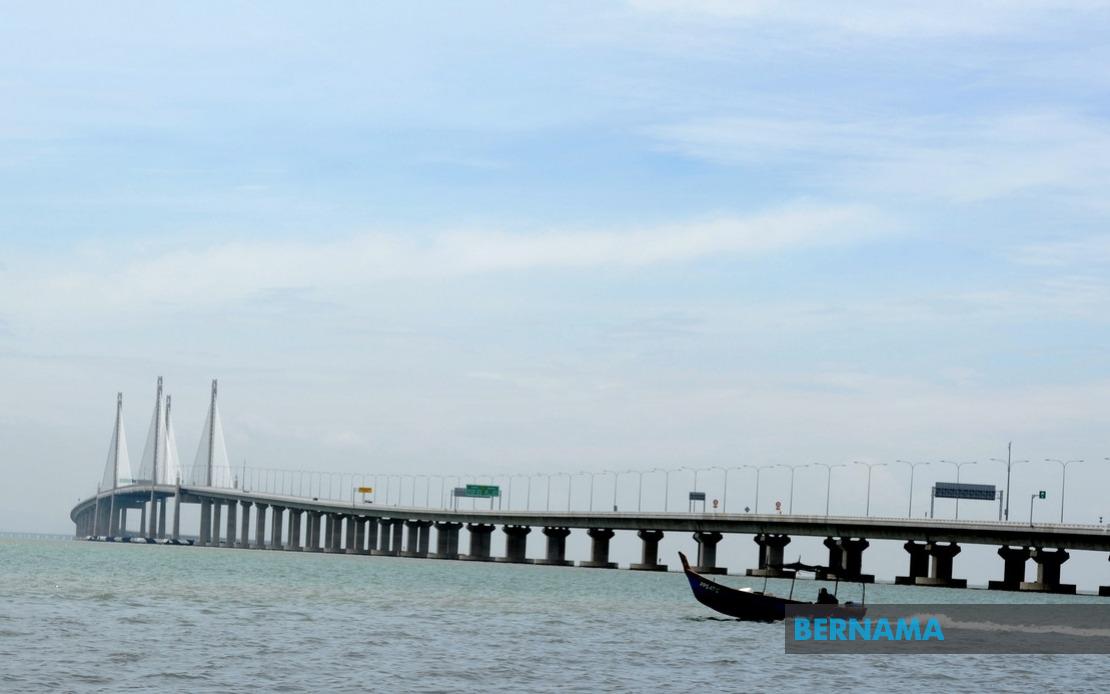
Penang motorists face a temporary traffic disruption as the Sultan Abdul Halim Mu'adzam Shah Bridge—the state's Second Bridge—will close its eastbound lane for a cultural event early next month. The closure, lasting from 8 pm on August 8 through 3 am on August 9, will prevent traffic flowing from Batu Maung on Penang island toward Batu Kawan on the mainland. The decision reflects growing use of major infrastructure for public events across Malaysia, a trend that has become increasingly common in urban centres seeking to activate public spaces and generate community engagement.
The operator, Jambatan Kedua Sdn Bhd (JKSB), confirmed the temporary closure will facilitate the Cultural Night Run 2026, an evening running event designed to celebrate local heritage and culture. Such events have grown in popularity across Southeast Asia as cities compete for attention and investment through experiential programming. The timing—a late-evening and early-morning window—was deliberately chosen to minimise disruption during peak commuting hours, reflecting efforts to balance community activities with essential traffic flows. This approach demonstrates how infrastructure operators and event organisers are becoming more sophisticated in scheduling large gatherings around existing transportation demands.
Despite the eastbound closure, traffic management authorities have structured alternative arrangements to prevent gridlock. The westbound lane of the Second Bridge, carrying traffic from Batu Kawan back toward Batu Maung, will remain fully operational throughout the closure period. This preservation of one direction ensures that residents and workers returning from the mainland to Penang island face minimal delays. Additionally, drivers heading toward Penang's industrial and commercial zones have direct access maintained through separate routes connecting Bandar Cassia and the Batu Kawan Industrial Park (BKIP) directly to the North-South Expressway (PLUS), allowing goods movement and commercial traffic to bypass the affected bridge entirely.
For those specifically needing to travel from Penang island to the mainland during the affected window, JKSB has advised utilising the Penang Bridge, the state's older and primary crossing. This represents a return to the main artery that served Penang exclusively before the Second Bridge opened, a familiar route for most established residents though potentially less convenient for those in Batu Maung whose closest exit is the Second Bridge. The recommendation underscores how Penang's dual-bridge infrastructure provides resilience for the state's transport network, enabling authorities to close major facilities for special purposes while ensuring alternative passage. Such redundancy is increasingly valuable as Penang's population and commercial activity continue expanding, making single-route dependency a risk factor that planners seek to eliminate.
The closure highlights broader infrastructure management challenges facing Malaysian cities as they develop. Penang, as one of Malaysia's most densely populated states and a significant industrial and tourism hub, must balance competing demands: enabling economic and social activities while maintaining smooth traffic flow across constrained geography. The Second Bridge, completed in 2008 to relieve congestion on the original Penang Bridge, has become essential to daily operations, moving hundreds of thousands of vehicles monthly. Temporarily closing one direction for a cultural event represents calculated trade-offs, suggesting confidence that brief disruptions are acceptable when widely publicised and properly managed.
Traffic authorities have emphasised compliance with signage and instructions during the closure window to maintain safety and efficiency. This messaging reflects lessons learned from previous major events where inadequate driver preparation or communication led to congestion spillovers beyond affected areas. The seven-hour closure window is relatively contained, reducing the likelihood of severe secondary effects across the broader Penang transport network. However, timing remains critical—the 8 pm start catches tail-end rush-hour traffic, potentially affecting some evening commuters, while the 3 am finish occurs during minimal-traffic hours, minimizing morning gridlock risks.
The Cultural Night Run 2026 itself represents how Penang's authorities are leveraging physical assets for community programming and cultural expression. Evening and night-time running events have become popular across Asia, combining fitness with social engagement and often attracting tourists alongside residents. Such events generate economic activity for surrounding businesses, create social cohesion, and position cities as dynamic destinations. For Penang specifically, which competes regionally for investment and talent, demonstrating capacity to host significant public events on major infrastructure projects signals organisational capability and urban vitality.
From a Southeast Asian perspective, the Penang closure demonstrates how regional cities are increasingly integrating infrastructure planning with community and cultural objectives. Rather than viewing major bridges purely as transportation conveyances, cities now see them as multifunctional assets that can support various public purposes. This mirrors developments across the region, from Bangkok's use of public spaces for festivals to Jakarta's car-free days, representing a philosophical shift toward regarding urban infrastructure as shared civic commons rather than single-purpose utilities.
Motoring organisations and commuters should note the specific dates and plan accordingly, particularly those with appointments or time-sensitive business in Batu Kawan during the early morning of August 9. The advance notice—provided days before the event—allows sufficient time for route adjustments and alternative scheduling. Employers and institutions in both directions should similarly advise staff about potential traffic variations, ensuring informed decisions about transport timing. The closure also underscores the importance of maintaining multiple crossing points in constrained geographic areas, a consideration relevant to other Malaysian regions facing similar chokepoint risks.

