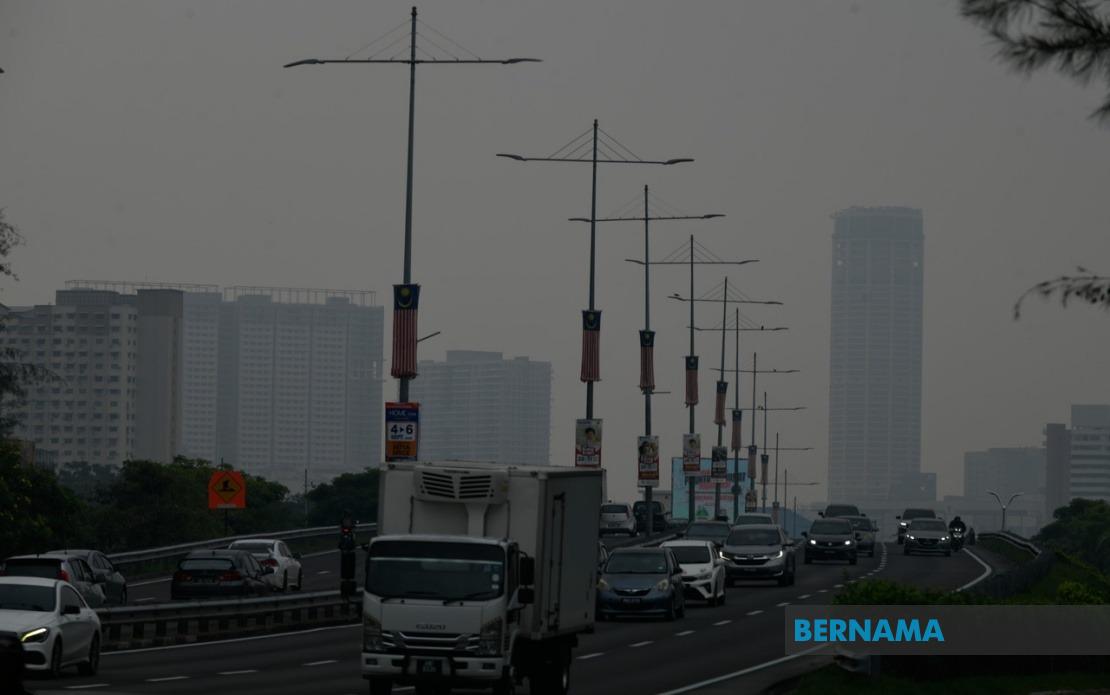
The Penang Education Department has issued comprehensive directives to all schools and district education offices throughout the state to fortify their operational readiness in response to rapidly deteriorating air quality from transboundary haze. The alert underscores mounting concern among officials that prolonged exposure to hazardous atmospheric conditions poses serious risks to the health and wellbeing of Malaysia's young learners and the educators who support them.
At the heart of the education department's strategy lies a tiered system keyed to the Air Pollutant Index, a standardised measurement that serves as the primary indicator of ambient air quality across Penang. Schools have been instructed to maintain continuous surveillance of API readings and respond with escalating measures as pollution levels climb. This graduated approach recognises that haze events rarely strike with uniform severity across the state, allowing individual institutions to adapt their protocols to local atmospheric conditions rather than implementing blanket policies that may prove either too restrictive or insufficiently protective.
The threshold framework established by the Penang Education Department stipulates that all outdoor recreational and sporting activities cease immediately once API readings breach the 100-point mark, a level classified as unhealthy and potentially harmful to vulnerable populations including children. When pollution intensifies further and API readings surpass 200, schools face mandatory closure, effectively suspending face-to-face instruction and sending students home until atmospheric conditions improve. At the extreme end, when API readings exceed 500—a rare but documented scenario during severe transboundary haze episodes—teaching staff are excused from reporting to school premises, with decisions about instruction to be governed by existing workplace regulations.
Beyond air quality benchmarks, the education department has prescribed concrete welfare measures designed to mitigate haze-related health impacts. Schools must ensure abundant drinking water is readily available throughout campus grounds and actively encourage both students and staff to maintain hydration, as increased water intake helps the body's natural detoxification processes. Officials have also mandated that schools limit students' exposure to outdoor air during haze episodes, effectively reconfiguring daily schedules to minimise time spent in polluted external environments. Indoor spaces, particularly classrooms equipped with air filtration systems, become the focal point of activities during elevated pollution events.
Recognising that children are not a homogeneous population in terms of haze vulnerability, the education department has specifically flagged the need for heightened vigilance around students with pre-existing health conditions or those exhibiting illness symptoms. Youngsters with asthma, respiratory infections, or cardiovascular issues face compounded risk during haze episodes, as air pollutants exacerbate existing respiratory and circulatory compromise. School health personnel and classroom teachers have been instructed to monitor these vulnerable cohorts closely and, where necessary, facilitate medical intervention or parental contact to ensure appropriate care.
The use of face masks among both students and school personnel has been encouraged as an additional protective layer, though guidance remains appropriately calibrated to recognise that masks represent one component of a broader safety strategy rather than a standalone solution. Older students and staff members capable of correctly donning and wearing masks benefit from this precaution, while younger primary pupils may struggle with proper mask usage, necessitating the continued emphasis on water consumption, indoor air circulation, and activity restriction.
Coordination and real-time communication form critical pillars of Penang's haze preparedness framework. Schools are obligated to report developments and specific actions undertaken to their respective District Education Offices and the state-level Penang Education Department, creating vertical information flows that enable authorities to monitor evolving conditions and synchronise responses across multiple institutions. This systematic reporting architecture allows the department to identify emerging trends, identify schools facing particular challenges, and allocate resources or guidance where needed.
The timeliness of these directives reflects data already emerging from across the peninsula. As of mid-afternoon on August 25, the Department of Environment recorded unhealthy API readings at 29 monitoring stations nationwide, including three locations within Penang itself: Minden, Seberang Perai, and Balik Pulau. These readings underscore that haze is not a hypothetical future threat but an immediate reality requiring urgent operational adjustments. For Malaysian schools accustomed to operating under relatively stable atmospheric conditions, the transition to haze-dependent protocols represents a significant modification to daily routines.
The broader context illuminating Penang's response involves recognition that transboundary haze—frequently originating from large-scale agricultural burning in Indonesia's Riau and Jambi provinces—represents an increasingly predictable seasonal challenge for the entire region. While seasonal wind patterns and rainfall can moderate or intensify haze episodes, Malaysian policymakers have moved beyond treating these events as sporadic crises. Instead, institutional frameworks including education systems have begun integrating haze preparedness into standard operational planning, much as they do for other environmental hazards.
For Penang specifically, geography plays a compounding role. The peninsula's northwest-facing orientation positions it directly in the pathway of prevailing winds carrying smoke and particulates southwestward from Sumatra. Unlike southern Malaysian states that experience haze only episodically, Penang faces a relatively predictable window of elevated risk during the regional burning season, typically spanning August through October. This predictability has allowed the education department to develop refined protocols rather than improvising responses to an unfamiliar phenomenon.
The implications for Malaysian education extend beyond immediate health considerations. Repeated school closures or widespread transition to online learning modalities during extended haze episodes create instructional continuity challenges, potentially disrupting learning progression and assessment schedules. For students dependent on school meals programmes, campus closures may also create food security gaps. These cascading effects underscore why education authorities view haze management not merely as a welfare issue but as a matter touching upon educational equity and quality.
Moving forward, Penang's experience during this haze episode will likely provide evidence informing whether current API thresholds and closure protocols remain appropriately calibrated or require adjustment. Federal and state authorities will monitor whether schools successfully implement the directives, whether the measures prove effective in protecting student and staff health, and whether business continuity can be maintained during extended pollution events. As climate patterns potentially intensify regional transboundary pollution, the systematic approach now being activated in Penang may serve as a model for other Malaysian states facing similar seasonal challenges.

