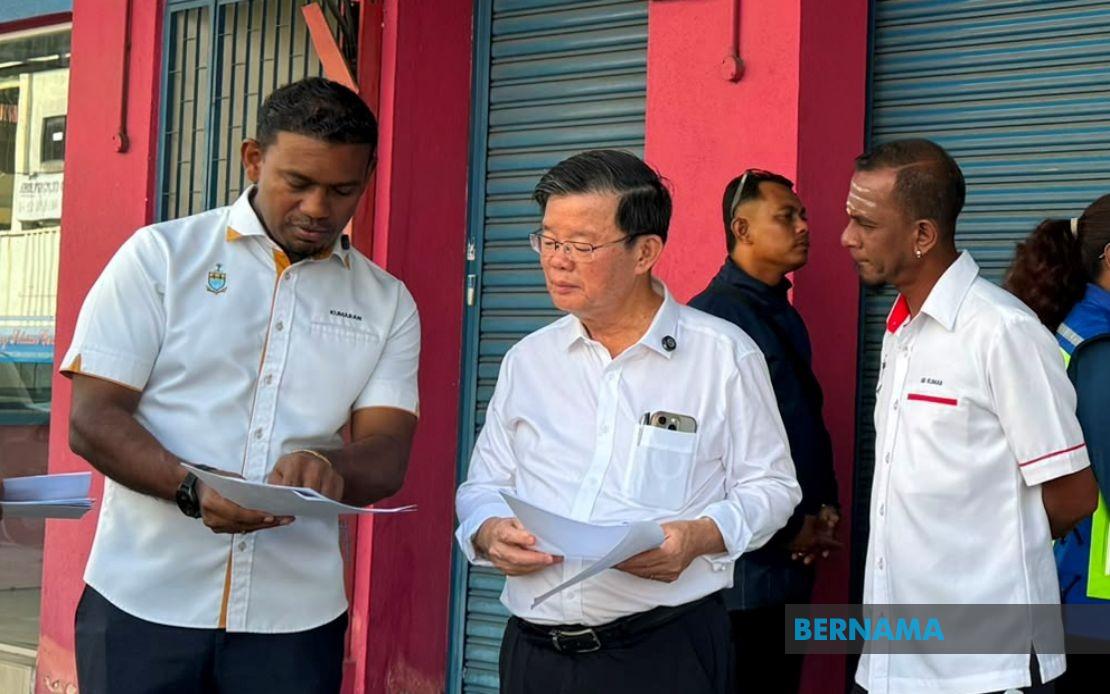
Penang's state government is moving forward without interruption on the implementation of revised water pricing that commenced on July 1, Chief Minister Chow Kon Yeow declared on Wednesday, rejecting requests from lawmakers to shelve the measure for another year. The decision comes after the administration had already deferred the start of the new tariff structure by nearly twelve months from its originally scheduled August commencement, seeking to cushion the impact on ratepayers even though the Federal Government's National Water Services Commission had mandated implementation by July 30, 2025.
The tariff adjustment is expected to generate approximately RM20 million in additional annual revenue for the Penang Water Supply Corporation, money that officials insist is indispensable for bankrolling critical initiatives designed to bolster the state's water security infrastructure. Chow emphasised during a media briefing in Butterworth that the government has thoroughly deliberated this course of action and determined that further postponement would be counterproductive to the state's long-term water sufficiency objectives.
Behind this determination lies an ambitious capital programme. Penang Water Supply Corporation requires nearly RM2 billion in capital expenditure dedicated purely to water supply resilience undertakings, figures that do not encompass substantial additional investment commitments required for the water transfer project originating from Perak state. These ambitious infrastructure plans underscore why state administrators believe the tariff adjustment cannot be delayed without jeopardising timeline and funding arrangements for these essential works.
The mechanism governing water rate-setting across Malaysia follows a standardised national framework overseen by the National Water Services Commission, which all states adopt uniformly. Under this structure, water operators are permitted to petition for tariff revisions at three-yearly intervals, provided they can substantiate their requests through documented operating expenses and infrastructure development requirements. This regulatory environment means Penang's decision to proceed aligns with broader national utility management practices rather than representing an isolated policy decision.
Crucially, Chow highlighted that Penang's domestic consumers maintain a privileged position within the tariff structure compared to the genuine cost of water delivery. The actual expense of supplying water to households has surpassed RM1 per cubic metre, yet residential users pay only approximately 65 sen per cubic metre under the revised schedule. This apparent generosity is sustainable only because non-residential sectors—industrial and commercial operations—absorb substantially higher charges that effectively subsidise household consumption. The cross-subsidy mechanism means businesses indirectly support domestic affordability, a trade-off that Chow stressed continues even with the latest price adjustment.
Opposition to the increase comes from Bagan Member of Parliament Lim Guan Eng, who recently appealed through social media for a twelve-month postponement of the 20 sen per cubic metre increase. His intervention reflects broader public concern about cost-of-living pressures in the state, a sentiment that resonates across Malaysian urban constituencies grappling with inflation and wage stagnation. The parliamentary representation underscores how utility pricing decisions, though technically mundane administrative matters, carry genuine political weight in contemporary Malaysian governance.
Datak K. Pathmanathan, chief executive officer of Penang Water Supply Corporation, articulated the operational necessity underpinning the tariff adjustment. According to his calculations, approximately 82 per cent of Penang households—those consuming 35 cubic metres or less monthly—will experience a maximum daily charge increase of RM0.08, translating to roughly RM2.55 additional monthly expenditure. For commercial enterprises consuming 500 cubic metres monthly, the impact rises to approximately RM77.70 in additional monthly costs. These figures, while moderate for substantial consumers, still represent tangible expense increases for price-sensitive households and small businesses.
The revenue generated through tariff adjustment will directly finance components of the Water Contingency Plan 2030, an ambitious framework designed to guarantee water availability across Penang through the remainder of this decade. Key initiatives receiving funding include construction of novel water treatment facilities at Mengkuang Dam and Sungai Perai, comprehensive land acquisition and modernisation of the Sungai Dua Water Treatment Plant, property procurement necessary for the Sungai Muda treatment installation, and critical pipeline infrastructure improvements linking Macallum and Bukit Dumbar. Each of these undertakings addresses specific vulnerabilities within Penang's water supply network, collectively representing the state's response to anticipated demand growth and supply security concerns.
For Malaysian observers, Penang's trajectory illustrates the mounting infrastructure challenges confronting urban states as populations expand and industrial development accelerates. The tariff debate encapsulates broader tensions between affordability expectations and genuine capital requirements necessary for service reliability. Unlike energy utilities, which benefit from natural resource revenues or subsidies, water corporations must finance expansion and maintenance almost entirely through user charges, creating inevitable pressure on pricing structures. Penang's experience—balancing government directives against fiscal realities—mirrors dilemmas faced by water authorities throughout Southeast Asia and globally.
The timing of the tariff implementation also reflects administrative pragmatism. By implementing on July 1 rather than waiting for the Federal Government's July 30, 2025 deadline, Penang authorities frontloaded the adjustment and demonstrated commitment to the Water Contingency Plan 2030 timeline. This decision suggests confidence that public resistance, while politically noticeable, will not crystallise into sustained opposition capable of forcing policy reversal. Government officials appear to be betting that once consumers adjust to the new charges—modest in absolute terms for most households—political salience will diminish. The approach reflects lessons learned from previous utility price increases across Malaysia, where early implementation often proves more effective than protracted delays that extend uncertainty and political agitation.
Moving forward, Penang's water sector will operate within a reinforced fiscal framework enabling accelerated infrastructure development. The state's experience also provides instructive context for other Malaysian water operators contemplating tariff adjustments, suggesting that explicit communication about cross-subsidies and explicit infrastructure linkages may help frame pricing decisions as investments rather than simple cost increases. Whether Penang's tariff strategy ultimately proves sustainable politically and financially will become clearer as the Water Contingency Plan 2030 initiatives commence construction and demonstrate tangible benefits to water security across the state.

