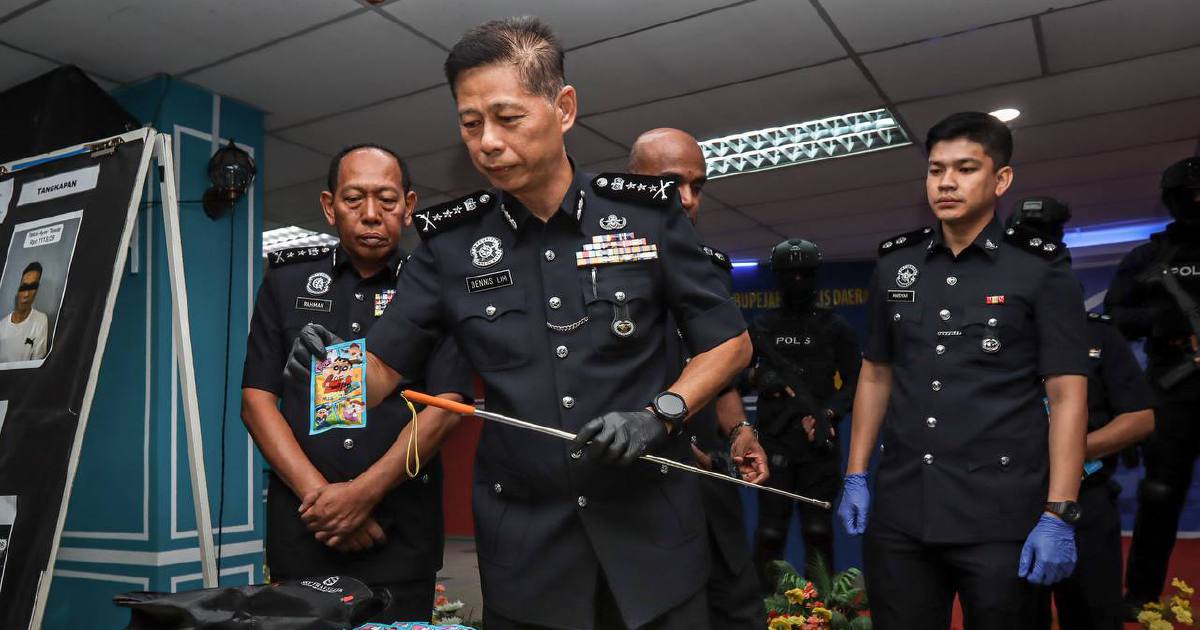
Penang police have announced a significant drugs seizure following a Sunday raid in the Teluk Air Tawar area, removing an estimated RM470,000 worth of MDMA — commonly known as ecstasy or molly — from circulation. The operation resulted in the confiscation of 3.1 kilograms of the synthetic drug, representing one of the larger hauls of its kind in the state in recent months and underlining the ongoing pressures law enforcement faces in combating designer drug trafficking throughout Penang.
The seizure represents a meaningful victory for local narcotics units, which have intensified their focus on synthetic and party drugs following intelligence indicating a surge in such substances entering the northern corridor. MDMA remains among the most prevalent illegal drugs in Malaysian nightlife and entertainment venues, particularly in major urban centres like George Town, where clusters of entertainment complexes and beach resorts create demand networks that attract suppliers. The street value calculation of RM470,000 reflects typical market pricing for MDMA in Malaysian urban markets, where the drug commands premium prices relative to other controlled substances.
The circumstances surrounding the raid suggest police were acting on actionable intelligence rather than routine patrol activity. While details regarding the specific intelligence or duration of surveillance preceding the operation remain limited, such precision operations typically develop over weeks of monitoring and information gathering. The targeting of Teluk Air Tawar, a location along Penang's coastal belt facing residential areas and tourism infrastructure, indicates dealers may have been attempting to operate from seemingly inconspicuous addresses to evade detection.
One individual was apprehended during the operation, though police have not released comprehensive details regarding charges, anticipated court proceedings, or the suspect's suspected role within any larger distribution network. This information gap is not unusual in initial enforcement announcements, particularly when investigations remain ongoing and authorities seek to prevent the alert of connected parties. Subsequent investigation will likely focus on establishing whether the arrested person represents a street-level dealer or occupied a more significant position within a trafficking organization.
For Penang, the seizure fits within a broader narrative of intensifying designer drug enforcement. Authorities have observed that MDMA availability in the state has expanded beyond traditional club environments into broader youth social circles, university settings, and private gatherings. The Teluk Air Tawar operation reflects attempts by law enforcement to disrupt supply chains before drugs reach end consumers rather than merely intercepting street-level transactions.
The logistics required to move 3.1 kilograms of MDMA through Malaysian distribution networks deserve consideration. Such quantities typically originate from international sources, passing through major port cities or border regions before fragmenting into smaller packets for regional distribution. Penang's geographic position as a major shipping hub and its proximity to major Malaysian population centres makes it a natural intermediate point in such supply chains, with dealers leveraging its connectivity to reach markets in Kuala Lumpur, Selangor, and beyond.
The social implications of MDMA prevalence in Malaysia merit reflection. Unlike opioids, which carry established harm profiles and treatment pathways, MDMA remains relatively novel within Malaysian public health discourse despite its presence in youth culture for two decades. Users often perceive MDMA as less dangerous than heroin or methamphetamine, yet the drug carries significant risks including hyperthermia, dehydration, and cardiovascular complications. No widespread Malaysian public education campaigns specifically address MDMA harms, potentially leaving young users poorly informed about safe practices or risk mitigation.
The enforcement response also reflects broader regional trends. Neighbouring countries including Thailand and Singapore have similarly intensified crackdowns on synthetic drug distribution, suggesting coordinated sourcing networks serving Southeast Asian markets. Intelligence sharing between regional law enforcement agencies has become increasingly sophisticated, with cross-border operations occasionally disrupting networks operating across multiple jurisdictions.
Looking forward, the sustainability of enforcement pressure against synthetic drugs depends partly on resource allocation and investigative capacity. Penang police face competing demands across numerous enforcement priorities, and maintaining momentum against designer drug traffickers requires sustained attention and funding. Intelligence-led policing approaches, as demonstrated in this Teluk Air Tawar operation, prove more effective than random interdiction but demand higher initial investments in surveillance and analysis capabilities.
The seizure also highlights the profitable dynamics of designer drug markets. A 3.1-kilogram haul representing RM470,000 in street value implies unit economics that sustain trafficking networks despite enforcement risks. As long as demand persists among affluent youth demographics capable of affording premium pricing, supply networks will develop and adapt. Reducing designer drug availability therefore requires concurrent demand-reduction strategies including youth education, community engagement, and treatment accessibility alongside enforcement efforts.

