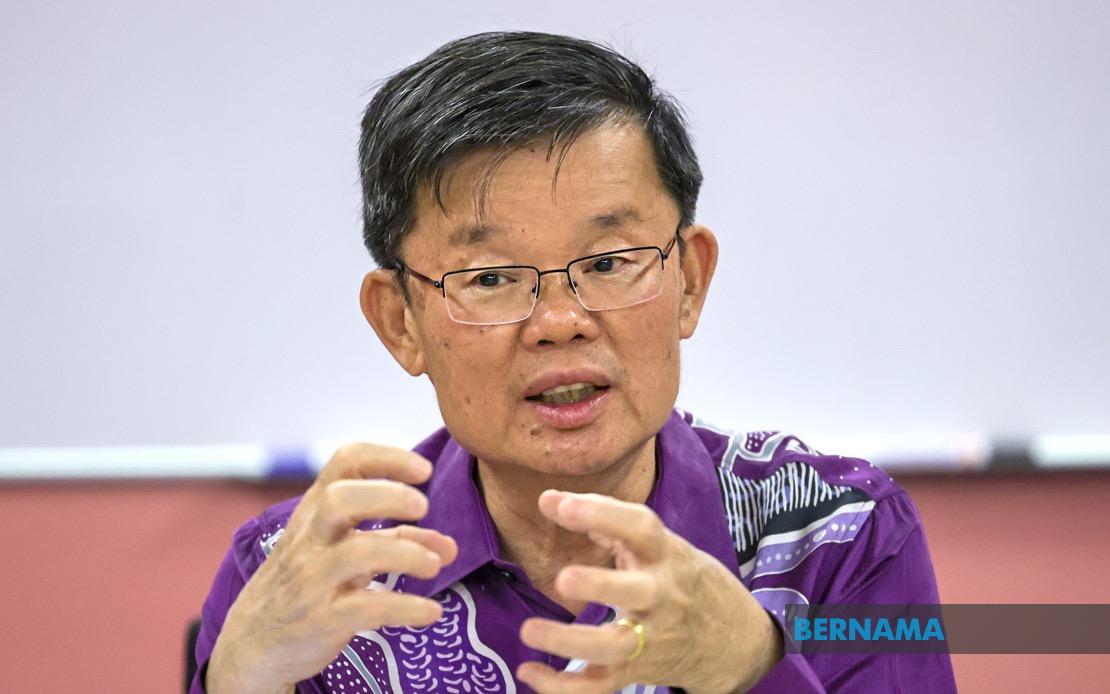
Penang's Pakatan Harapan leadership has committed to keeping Barisan Nasional's representative in the state cabinet intact until the next general election, signalling continuity in the regional Unity Government arrangement that has held since the 2023 state polls. The decision, announced by Penang PH chairman and Chief Minister Chow Kon Yeow after a coalition meeting in George Town, reflects the bloc's intent to preserve the cross-party alliance that has underpinned the state administration for the past year.
The commitment centres on Datuk Rashidi Zinol, the state's Rural Development, Agrotechnology and Food Security Committee chairman and the sole BN executive councillor in the Penang administration. His retention underscores the fragile but functional cooperation between PH and BN that emerged from the 2023 Penang state election, when the two coalitions jointly secured 29 of 40 contested seats. This arrangement, while unconventional given the parties' traditional rivalry at the federal level, has become a defining feature of the post-2023 political landscape in several Malaysian states.
Chow's announcement suggests that despite tensions and electoral competition elsewhere, Penang's PH leadership views the BN partnership as strategically valuable heading into the critical 16th general election campaign. The chief minister framed the decision as rooted in pragmatism, emphasising that the coalition believes retaining the arrangement provides room to deepen cooperation among component parties and accelerate the reform agenda central to PH's political identity. This framing acknowledges that unity, however uncomfortable, may be preferable to renewed confrontation in a state where PH has solid dominance.
The decision carries particular weight given recent electoral setbacks for PH in other states. Penang PH has evidently studied the outcomes of the Johor and Negeri Sembilan state elections and drawn lessons about the importance of coalition cohesion and strategic positioning. By maintaining BN's symbolic presence in the state executive council, the coalition may be attempting to signal stability and consensual governance to voters, a message that could prove valuable if public sentiment becomes volatile during the run-up to the federal polls.
Chow acknowledged that complacency poses a genuine risk despite the administration's tangible achievements. He noted that voter perceptions and sentiments often shift more rapidly than underlying facts on the ground, a recognition that speaks to the inherent unpredictability of Malaysian electoral politics. The coalition's efforts to drive economic growth, attract investments, create employment, and implement populist policies have strengthened Penang's material position, yet these accomplishments may not automatically translate into electoral support if the political narrative falters.
In response to this vulnerability, Penang PH is reportedly intensifying efforts to shape its political message more effectively. The coalition plans to acknowledge its shortcomings openly, a departure from the defensive posturing that sometimes characterises Malaysian political discourse. Simultaneously, it intends to harness digital platforms more strategically and engage more deliberately with the growing cohort of Undi18 voters—the newly enfranchised youth demographic that has emerged as a significant electoral force following changes to voting age legislation.
The retention of Rashidi Zinol's position also reflects broader calculations about the nature of the Unity Government experiment nationwide. Penang's arrangement, while smaller in scope than the federal coalition, demonstrates that cross-coalition cooperation can function at the state level, albeit within carefully defined boundaries. The decision to preserve this arrangement until the next general election rather than dissolving it before campaign season suggests that Penang PH believes the partnership serves its interests better than confrontation would.
However, the timeline matters significantly. By committing to maintain the arrangement specifically until the next general election rather than indefinitely, PH preserves flexibility to restructure its political positioning as the 16th GE campaign intensifies. This measured approach allows the coalition to enjoy the stabilising effects of cooperation while retaining the option to pivot toward more combative electoral strategies when necessary. It represents a pragmatic middle ground between complete merger and outright separation.
For Malaysian observers and political analysts, Penang's decision underscores how electoral alliances have become increasingly fluid and negotiated, moving beyond the rigid coalitional structures that dominated earlier decades. The state has effectively become a testing ground for new models of interparty cooperation that transcend traditional federal-level alignments. As PH and BN prepare for their eventual electoral contest, whether at state or federal level, the maintenance of this arrangement in Penang suggests both coalitions judge continued cooperation as temporarily advantageous.
Looking ahead, the trajectory of this partnership will likely influence how political coalitions operate elsewhere in Malaysia during the 16th general election cycle. If Penang's unity administration proves effective and delivers tangible benefits to constituents, it may encourage similar arrangements in other states. Conversely, if internal tensions or policy conflicts emerge, the model could unravel, signalling to other political leaders that such cross-coalition governance remains inherently unstable.
The chief minister's emphasis on the coalition's strength and integrity, coupled with his frank acknowledgement of the need for enhanced political communication, suggests that Penang PH understands the precarious nature of its position. The state administration enjoys genuine accomplishments, but success in electoral politics depends not merely on objective achievements but on voters' subjective perception of those achievements. By maintaining BN's representation while simultaneously intensifying efforts to strengthen PH's political narrative and expand engagement with new voters, the coalition is attempting to hedge its bets heading into what promises to be a fiercely competitive general election campaign.

