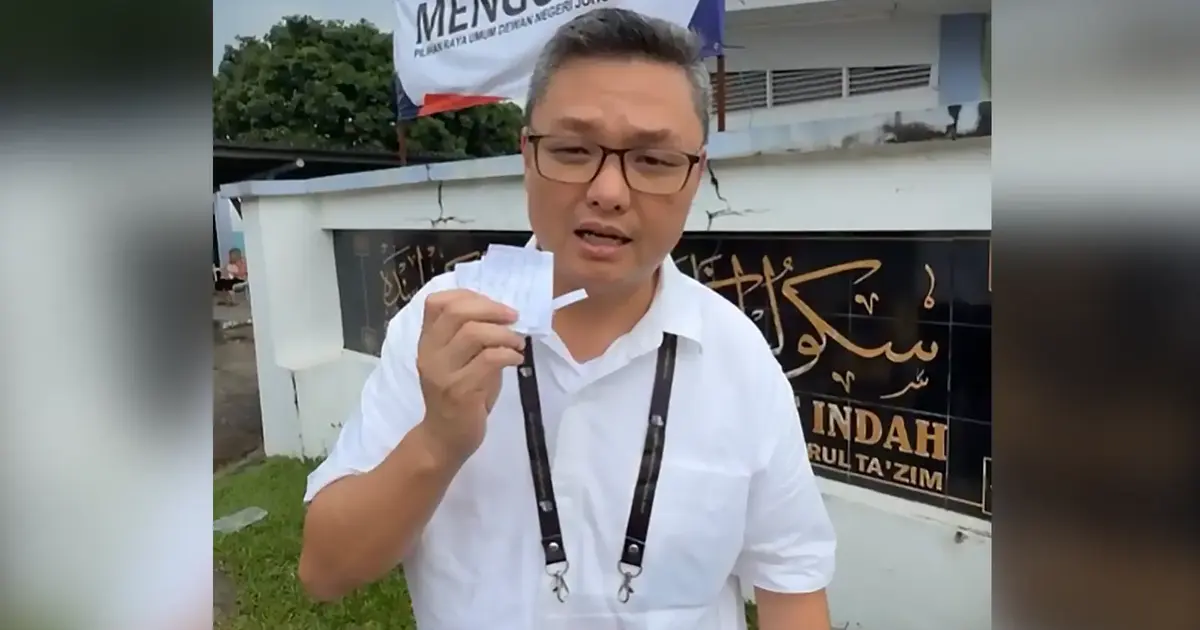
An election integrity concern has emerged in Penang after a Pakatan Harapan member alleged that a Barisan Nasional counting agent improperly documented individual voter choices during the recent polling process. Tee Boon Tsong, the PH activist lodging the complaint, has demanded that the Election Commission undertake a thorough investigation into the matter, with particular emphasis on securing the handwritten notes he claims were used to track votes cast.
The allegation strikes at one of the most sensitive aspects of democratic elections—the secrecy of the ballot. Malaysia's electoral framework explicitly protects voters' right to cast ballots in private, a principle that underpins public confidence in the fairness and legitimacy of the polling process. The suggestion that agents representing any political coalition were recording how individual voters cast their ballots would constitute a serious breach of electoral conduct standards, regardless of which party was involved.
Tee's complaint highlights the ongoing tensions surrounding election observation and the roles assigned to party representatives at polling stations. While Malaysian electoral law permits political parties to station counting agents and observers at voting locations to monitor the tallying process, strict guidelines govern their conduct and permitted activities. The boundary between legitimate observation and improper interference remains a contested territory, with both government and opposition parties frequently lodging complaints about agent behaviour during elections.
The existence of handwritten notes allegedly documenting individual voter choices would represent tangible evidence that could be examined as part of any formal inquiry. Such documentation, if it exists, would be difficult to justify under standard electoral operating procedures. Election observers are typically instructed to monitor the counting process itself—ensuring that votes are tallied accurately and recorded properly—rather than maintaining independent records that catalogue how specific individuals voted.
The Electoral Commission faces pressure to respond swiftly and credibly to such allegations. The agency's willingness to investigate complaints thoroughly, regardless of which party is implicated, remains crucial to maintaining public trust in Malaysia's electoral system. A sluggish or perceived biased response could fuel narratives about institutional capture and undermine confidence in future election outcomes, particularly among opposition supporters already sceptical of the commission's impartiality.
For Pakatan Harapan, the complaint represents an opportunity to demonstrate vigilance regarding electoral integrity while building a broader narrative about BN's alleged willingness to bend rules. The party has consistently positioned itself as a guardian of democratic norms since returning to electoral competitiveness following the 2018 general election. However, the credibility of such complaints depends on their factual foundation and the willingness of authorities to investigate impartially.
Barisan Nasional has not yet issued a formal response to the specific allegation, though the coalition has previously denied various claims of electoral impropriety. The party's position typically emphasises that its agents operate within prescribed guidelines and that complaints about agent behaviour often stem from political rivalry rather than substantive violations. The outcome of any investigation will likely be interpreted through deeply partisan lenses by supporters and critics alike.
The Penang context adds another dimension to this complaint. The northern state has been a PH stronghold in recent elections, with the coalition controlling the state government. Allegations of electoral misconduct in Penang carry particular weight given PH's dominance there, as they suggest that irregularities are occurring even in areas where PH exercises substantial political power. This geographic specificity could make the complaint more difficult to dismiss as routine partisan noise.
Electoral observers and civil society organisations have long flagged concerns about agent conduct at polling stations. Training for party representatives varies in quality and consistency, and enforcement of conduct guidelines often proves challenging during the heat of election day. The possibility that agents might maintain independent vote records—whether from carelessness, misunderstanding of their role, or deliberate intent—underscores the need for tighter protocols and clearer communication about permissible activities.
For Malaysian voters, incidents like this reinforce anxieties about ballot secrecy and electoral fairness that extend beyond this specific complaint. Public awareness of alleged vote recording, even if ultimately unproven, can chip away at confidence in the system's integrity. This psychological dimension of electoral trust should not be underestimated, particularly in a political environment where competing coalitions increasingly question each other's commitment to democratic principles.
The path forward depends on how thoroughly the Electoral Commission examines this complaint and whether its investigation produces clear findings. If handwritten notes exist, their contents, authorship, and purpose must be established definitively. If they do not, the commission should articulate why it reached that conclusion. Transparency in this process—within the bounds of electoral confidentiality requirements—will be essential for validating whatever outcome emerges from the inquiry.
Broader implications for Southeast Asian electoral governance also merit consideration. Malaysia's experience with agent conduct at polling stations offers lessons for other regional democracies grappling with similar challenges around observer protocols and election administration. As societies across Southeast Asia strengthen their democratic institutions, establishing clear, enforceable standards for party representation at polling stations becomes increasingly important for system legitimacy.

