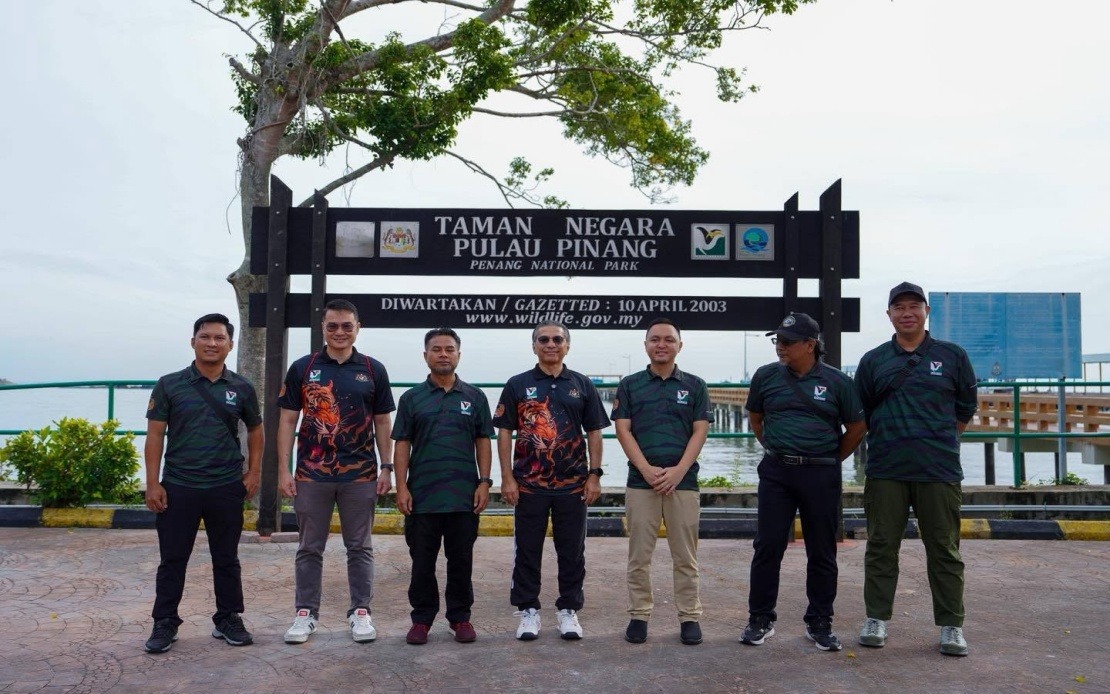
Malaysia's approach to environmental stewardship is undergoing meaningful evolution, with Penang National Park emerging as a case study in balancing strict preservation with meaningful public participation. During an inspection visit to the Teluk Bahang reserve, Deputy Minister of Natural Resources and Environmental Sustainability Syed Ibrahim Syed Noh articulated a vision extending beyond traditional fortress conservation—one that treats communities as essential partners rather than external stakeholders in safeguarding the nation's ecological heritage.
Penang National Park represents a remarkable concentration of biological diversity within a relatively compact area. The reserve encompasses multiple ecosystem types including primary and secondary forest, mangrove areas, coastal habitats, and the distinctive meromictic lake—a water body with chemically distinct layers that rarely mix, creating conditions for specialized microbial communities found nowhere else locally. This ecological complexity makes the park far more than a recreational destination; it functions as a living laboratory for understanding how interconnected habitats maintain broader ecosystem balance and resilience.
The conservation challenge facing Malaysia's protected areas extends beyond physical preservation to encompassing genuine integration with surrounding populations. Syed Ibrahim's remarks underscore a critical realization among policymakers: future generations will only value and protect natural areas if they have developed personal connections with those spaces through direct experience and education. This perspective represents a departure from historical approaches that often treated conservation as an exclusive domain of government agencies and scientific institutions.
Educational initiatives within the park demonstrate this evolving philosophy in practice. Entopia Penang offers interactive learning experiences allowing visitors of all ages to engage with biodiversity concepts through hands-on observation and participation. Rather than presenting conservation as a distant technical endeavor, these programs position environmental stewardship as an accessible responsibility that individuals can actively support through informed choices and sustained engagement.
The Turtle Conservation Centre at Kerachut Beach exemplifies targeted species protection addressing immediate ecological threats. Green Turtles and Olive Ridley Turtles face mounting pressures from habitat loss, marine pollution, and fishing practices across Southeast Asia. By establishing dedicated conservation facilities and conducting public education about turtle ecology and the threats these animals face, the initiative transforms individual tourist visits into moments of conservation awareness. When visitors witness ongoing protection efforts firsthand, abstract concepts about biodiversity loss acquire tangible meaning.
The meromictic lake inspires particular scientific interest due to its unusual chemistry and the specialized life forms adapted to its unique conditions. These rare ecosystems merit preservation both for their intrinsic ecological value and as research sites contributing to broader understanding of microbial diversity and ecosystem function. Protecting such distinctive features requires sophisticated management approaches that recognize their vulnerability to both direct disturbance and indirect impacts from surrounding land-use changes.
Ecotourism represents a potentially transformative economic mechanism for conservation if implemented with ecological constraints firmly established. Rather than allowing visitor numbers to exceed ecosystem carrying capacity, responsible ecotourism development prioritizes sustainable practices while generating revenue that funds ongoing management and creates local employment. This economic foundation becomes particularly important in regions where alternative livelihood opportunities remain limited, helping address underlying tensions between conservation and human development aspirations.
For Malaysian biodiversity protection to succeed at scale, the integration of conservation science with community participation must extend well beyond flagship parks. Penang's approach offers valuable lessons applicable to protected areas throughout Southeast Asia, where similar challenges involving habitat fragmentation, invasive species, pollution, and human pressure confront management authorities. The emphasis on educational initiatives and public engagement provides replicable models that other states and neighboring countries might adapt to their specific ecological and cultural contexts.
The Ministry of Natural Resources and Environmental Sustainability's positioning of conservation as grounded in "realities on the ground" acknowledges that protected areas function within broader human landscapes and cannot be managed as isolated preserves disconnected from surrounding communities. This perspective requires recognizing legitimate livelihood concerns while simultaneously establishing clear ecological boundaries protecting the most sensitive and valuable habitat areas.
Long-term biodiversity conservation fundamentally depends on sustained political commitment and adequate funding extending across decades and political transitions. Malaysia's ability to maintain protection of parks like Penang will ultimately reflect whether successive governments prioritize ecosystem services and cultural heritage alongside immediate economic development pressures. Current efforts to strengthen community connections with protected areas represent an investment in social infrastructure—building constituencies of informed citizens who understand why biodiversity protection serves their genuine long-term interests.
The framing of natural areas as intergenerational heritage rather than disposable resources carries particular significance in rapidly developing Southeast Asia, where urbanization and industrial expansion constantly encroach on remaining wilderness. By emphasizing that preserved ecosystems represent gifts to future Malaysians, policy discussions shift from asking whether conservation is economically justified to recognizing preservation as a fundamental responsibility transcending conventional cost-benefit calculations.
Penang National Park's multifaceted approach—combining strict protection of core habitats, targeted species conservation, educational programming, and sustainable recreation—demonstrates that fortress conservation and community engagement need not represent contradictory goals. Rather, they represent complementary strategies that together create more durable protection than either approach could achieve independently. This integrated model deserves careful study and potential expansion to other Malaysian protected areas facing similar pressures and opportunities.

