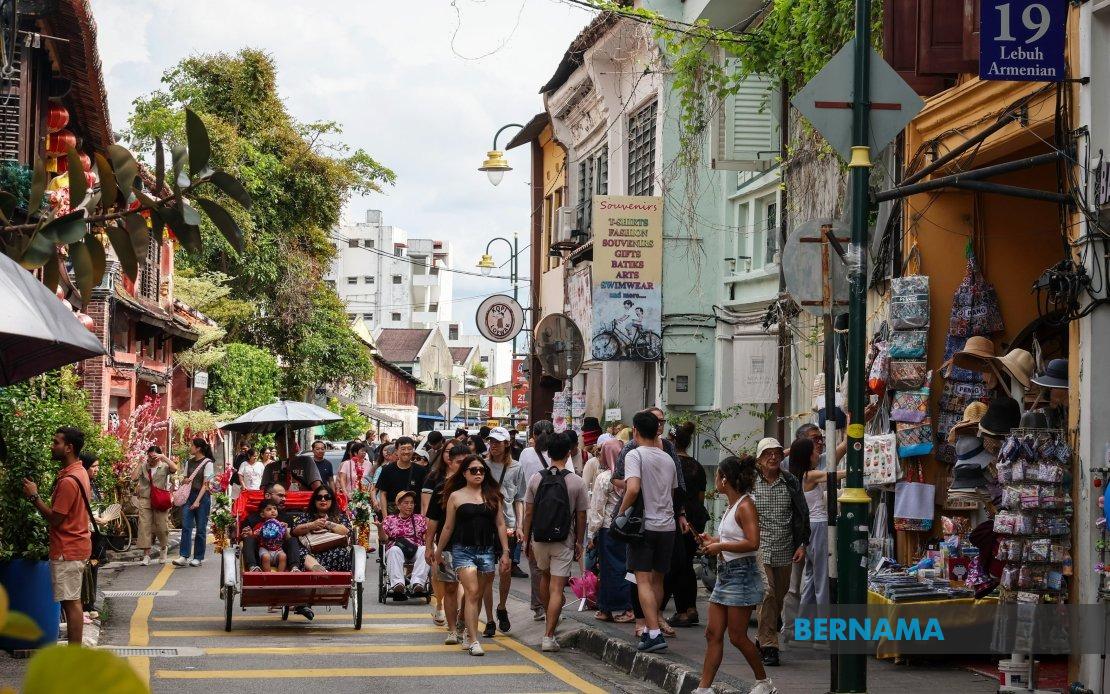
The Penang state government has initiated a comprehensive review of structural safety across its heritage building stock after a dramatic incident on Armenian Street left two tourists injured when wooden beams and concrete debris fell from a deteriorating shophouse. The collapse, which occurred in George Town's renowned heritage zone, has prompted urgent action to balance the preservation of historically significant structures with public safety concerns—a tension that will define conservation policy going forward across Southeast Asia's heritage-conscious cities.
Jason H'ng Mooi Lye, chairman of the State Local Government and Town and Country Planning Committee, announced that Penang will engage an independent structural engineer in consultation with the National Heritage Department to systematically evaluate buildings across the state. This study aims to identify structures posing safety risks, establishing a clear hierarchy of intervention priorities. Once complete, the Penang Island City Council will have authority to issue restoration notices to owners, shifting responsibility for repairs to private stakeholders while maintaining government oversight of heritage preservation standards.
The incident itself underscores the vulnerability of aging wooden structures in tropical climates. The two injured tourists, identified as Mohamad Ammtar, 66, and Fatimah, 55, from Sri Lanka, suffered injuries when materials cascaded from the deteriorating building. Preliminary investigations traced the structural failure to termite infestation—a particularly common problem in Malaysia's humid climate where wooden components in century-old buildings face relentless biological degradation. Mohamad Ammtar received treatment and was discharged from Penang Hospital, while Fatimah remained hospitalised undergoing a CT scan to evaluate the severity of her injuries.
The response reflects broader regional challenges facing heritage city administrators. George Town's UNESCO World Heritage status brings tourism revenue and cultural prestige, yet the very buildings that generate this value often require constant maintenance. H'ng's comments suggest Penang is adopting a pragmatic approach: rather than insisting on strict historical authenticity that might render buildings dangerously fragile, the government acknowledges that contemporary materials—while not historically authentic—may be necessary when original timber and components deteriorate beyond safe functional thresholds.
This policy position carries significant implications for conservation practice across Malaysia. Heritage preservation in Southeast Asia has traditionally emphasised aesthetic and cultural authenticity, sometimes at the expense of structural modernisation. Penang's willingness to countenance durability-focused material substitutions represents a maturation of heritage management philosophy, recognising that preservation means little if buildings collapse or injure occupants. The approach balances cultural heritage values against the legitimate public interest in safe urban environments.
State Tourism and Creative Economy Committee chairman Wong Hon Wai has instructed both George Town World Heritage Incorporated and the Penang Island City Council to issue formal advisories to heritage building owners state-wide. These communications will alert proprietors to potential structural vulnerabilities and expectations regarding maintenance standards. The advisory mechanism serves an educational function, informing owners—many of whom may lack technical expertise—about their obligations and available support systems for remediation work.
The practical challenge facing Penang authorities centres on implementation and enforcement. Heritage buildings often have fragmented ownership, with multiple units within single structures held by different proprietors of varying financial means. Wealthier owners may readily undertake restoration works, while those with limited resources might struggle to fund expensive repairs to maintain structural safety. This economic disparity could create a two-tier heritage landscape, where affluent districts maintain well-preserved buildings whilst economically depressed neighbourhoods face deterioration and potential safety hazards.
Financial mechanisms to support owner compliance will likely emerge as critical policy questions. Penang might consider heritage restoration grants, tax incentives, or concessional loans to enable owners to execute necessary safety upgrades without prohibitive costs. Without such support systems, enforcement notices could prove counterproductive, driving owners toward abandonment or illicit unauthorised demolition rather than restoration. Malaysian governments have occasionally deployed such incentive schemes, though consistency and adequacy of funding remain persistent challenges.
The Armenian Street incident also highlights tourism vulnerability in heritage destinations. The injury to foreign visitors risks reputational damage to George Town as a safe tourist precinct, potentially affecting visitor numbers and associated economic benefits. Southeast Asian heritage cities depend substantially on tourism revenue, making safety perceptions economically significant. Rapid, visible government action to address structural hazards thus serves multiple purposes: genuine public protection, owner accountability, and destination image management.
Looking forward, this episode may catalyse more sophisticated heritage building registries and monitoring systems across Malaysian cities. Digital mapping of structural condition, mandatory periodic inspections, and centralised databases could enable predictive maintenance and risk-based prioritisation of interventions. Such systems would represent a significant advance over reactive responses to crisis incidents. Kuala Lumpur, Melaka, and other heritage-designated areas might adopt comparable frameworks, establishing conservation standards that balance authentic preservation with contemporary safety expectations.
The broader lesson extends beyond Penang's borders. As Southeast Asian cities increasingly market heritage tourism and invest in preservation initiatives, structural safety must remain paramount. Building codes, inspection regimes, and owner support systems need strengthening region-wide. The Armenian Street incident serves as a cautionary reminder that heritage buildings, however culturally significant, remain physical structures subject to material degradation and environmental stress. Preservation means protecting these buildings for future generations through rigorous maintenance, not merely preserving their facades while interior structures deteriorate unnoticed.
Penang's commitment to comprehensive assessment represents a proactive governance response that could establish model standards for heritage city management throughout Malaysia and the wider region. By engaging independent expertise, coordinating between heritage and safety authorities, and preparing to enforce restoration standards, the state demonstrates that cultural conservation and public safety form complementary rather than competing objectives. The success of this initiative will likely influence how other Malaysian cities approach their own ageing heritage building stock.

