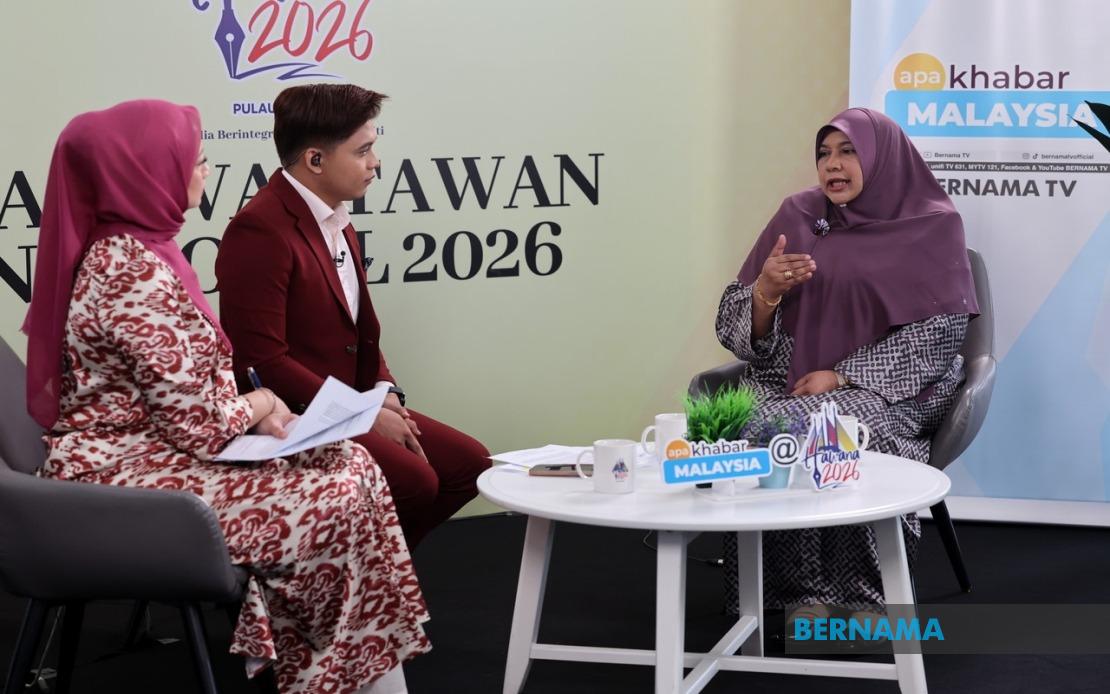
The curtain falls tomorrow on Malaysia's flagship celebration of journalism when the National Journalists' Day (HAWANA) 2026 summit converges in Penang, drawing roughly 1,000 media professionals from within the country and beyond. Scheduled to commence at 3 pm, the culminating event will be marked by Prime Minister Datuk Seri Anwar Ibrahim's official opening, symbolising the government's commitment to recognising the profession's indispensable role in the democratic fabric. Under the banner "Media Integrity Strengthens Credibility", the gathering represents a watershed moment for the media industry to collectively reflect on its responsibilities and future trajectory in an increasingly complex information environment.
The assembly will bring together a cross-section of Malaysia's media and political leadership. Penang Chief Minister Chow Kon Yeow, Communications Minister Datuk Fahmi Fadzil, and Communications Ministry secretary-general Datuk Abdul Halim Hamzah will be among those gracing the occasion. The Malaysian National News Agency (Bernama) will be well-represented, with chairman Datuk Seri Wong Chun Wai and chief executive officer Datin Paduka Nur-ul Afida Kamaludin attending alongside senior management from prominent local media organisations. This assembly of figures underscores how HAWANA transcends a mere ceremonial exercise, functioning instead as a nexus where institutional leadership and newsroom professionals converge to reinforce the importance of their collective mission.
Nur-ul Afida, overseeing the HAWANA 2026 Working Committee, has articulated a broader vision for the event than simple recognition. She emphasises that HAWANA functions as an instrument for consolidating professional relationships and deepening community engagement with the media sector. The committee has partnered with MyCreative Venture, a support agency under the Ministry of Communications, to expand the event's scope beyond the summit itself. This collaboration has birthed the RIUH Pi HAWANA Carnival, which commenced today at the PICCA Convention Centre parking lot, featuring live performances and interactive experiences designed to familiarise the broader public with media practitioners and creative industries.
The carnival dimension of this year's HAWANA celebration reflects evolving attitudes toward public engagement with the press. Over three days, the event hosts performances by established acts including Exists, Bunkface, Masdo, Sakura Band, Budak Nakal Hujung Simpang, and Chelsea Ng. Beyond entertainment, the carnival houses more than 24 local creative product brands and 20 food and beverage vendors, transforming what might otherwise be an elite gathering into a community festival. Interactive workshops provide visitors with direct exposure to media practitioners, thereby demystifying journalism and fostering greater appreciation for the profession's nuances and challenges.
The summit's proceedings will carry nationwide significance through extensive broadcast coverage. Bernama TV will stream the event live, with subsequent relay by RTM and TV AlHijrah, alongside distribution across local social media platforms. This multi-platform approach maximises accessibility for Malaysians unable to attend physically, extending the day's messaging to a significantly larger audience across the peninsula and East Malaysia. The emphasis on broadcast reach reflects recognition that celebrating journalistic integrity and credibility carries implications beyond Penang's confines—it speaks to aspirations for media standards throughout the nation.
The Prime Minister's role tomorrow encompasses substantive ceremonial duties beyond the formal opening. Anwar Ibrahim will distribute contributions from Tabung Kasih@HAWANA to veteran journalists facing financial hardship, a tangible expression of institutional support for the profession's elder statesmen and women. Simultaneously, he will present awards to victors of the HAWANA-DBP Pantun Festival, held on May 9, recognising excellence in traditional Malay verse composition. These concurrent acts symbolise the government's commitment to sustaining both the material welfare of journalists and the cultural dimensions of Malaysian literary and journalistic expression.
The awards component constitutes a crucial element of HAWANA's observance. Beyond recognition of festival participants, the summit will present the HAWANA Award and HAWANA Special Award to individuals whose contributions have substantially shaped journalism's development and informed public thinking in Malaysia. These accolades identify exemplars within the profession, establishing benchmarks for integrity and excellence that resonate throughout newsrooms and training institutions. By publicly celebrating such figures, HAWANA reinforces professional norms and aspiration within a media ecosystem navigating rapid technological change and epistemological challenges.
The historical anchoring of HAWANA itself merits reflection for those seeking to understand Malaysia's media consciousness. The celebration commemorates May 29, the date when the Utusan Melayu newspaper published its inaugural edition in 1939, marking a foundational moment in Malaysian journalism's institutional history. By tethering contemporary celebrations to this century-old milestone, HAWANA situates present-day practitioners within a continuum of journalistic endeavour spanning pre-independence colonial rule through post-Merdeka nation-building to the digital age. This temporal consciousness reminds practitioners of journalism's enduring obligation to serve the public interest across vastly differing technological and political landscapes.
Organised through the Ministry of Communications with Bernama as the implementing agency, HAWANA operates as the primary national platform for honouring media professionals' dedication and professionalism. The ministry's direct involvement signals governmental recognition that a functioning fourth estate—one capable of delivering accurate, authentic, and authoritative information—constitutes a foundational pillar of democratic governance and public confidence. Beneath the ceremonial veneer lies an implicit acknowledgment that journalism's capacity to inform citizens meaningfully shapes both political outcomes and societal cohesion.
The lead-up to tomorrow's culmination has involved multiple preliminary engagements designed to build momentum and deepen participation. A HAWANA 2026 Media Forum convened on May 7, followed by a Strategic Partner Meeting on June 4, and a Fun Walk HAWANA 2026 on June 14, all drawing substantial participation from both media professionals and the general public. These staggered activities function as scaffolding, gradually building awareness and investment in the final summit event. Collectively, they transform HAWANA from a single-day ceremony into an extended season of reflection, networking, and community interaction.
For Malaysian readers and the Southeast Asian media landscape more broadly, tomorrow's Penang summit carries implications worth monitoring. The emphasis on media integrity and credibility reflects regional and global preoccupations with misinformation, digital disruption, and public trust in institutions. By concentrating national attention on these themes through HAWANA 2026, Malaysia signals commitment to maintaining professional standards even as the industry undergoes profound structural transformation. The gathering also provides practitioners an opportunity to articulate their concerns and aspirations to political leadership, potentially influencing policy discussions around media freedom, digital regulation, and journalism's economic sustainability in years ahead.
The timing of HAWANA 2026 arrives as the Malaysian media industry confronts evolving challenges spanning generational transition, revenue model disruption, and changing consumption patterns among younger audiences. The festival's integration of entertainment, community engagement, and awards recognition suggests an industry seeking to remain culturally relevant while maintaining professional substance. Whether tomorrow's summit successfully bridges these tensions—celebrating journalism's traditional virtues while acknowledging the transformed realities of contemporary media practice—will offer observers valuable insight into the profession's capacity for institutional renewal and adaptation within Malaysia's democratic context.