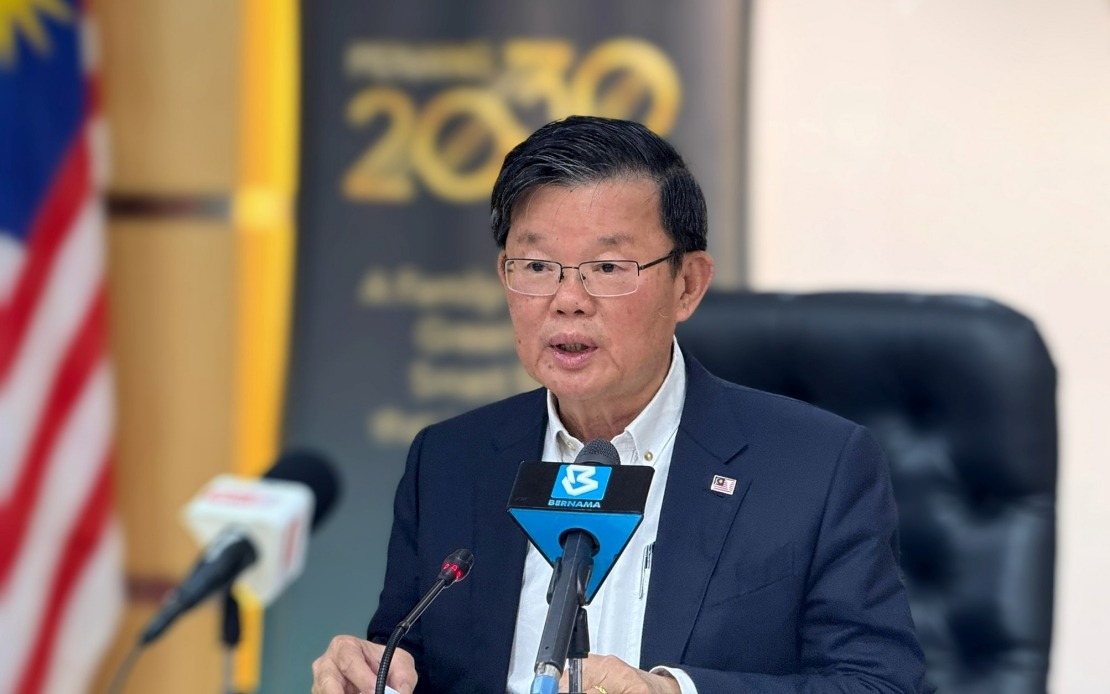
Penang has taken a significant step toward realising its ambition to establish an international financial centre by engaging PricewaterhouseCoopers Advisory Services Sdn Bhd as lead consultant to develop the foundational policy documents that will guide the initiative. Chief Minister Chow Kon Yeow announced that the appointment, formalised on June 15, represents a carefully considered move to translate the state's economic aspirations into a practical, implementable strategy centred on the proposed Penang International Financial Centre (PIFC).
The consultancy has been allocated 20 weeks to produce three interconnected deliverables: a comprehensive White Paper articulating the strategic rationale and regulatory framework; a detailed Strategic Blueprint outlining governance structures and infrastructure requirements; and a phased Action Plan mapping the implementation timeline. This layered approach reflects an understanding that establishing a financial hub of international standard demands more than vision—it requires rigorous groundwork addressing everything from regulatory architecture to physical facilities and human capital development. The timeline, expected to conclude by late July or early August, indicates the state's determination to move expeditiously while maintaining analytical rigour.
A progress report presented to the PIFC Special Task Force Committee on July 17 revealed that preliminary analysis has identified Penang's existing competitive advantages as the cornerstone upon which the financial centre concept should be built. The state's deeply entrenched position within the global electrical and electronics supply chain, encompassing semiconductor manufacturing, component design, and related services, provides both an anchor sector and a natural constituency for advanced financial services. Rather than attempting to create a financial hub divorced from economic reality, the PIFC model explicitly leverages what Penang already does exceptionally well—managing complex, technology-intensive manufacturing and supply chain operations.
This strategic grounding holds particular relevance for regional observers. Unlike greenfield financial centre initiatives that attempt to attract financial services through incentives alone, Penang's approach recognises that sustainable financial hubs typically emerge where they serve genuine economic activity. The state's electronics cluster generates substantial international trading, investment, and hedging requirements that would naturally support sophisticated financial services. By building the PIFC around existing industrial strength rather than aspirational repositioning, Penang positions itself within a more realistic development trajectory than some regional financial centre proposals.
Beyond the established electronics sector, Chow highlighted the initiative's potential to stimulate innovation across adjacent industries and strengthen broader economic resilience. Financial centres functioning as technology hubs increasingly attract innovation in fintech, insurtech, and blockchain applications. A PIFC consciously designed to support the state's electronics ecosystem while remaining open to adjacent technology sectors could catalyse a virtuous cycle in which financial services innovation drives manufacturing and supply chain improvements, which in turn deepen financial services sophistication. This multiplier effect would extend the initiative's economic impact far beyond the financial services sector itself.
PwC's mandate extends substantially beyond document preparation. The firm has been explicitly tasked with orchestrating comprehensive stakeholder engagement encompassing local and international industry participants, regulatory authorities at both state and federal levels, academic institutions, and other strategic partners. This consultation architecture serves multiple purposes: it legitimises the eventual recommendations through broad buy-in; it surfaces practical implementation challenges early; and it builds political and business coalition support essential for navigating the complex regulatory and infrastructure changes any financial centre requires. In the Malaysian context, where federal-state coordination around economic initiatives often requires careful negotiation, this engagement strategy may prove as valuable as the strategic analysis itself.
The initiative's emphasis on alignment with national technology ecosystem development strategy also merits scrutiny. Rather than positioning the PIFC as narrowly serving Penang's parochial interests, state officials have framed it as contributory to broader national innovation and competitiveness objectives. This alignment could prove strategically important in securing necessary federal support for regulatory changes, tax incentives, or infrastructure investments that the PIFC's establishment might require. By positioning Penang's financial centre ambitions as serving national technology development goals, the state creates conditions under which federal authorities might view the project as complementary to rather than competitive with their own economic development priorities.
For the broader Northern Region, the PIFC initiative carries significant implications. Should Penang successfully establish a functioning international financial centre, adjacent states including Kedah and Perlis could benefit from proximity to financial services infrastructure, potentially accelerating their own industrial development. Conversely, the concentration of advanced financial services in Penang might deepen the region's economic hierarchy, strengthening the state's primacy as the north's economic anchor. These dynamics will partly depend on how explicitly the PIFC's governance structures and incentive frameworks promote or restrict regional participation versus strict Penang-centric control.
The selection of PwC as lead consultant reflects confidence in the firm's track record advising governments and financial services sectors across Southeast Asia and globally. PwC's experience navigating regulatory frameworks across multiple jurisdictions and liaising between public sector policymakers and private sector practitioners positions the firm to translate Penang's aspirations into politically achievable and operationally sound recommendations. The consultant's ability to benchmark Penang's PIFC model against comparable initiatives in Singapore, Hong Kong, and Dubai while adapting insights to local circumstances will significantly influence the white paper's credibility and practical value.
Chow's expression of confidence that the PIFC would catalyse a technology-driven financial ecosystem reflects the state government's strategic vision, though the phrase encompasses both genuine opportunity and substantial implementation risk. Establishing international-standard financial services infrastructure requires sustained capital investment, regulatory innovation, and talent recruitment that must extend well beyond consultancy completion. The white paper and blueprint will represent necessary but not sufficient conditions for success. Execution—translating recommendations into actual regulatory changes, securing necessary infrastructure investment, and attracting financial services firms and talent—will ultimately determine whether the PIFC becomes transformative reality or aspirational planning document.
The appointment also signals Penang's determination to position itself not merely as a manufacturing hub but as a sophisticated, knowledge-intensive economic centre capable of competing for high-value financial services activities. This rebranding ambition reflects broader Malaysian trends as established industrial regions seek to upgrade value chains and economic positioning. Whether Penang's PIFC achieves its objectives will likely influence not only the state's economic trajectory but also the template for how other Malaysian regions approach the challenge of economic upgrading in an increasingly competitive regional environment where traditional manufacturing advantages face perpetual pressure from lower-cost jurisdictions.

