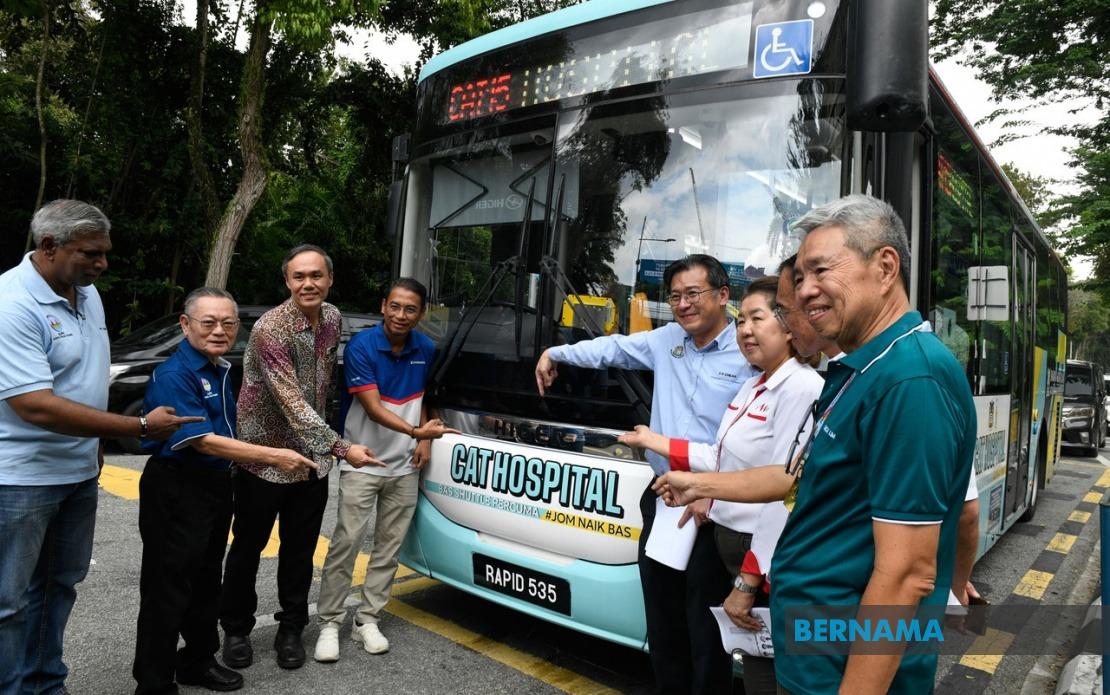
The Penang Island City Council (MBPP) has committed RM900,000 annually to operate a free Central Area Transit (CAT) shuttle bus service, underscoring growing municipal focus on public healthcare accessibility and traffic mitigation in urban areas. The eight-kilometre route links Komtar, Penang's administrative heart, with Penang Hospital (HPP) along with three private hospitals and multiple healthcare establishments scattered throughout the city centre, creating an integrated transport solution for patients, medical staff and visitors navigating the downtown medical precinct.
The initiative reflects a strategic response to practical challenges that emerged during Penang Hospital's recent expansion programme. MBPP Engineering Director Cheah Chin Kooi explained that comprehensive surveys revealed acute parking constraints and insufficient public transport infrastructure surrounding the enhanced medical facility, creating bottlenecks that threatened to undermine the expansion's benefits. By introducing dedicated shuttle connectivity at no cost to users, the council sought to address congestion while simultaneously improving equitable access to healthcare for residents who depend on public transport.
Since commencing operations on January 1, the service has demonstrated strong community uptake, with ridership patterns revealing genuine demand for this type of mobility solution. Initial passenger numbers hovered around 300 daily users, but this figure has climbed to approximately 600 passengers per day—a doubling that suggests the service has successfully filled a genuine transportation gap. Such growth trajectory indicates that Penang residents, particularly those accessing healthcare services, recognise the convenience and reliability that dedicated shuttle operations provide compared to navigating fragmented conventional bus routes or risking parking-related frustrations.
Three Rapid Penang buses service the route throughout extended daily hours, operating from 6 am until 8 pm with departures scheduled at 20-minute intervals, ensuring consistent 36 trips per day. This frequency structure balances operational efficiency against user convenience, allowing commuters to plan journeys without excessive waiting periods while maintaining reasonable cost-control for the municipal budget. The extended evening service until 8 pm reflects awareness that hospital visits and outpatient appointments frequently extend into early evening hours, particularly for working-age visitors managing personal healthcare alongside employment schedules.
Cheah articulated the broader policy objectives underpinning the investment, emphasising aspirations to encourage modal shift away from private vehicle dependency toward public transportation utilisation. Traffic congestion and parking scarcity represent persistent challenges across Malaysian urban centres, where hospital districts particularly concentrate vehicular demand during operational hours. By providing cost-free, reliable shuttle connectivity, MBPP attempts to make public transit the rational choice for hospital-bound journeys, reducing search time for parking spaces and associated environmental impacts from circulating vehicles seeking available spots.
The initiative demonstrates coordination between multiple stakeholders essential for successful urban transport integration. Rapid Bus Sdn Bhd Northern Region head Mohd Amir Abd Halim participated in the service inspection alongside Penang Hospital Director Dr Goh Hin Kwang and Penang Women's Development Corporation chief executive officer Datuk Ong Bee Leng, illustrating how government agencies, transport operators and healthcare administrators must align interests toward mutually beneficial outcomes. Such partnerships extend beyond ceremonial appearances, requiring operational agreements, service standards and performance monitoring mechanisms.
Complementary infrastructure improvements augment the shuttle service's effectiveness. Penang Hospital has upgraded pedestrian walkways along Jalan Residensi and undertaken renovations to the main entrance on Jalan Utama, recognising that seamless connectivity demands attention to both the journey between transport nodes and the final access points where patients actually arrive. Without thoughtful last-mile design, even efficient shuttle services fail to deliver their intended accessibility benefits if users encounter confusing wayfinding, poorly maintained sidewalks or inadequate signage linking bus stops to hospital entrances.
The policy explicitly prioritises vulnerable user populations, acknowledging that hospital accessibility carries particular significance for senior citizens and patient caregivers who may face mobility constraints or financial pressures limiting transport options. Free shuttle provision removes the cumulative cost burden that medical expenses already impose on households, recognising that transport costs represent a genuine barrier preventing some residents from accessing necessary healthcare. Equitable healthcare access requires removing not only medical obstacles but also the ancillary logistical and financial impediments that prevent people from reaching treatment facilities.
From a Southeast Asian governance perspective, Penang's investment signals recognition that public health infrastructure requires corresponding transport infrastructure investment to function optimally. Across the region, hospital expansion frequently proceeds without equivalent public transport enhancements, creating the precise congestion and access difficulties that prompted this initiative. The RM900,000 annual commitment, while substantial, represents relatively modest expenditure compared to the healthcare investment itself, suggesting favourable cost-benefit economics when transport improvements amplify healthcare facility utilisation and user satisfaction.
The doubling of daily ridership within months indicates strong product-market fit, validating the underlying demand assumptions that justified the programme. This empirical evidence will likely influence conversations among other Malaysian councils considering similar interventions, as the Penang model demonstrates measurable success attracting users to public transport for healthcare-specific journeys. Transport planners across Malaysia increasingly recognise that generic frequency improvements fail to convert car commuters unless targeted solutions address specific journey purposes like hospital access, where reliability, safety and convenience represent paramount concerns.
Looking forward, the service's sustainability depends on continued council budget allocation and ongoing partnership with Rapid Penang, requiring institutionalisation within municipal planning frameworks rather than treatment as temporary pilot initiative. If maintained and potentially expanded, similar shuttle networks could extend to other major medical facilities across Penang and potentially serve as template for other Malaysian cities managing hospital-induced traffic pressures. The investment demonstrates that urban transport policy increasingly embraces health-specific mobility solutions rather than expecting general transit networks to accommodate specialised journey patterns.

