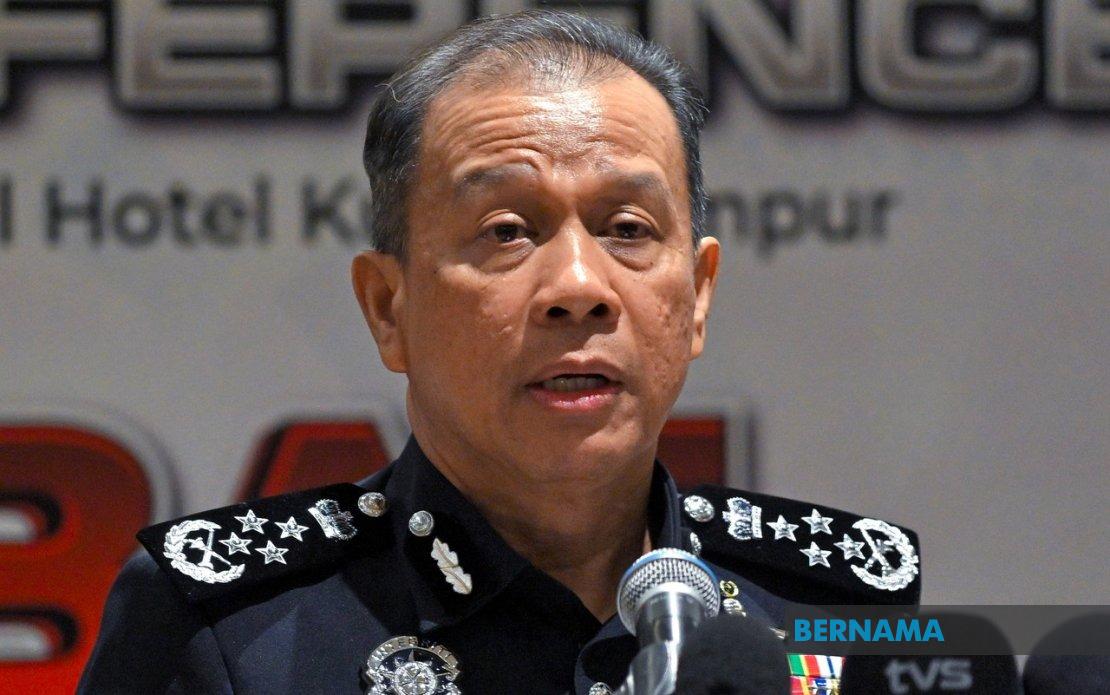
The Royal Malaysia Police has committed to full cooperation with a Cabinet-approved plan to embed police officers within the country's Aviation Security teams, marking a significant shift in how airport security is managed across Malaysian facilities. Inspector-General of Police Tan Sri Mohd Khalid Ismail confirmed the force's readiness to participate in what officials describe as an immediate enhancement to the nation's aviation security infrastructure, which has drawn increased scrutiny following the recent detention of a Malaysian pilot in Indonesia on suspected drug trafficking charges.
The decision to involve PDRM personnel represents a coordinated effort among multiple government agencies, with the Home Ministry, Ministry of Transport, and related departments currently working to establish the operational framework. Police leadership has indicated that considerable groundwork remains before deployment begins, with officials currently mapping out the specific roles officers will assume, determining which airports and facilities will receive enhanced police presence, calculating staffing requirements, and clarifying jurisdictional boundaries among the various security agencies that operate within Malaysia's aviation ecosystem.
According to Tan Sri Mohd Khalid, the integration of police into aviation security is premised on the operational advantages law enforcement brings to an environment traditionally managed by dedicated security personnel. The force believes that direct police involvement will accelerate intelligence gathering and information sharing between airport security teams and broader law enforcement networks, enabling faster identification of suspicious patterns or individuals. Additionally, police training in enforcement procedures and criminal investigation could enhance the capacity to detect and respond to threats before they materialise, while direct coordination between officers on the ground and command structures would theoretically reduce response times to security incidents.
The framework being developed envisages the police presence as part of a more sophisticated, multi-layered security architecture rather than a replacement for existing protocols. This approach involves reinforcing conventional security measures such as controlled access points, passenger and baggage screening, comprehensive security audits, and systematic threat assessments. By operating within a broader integrated system that connects airport security with police capabilities and intelligence services, officials argue the strategy creates redundancy and interconnected checkpoints that make it increasingly difficult for potential bad actors to exploit vulnerabilities in any single system or procedure.
Malaysia's aviation security environment has historically been managed through a combination of dedicated security contractors, airport authority personnel, and coordination with relevant government agencies. However, the recent case involving the Malaysian pilot accused of drug smuggling has prompted serious questions about whether existing frameworks adequately detect and prevent criminal activity exploiting aviation channels. The incident highlighted potential gaps in intelligence sharing and enforcement capabilities, with critics arguing that dedicated security personnel, while professional, lack the investigative tools and broader criminal intelligence networks that police forces possess. This incident effectively catalysed the Cabinet's decision to pursue deeper police integration rather than incremental adjustments to current systems.
Tan Sri Mohd Khalid's statement emphasises that the new arrangement targets criminal networks attempting to use airports and aircraft as conduits for illegal goods and activities. He explicitly noted that the police force will prioritise preventing any exploitation of aviation infrastructure for smuggling operations, a commitment that carries particular weight given the Malaysian pilot case and broader regional concerns about transnational drug trafficking. The statement suggests that police involvement will include active investigation and enforcement functions, not merely advisory or supportive roles within existing security structures.
From a regional perspective, Malaysia's move reflects a broader trend among Southeast Asian nations to strengthen airport security in response to transnational organised crime and trafficking networks. Countries including Thailand, Singapore, and Indonesia have progressively integrated law enforcement more directly into aviation security protocols, recognising that traditional security models alone struggle to counter sophisticated smuggling operations. Malaysia's decision positions the country alongside regional peers in adopting more aggressive intelligence-led security approaches, though the specific implementation details will ultimately determine whether the measure meaningfully closes existing vulnerabilities.
The emphasis on intelligence sharing and early detection indicates that the government views the police integration as part of a larger shift toward predictive security models rather than purely reactive responses. By combining airport security with police access to criminal databases, informant networks, and joint task forces targeting organised crime, the integrated approach theoretically enables authorities to identify suspicious passengers or patterns before they reach departure gates. This preventive orientation contrasts with traditional security screening, which focuses on detecting prohibited items rather than predicting criminal intent.
Operational success will depend significantly on how effectively different agencies coordinate and share information. Airports in Malaysia are currently managed by various authorities including Malaysia Airports Holdings Berhad, which operates major international facilities, alongside state-level entities overseeing smaller regional airports. Integrating PDRM personnel across this fragmented landscape requires clear protocols for communication, decision-making authority, and liability allocation. The working groups currently developing implementation mechanisms will need to resolve these structural challenges before meaningful deployment can commence.
The timeline for the police integration remains undefined, with officials indicating only that the measure represents an immediate improvement priority. Given the need to establish procedures, allocate personnel, and coordinate across multiple agencies, deployment will likely occur in phases, potentially beginning at major international airports in Kuala Lumpur and other principal cities before expanding to secondary facilities. The pilot phase will provide important data about operational effectiveness, resource requirements, and any unintended consequences that comprehensive airport security monitoring with police involvement might generate.
For Malaysian travellers and the aviation industry, the changes could produce both benefits and adjustments. Enhanced security may increase confidence in airport safety and the integrity of Malaysia's aviation system, potentially boosting passenger and freight traffic if the perception of security improves. However, more intensive police involvement could also extend processing times and create additional friction points for legitimate passengers, depending on how police personnel operate within airport environments. Airlines and ground handlers will need training on the new security architecture to ensure smooth operations during the transition period.

