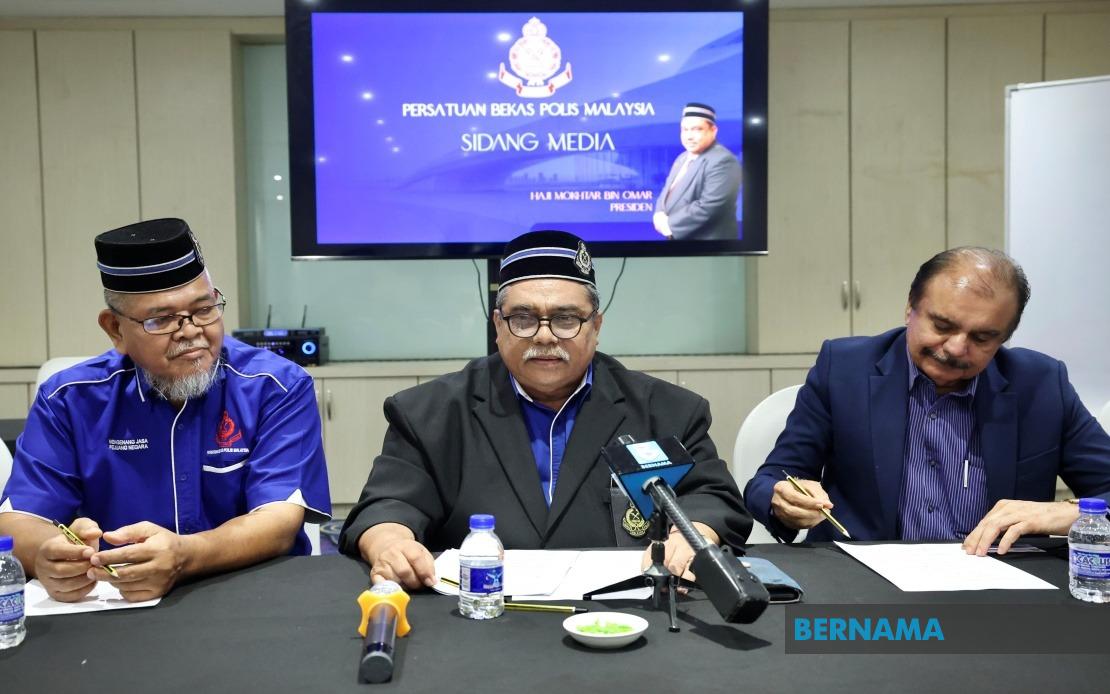
The Malaysian Ex-Police Association (PBPM) has mounted a fresh appeal to the federal government to introduce a dedicated monthly cost-of-living allowance targeting non-pensionable former police officers who now face mounting financial strain. The initiative comes as the association seeks to address what it characterises as an overlooked segment of Malaysia's security services community—individuals who contributed significantly to the nation's stability but lack the pension protections afforded to their counterparts. President Mokhtar Omar presented the case to media in Kuala Lumpur on August 13, emphasising both the moral imperative and fiscal feasibility of the proposal.
The scale of the challenge is substantial. According to PBPM records extending back to 1972, roughly 40,000 of the association's 86,000 registered members belong to the non-pensionable category, representing nearly half its membership base. This cohort includes individuals who served in specialised units such as the Special Squad and Home Guard, as well as former contract inspectors deployed during Malaysia's Emergency period. Many are now elderly, their working years long behind them, and their savings depleted by decades of inflation and unexpected health costs. The passage of time has narrowed their ranks, yet those who remain often struggle to meet basic living expenses without regular employment income.
Mokhtar framed the proposal as both recognition of sacrifice and a practical acknowledgment of demographic reality. He argued that the absolute number of claimants is now manageable from a budgetary perspective, and that the government's financial burden would be comparatively modest given the historical contributions these individuals made to national security. The emotional resonance of the argument is clear: these men and women served during a period when Malaysia faced genuine internal security threats, often accepting less formal employment arrangements in exchange for patriotic duty. That many were subsequently denied pension eligibility due to the nature of their contracts now appears increasingly inconsistent with contemporary standards of veterans' welfare.
The PBPM has suggested a monthly special allowance bracket of between RM300 and RM500 per recipient, though the full context of that proposal was not entirely captured in the original statement. This range positions the scheme as a modest but meaningful supplement rather than a comprehensive living wage, pitched at a level that might be defensible within tight fiscal constraints while still providing tangible relief to recipients managing day-to-day expenses. The association recognises that such a programme would require legislative backing and budgetary allocation, necessitating sustained advocacy with policymakers.
Beyond the monthly allowance proposal, PBPM is advocating for a comprehensive overhaul of existing welfare mechanisms. The Police Heritage Trust Fund (TAWP) has come under review, with the association calling for enhanced assistance rates and broader coverage. The expanded mandate would encompass educational support for the children and grandchildren of former personnel, subsidised healthcare access, and disaster relief provisions—acknowledging that non-pensionable retirees remain vulnerable to the same economic shocks that affect other Malaysian households. This multi-faceted approach suggests the association views its challenge not merely as a pension gap but as a systematic exclusion from modern social safety nets.
Complementing its government advocacy, PBPM is mobilising alternative revenue streams through corporate engagement. Information Chief Datuk Dr Basant Singh Sidhu announced plans for an October fundraising dinner designed to harness private sector support. The target of RM1 million reflects ambition but also realism—such sums, while substantial in philanthropic terms, represent a fraction of what a nationwide government allowance scheme would cost, yet demonstrate the association's determination to alleviate immediate hardship even as it pursues permanent policy solutions.
The projected use of fundraising proceeds reveals the spectrum of unmet needs within the membership. Medical equipment, wheelchairs, hearing aids, and nutritional supplements such as milk are among the items earmarked for distribution. These are not luxuries but fundamental enablers of dignity and independence for ageing retirees. The itemisation also underscores how existing social security systems may fail to address the specific vulnerabilities of this population, particularly those managing mobility issues or chronic illness on minimal incomes.
The timing of PBPM's campaign reflects broader regional conversations about veterans' welfare and intergenerational responsibility. Malaysia's Emergency concluded in 1960, yet the legal and administrative distinctions between pensionable and non-pensionable service remain embedded in bureaucratic structures. As survivors of that era approach their final years, the window for remedying historical inequities narrows. Neighbouring countries have grappled with similar questions, often settling on inclusive approaches that recognise service regardless of the technicalities of employment categorisation.
For the Malaysian government, the proposal presents both moral and practical considerations. The fiscal impact of a modest monthly allowance to 40,000 individuals would be substantial but quantifiable, likely ranging in the tens of millions of ringgit annually depending on the exact allowance rate selected. Against this must be weighed the political capital gained from visibly honouring a vulnerable cohort with historical claims on state recognition, particularly as election cycles approach. The PBPM's framing—that the burden is light relative to benefit—is designed to appeal to policymakers' desire for efficient, targeted spending.
The proposal also illuminates how legalistic distinctions in employment contracts can crystallise into long-term inequalities across entire cohorts. Had these individuals been classified as pensionable when first hired, their retirement security would be assured; instead, contractual minutiae from decades past continue to determine their access to state support. This structural legacy problem suggests that resolution may require not just new spending but a reckoning with how pension eligibility was historically determined and whether those determinations remain defensible by contemporary standards.
Looking forward, the PBPM faces the challenge of maintaining political salience for an issue that affects a declining population with limited electoral leverage. Fundraising dinners and public campaigns generate awareness, but sustained government commitment requires either legislative action or consistent budget allocation. The association's dual strategy—seeking permanent government support while building interim private assistance mechanisms—acknowledges this reality. Success will likely depend on whether the PBPM can frame its case as a matter of national obligation rather than sectional interest.

