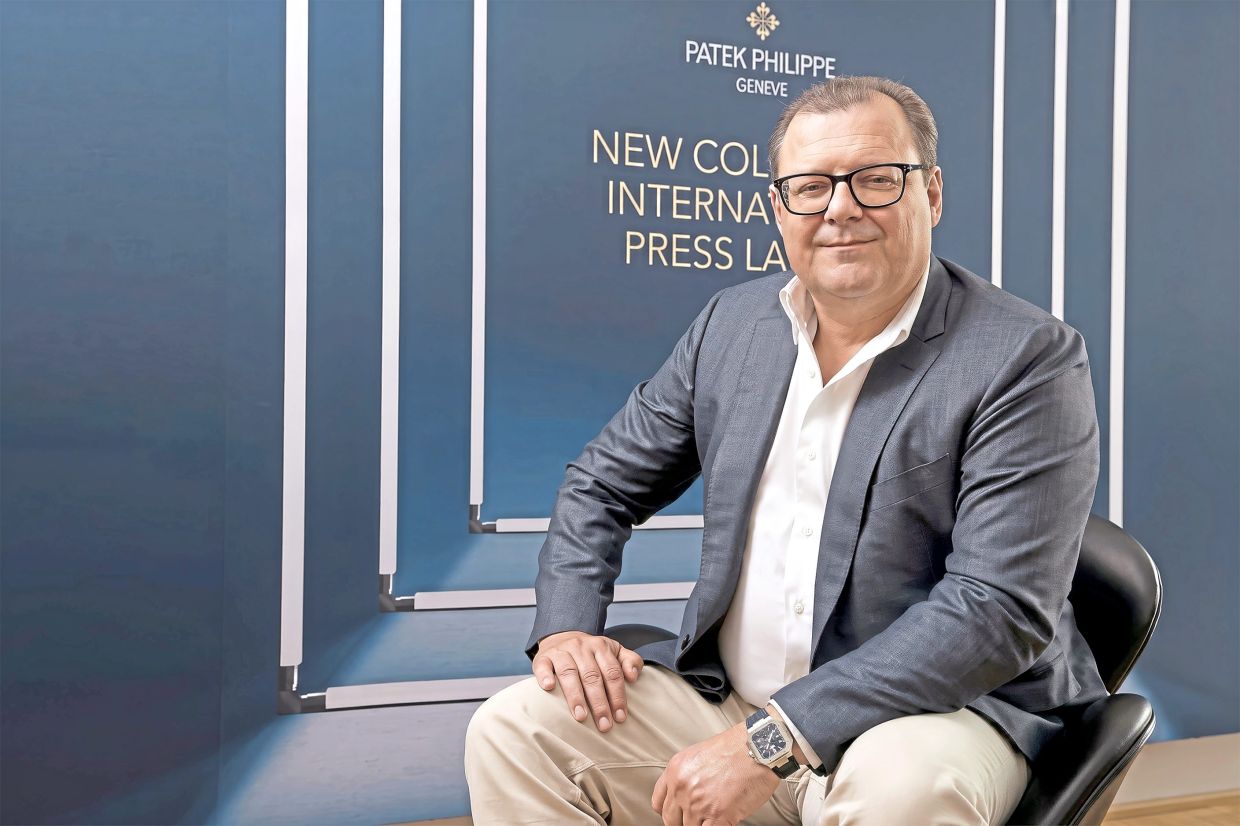
Thierry Stern speaks with the conviction of a devoted horologist rather than a corporate executive overseeing one of watchmaking's most hallowed institutions. The 55-year-old president of Patek Philippe brooks no pretence when discussing what it takes to lead the fourth-generation family business—and his candour offers a window into how Swiss luxury brands navigate the tension between heritage and relevance in an evolving market.
When Stern insists that passion for timepieces is not merely desirable but absolutely fundamental to succeeding in his world, he is articulating something that resonates throughout the premium watch industry. "If you do not like watches, don't expect to be able to do this job," he remarked during an interview at Watches and Wonders 2026 in Geneva. His point cuts deeper than corporate cheerleading. In an industry where clientele often possess encyclopedic knowledge of movements, cases, and design lineages, any hint of inauthenticity becomes immediately apparent. Clients, he notes, possess sufficient expertise to detect when leadership lacks genuine enthusiasm. Intelligence and business credentials alone cannot compensate for this deficit; customers sense disengagement the moment a steward treats watches as mere commercial commodities rather than objects of artistic and technical devotion.
This philosophy acquires particular significance as Patek Philippe marks a watershed moment in its history. The year 2026 marks fifty years since the Nautilus—arguably the most transformative design in modern horology—made its controversial debut in 1976. Created by the legendary designer Gerald Genta, the watch's porthole-inspired case and integrated bracelet shocked traditionalists who viewed the aesthetic as too modern, too industrial, fundamentally at odds with Patek Philippe's conservative identity. The maison's archives reveal how fiercely some purists resisted what they perceived as a betrayal of house values. Today, that same Nautilus commands years-long waiting lists and fetches astronomical prices at auction, a reversal that Stern finds darkly amusing. "When the Nautilus was launched, I was six. Everybody who was complaining in 1976—and believe me, there were many—is long gone," he remarked with evident satisfaction.
The anniversary offerings demonstrate Stern's understanding that celebrating legacy need not mean merely replicating the original formula. Three limited-edition Nautilus models, including variants in white gold and platinum, arrive alongside a desk clock drawing inspiration from the iconic sports watch. What makes these releases notable is their restraint. Rather than introducing complicated movements or avant-garde embellishments, Stern deliberately chose simplicity. "I think everybody expected me to come with a tourbillon, or whatever," he explained. The decision reflects mature leadership: understanding that adding complexity for complexity's sake risks compromising the essence of a design that derives its power from elegant economy. The ultra-thin 6.9mm cases harness the historic micro-rotor Calibre 240, a movement that represents continuity with horological tradition rather than technological excess. Getting the ergonomics of case and bracelet precisely right consumed considerable development time—a commitment to incremental refinement that underscores Stern's rejection of shortcuts.
Stern's approach to stewardship was shaped by his father Philippe Stern, who helmed the company before him. The younger Stern absorbed a crucial lesson during years spent travelling alongside his predecessor: genuine understanding of client needs demands constant engagement with retailers and end customers. This principle—that leadership requires listening and learning across geographies—remains embedded in how Stern thinks about Patek Philippe's global position. The maison ranks among the five largest Swiss luxury watch brands worldwide, sharing that rarefied tier with Rolex, Cartier, Audemars Piguet, and Omega. Yet occupying such heights carries obligation. Stern recognises that complacency inevitably leads to decline. "If I don't take risks, I'm not evolving. There is no way I can keep Patek Philippe at the same level over the years if we don't move," he contended. This conviction separates him from a purely custodial approach to heritage brands, where leaders treat themselves as museum directors rather than active innovators.
Yet Stern's philosophy of necessary risk-taking remains disciplined and contextual rather than reckless. He does not advocate for arbitrary experimentation but rather for strategic interventions informed by market observation and design coherence. The Aquanaut, introduced in the late 1990s, exemplifies this measured approach. Conceived as a younger, more athletic counterpoint to the Nautilus, the Aquanaut expanded Patek Philippe's appeal without diluting brand identity or cannibalising core offerings. It represents the kind of calculated expansion that respects existing architecture whilst opening new customer pathways. For Malaysian and Southeast Asian collectors—a market where Patek Philippe maintains devoted followings despite scarcity and lengthy acquisition waiting times—Stern's philosophy carries particular resonance. In regions where access to premium watches remains constrained and secondary market premiums remain substantial, understanding that leadership prioritises authentic craftsmanship over quarterly financial targets provides reassurance about long-term brand stewardship and value preservation.

