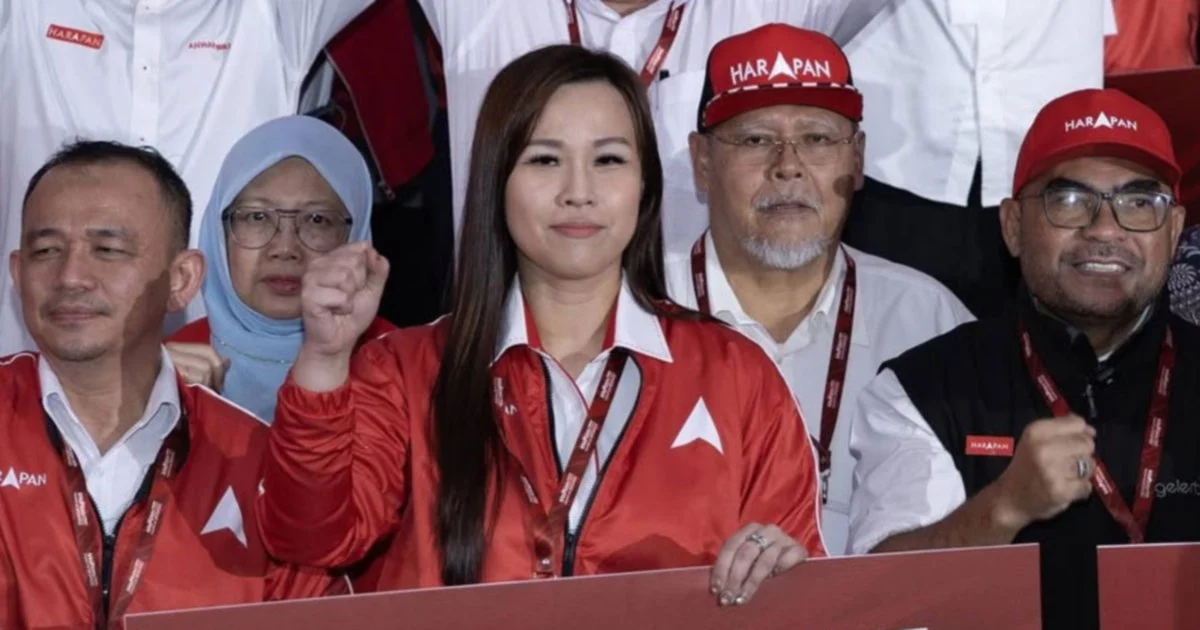
The Pasir Gudang division of Amanah has signalled its intention to withhold electoral support for Sharon Teo, Pakatan Harapan's chosen candidate for the Permas state constituency in the upcoming 16th Johor state election, accusing party leadership of imposing an external figure on a seat the local party apparatus considers its stronghold. This decision represents a significant fracture within Pakatan's alliance structure in Johor, exposing underlying tensions over how candidates are selected and deployed across contested territory in a state where the coalition maintains active party membership and organizational infrastructure.
The term "parachute candidate" carries particular weight in Malaysian electoral discourse, referring to politicians who are deployed into constituencies where they hold little grassroots connection or prior organizational involvement. For Pasir Gudang Amanah members, Sharon Teo's appointment appears to exemplify this practice, suggesting that coalition leadership in Kuala Lumpur or Johor state level made the selection without meaningful consultation with the party division responsible for mobilizing voters and maintaining party presence in the constituency. This approach stands in contrast to the localist principles that many Amanah members believe should guide candidate selection, particularly in seats where the party has cultivated voter relationships over multiple election cycles.
The grievance reflects broader challenges facing Pakatan Harapan as the coalition attempts to balance competing interests between senior leadership's strategic preferences and the autonomy that local party divisions expect in their territories. When coalition partners operate with different expectations about how decisions should be made, the resulting friction can undermine campaign effectiveness and volunteer enthusiasm precisely when unified effort matters most. Amanah's public boycott announcement signals that this particular disagreement has escalated beyond closed-door negotiations into territory where local party members feel compelled to make their dissatisfaction visible to the broader electorate.
Johor represents strategically important ground for Pakatan Harapan, given the state's significant number of seats and the coalition's ambitions to strengthen its position there. However, the state has also proven unpredictable in recent electoral contests, with voter preferences shifting between different political combinations. In this context, internal coalition unity becomes especially critical. When one partner threatens to withhold campaign participation, it potentially reduces the coalition's capacity to mobilize voters effectively, even if the boycott remains informal rather than extending to active opposition.
The dynamics at play in Pasir Gudang illuminate how candidate selection decisions carry consequences far beyond the individual personalities involved. Sharon Teo, regardless of her qualifications or experience, becomes a focal point for debates about internal coalition governance, local party autonomy, and the legitimacy of top-down decision-making in democratic structures. For voters considering which coalition to support, visible disputes about how parties operate internally can shape perceptions about whether those coalitions truly embody the democratic principles they advocate in their political messaging.
Amanah's position in Malaysian politics has historically emphasized internal democracy and grassroots participation as core organizational values, distinguishing itself from other coalition partners perceived as more hierarchical. When the party's Pasir Gudang division perceives that these principles are being violated through candidate imposition, the resulting resistance taps into genuine ideological commitments held by party activists. This makes the boycott more than tactical maneuvering; it represents defense of organizational identity.
The timing of this dispute, unfolding during the campaign period for the 16th state election, adds urgency and visibility to what might otherwise remain an internal coalition matter. Voters and observers across Johor are now aware that Amanah members in Pasir Gudang oppose their own coalition's choice for Permas. This public knowledge complicates the coalition's messaging and potentially confuses voters who might expect unified support for coalition-endorsed candidates. Campaign volunteers from Amanah who disagree with the boycott decision face awkward choices about whether to follow party division direction or coalition directives.
The situation also raises questions about how Pakatan Harapan's leadership anticipated and managed this risk. If coalition decision-makers understood that Pasir Gudang Amanah would likely resist the Sharon Teo appointment, the failure to negotiate a resolution beforehand suggests either miscalculation about the division's influence or deliberate prioritization of other factors over maintaining harmony with local party structures. Conversely, if the resistance surprised leadership, it indicates inadequate consultation mechanisms within the coalition.
For Sharon Teo herself, contesting Permas without the organized support of a significant Amanah contingent presents genuine difficulties. She must either build support primarily through her own network, through other coalition partners' structures, or through whatever backing Amanah members choose to offer individually despite their division's position. The boycott doesn't prevent her candidacy but substantially complicates the campaign infrastructure she could otherwise expect.
The broader Southeast Asian context shows that coalition politics regularly encounter such tensions, particularly in democracies where multiple parties attempt to coordinate electoral strategies. How these disputes are resolved—through negotiation, compromise, acceptance of division hierarchy, or escalation into public disputes—shapes coalition durability and effectiveness. Pasir Gudang Amanah's decision to publicize their boycott rather than quietly accept the arrangement suggests they believe the local costs of visible resistance are lower than the costs of silent capitulation to a decision they view as wrong.
Looking forward, this dispute will likely influence how Pakatan Harapan approaches candidate selection in subsequent elections. If the boycott materially harms Permas campaign prospects, coalition leadership may become more attentive to local party division preferences in the future. Conversely, if Sharon Teo performs unexpectedly well despite the Amanah withdrawal, it might embolden coalition leadership to continue top-down selection approaches. The 16th Johor state election thus serves as a test case for how coalition governance evolves in Malaysia's competitive electoral environment.