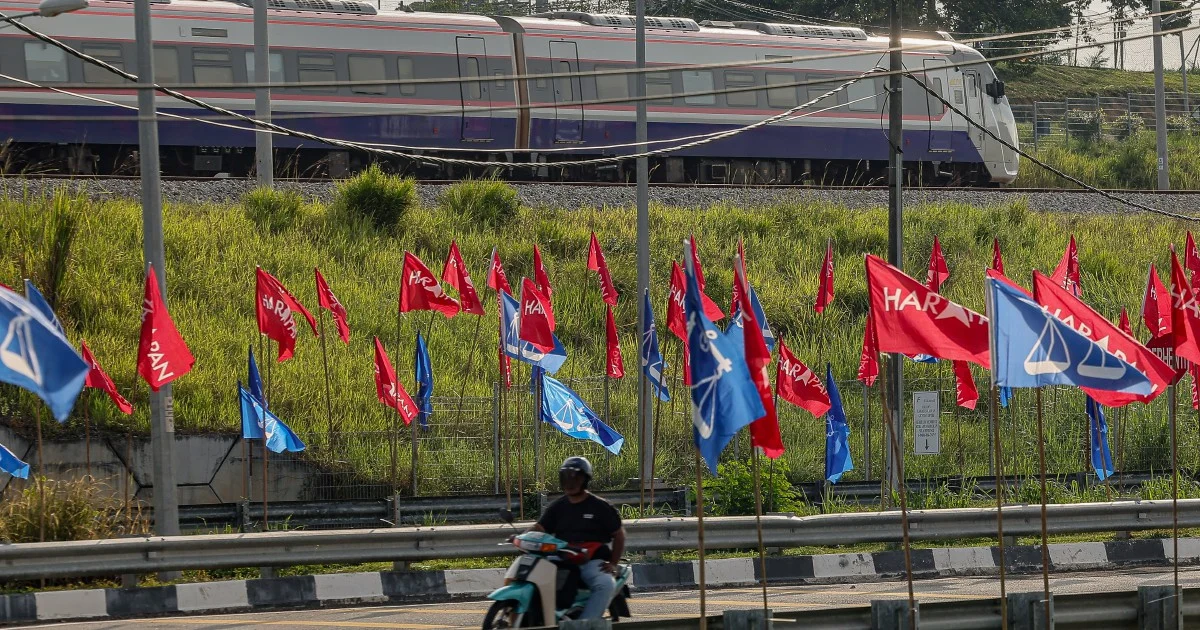
PAS Youth has provided fresh insight into the party's electoral calculations, explaining that backing Barisan Nasional candidates in select constituencies represents a deliberate containment strategy against Pakatan Harapan. The clarification, made in Johor Baru, addresses growing scrutiny over the Islamist party's willingness to shift voter support away from its traditional allies within Perikatan Nasional in certain parliamentary seats.
The strategic repositioning reflects the complex three-way contest that has reshaped Malaysia's political landscape following recent electoral realignments. Rather than present an isolated tactical accommodation, PAS Youth framed the arrangement as part of a broader initiative to prevent what party officials characterise as unfavourable political outcomes. The stated objective is explicitly focused on limiting PAS Harapan's electoral territory, suggesting that blocking the opposition coalition takes priority over maintaining exclusive loyalty to Perikatan Nasional partners.
This approach underscores the fragmented nature of Malaysian coalition politics, where formal partnerships frequently yield to issue-specific calculations. PAS Youth's willingness to endorse BN candidates—despite Perikatan Nasional's broader alliance positioning—indicates that both sides view the containment of Pakatan Harapan as outweighing other political considerations. The arrangement effectively creates a tacit two-front strategy in which different constituencies receive different guidance depending on the competitive landscape.
For Malaysian voters, the development signals that electoral outcomes in specific seats will be shaped not by straightforward ideological or coalition-based preferences, but by precise seat-by-seat analyses conducted by party strategists. In constituencies where Perikatan Nasional has determined not to contest, PAS Youth's mobilisation of support for BN candidates transforms the local contest into a direct binary choice between BN and Pakatan Harapan, fundamentally altering the competitive dynamics from those in seats where Perikatan Nasional fields candidates.
The strategy carries implications for voter expectations around coalition stability and party discipline. For PAS members accustomed to receiving unified messaging, selective calls to vote for BN candidates introduce inconsistency that may confuse grassroots supporters or raise questions about the depth of commitment to Perikatan Nasional. Conversely, the tactical flexibility reflects modern Malaysian politics' increasing pragmatism, where broad coalitions serve more as institutional containers for issue-specific alliances than as comprehensive governing frameworks.
Regional analysts have noted that such arrangements reveal the underlying fragility of Malaysia's larger coalition structures. Rather than BN and Perikatan Nasional functioning as unified competitive blocs, they appear to operate as collections of convenience that fragment when constituency-level incentives diverge. PAS Youth's public acknowledgement of the BN-backing arrangement suggests the party feels confident enough in its grassroots support to openly explain what might otherwise appear as a breach of coalition loyalty.
The clarity provided by PAS Youth also manages expectations around the meaning of coalition membership in contemporary Malaysian politics. By explicitly stating that blocking Pakatan Harapan constitutes the primary objective, the party signals to both supporters and partner organisations that its commitment to Perikatan Nasional is conditional rather than absolute. This transparency, while potentially useful for voters seeking to understand party priorities, also highlights how Malaysia's political coalitions operate more as temporary aggregations of conflicting interests than as ideologically cohesive entities.
For BN strategists, the arrangement offers a significant advantage in marginal constituencies where Perikatan Nasional's withdrawal might otherwise enable Pakatan Harapan to win by default. By securing PAS Youth backing, BN effectively inherits a rival coalition's mobilisation apparatus in selected seats, multiplying its competitive advantage without formally expanding its own organisational footprint. The arrangement thus represents a creative solution to a common coalition challenge: how to govern unwieldy alliances where partners' interests diverge on a seat-by-seat basis.
Southeast Asian observers increasingly recognise that Malaysia's three-coalition system lacks the institutional mechanisms that typically govern two-coalition democracies. The absence of clear pre-election seat-sharing agreements, combined with the multiplicity of potential coalition configurations, creates conditions where strategic flexibility becomes a competitive necessity. PAS Youth's candidness about its BN-supporting moves signals acceptance of this new reality, in which grand coalition arrangements coexist with localised tactical partnerships.
Looking forward, the pattern demonstrated by PAS Youth's strategy may influence how subsequent elections evolve. If parties successfully leverage selective support arrangements to contain rivals without formalising permanent coalition changes, Malaysian electoral politics may increasingly resemble a series of localised contests shaped by issue-specific alliances rather than nationwide coalition competitions. This development carries both advantages, in enabling parties to optimise campaign resources, and disadvantages, in making it harder for voters to predict post-election governance structures based on their ballot choices.

