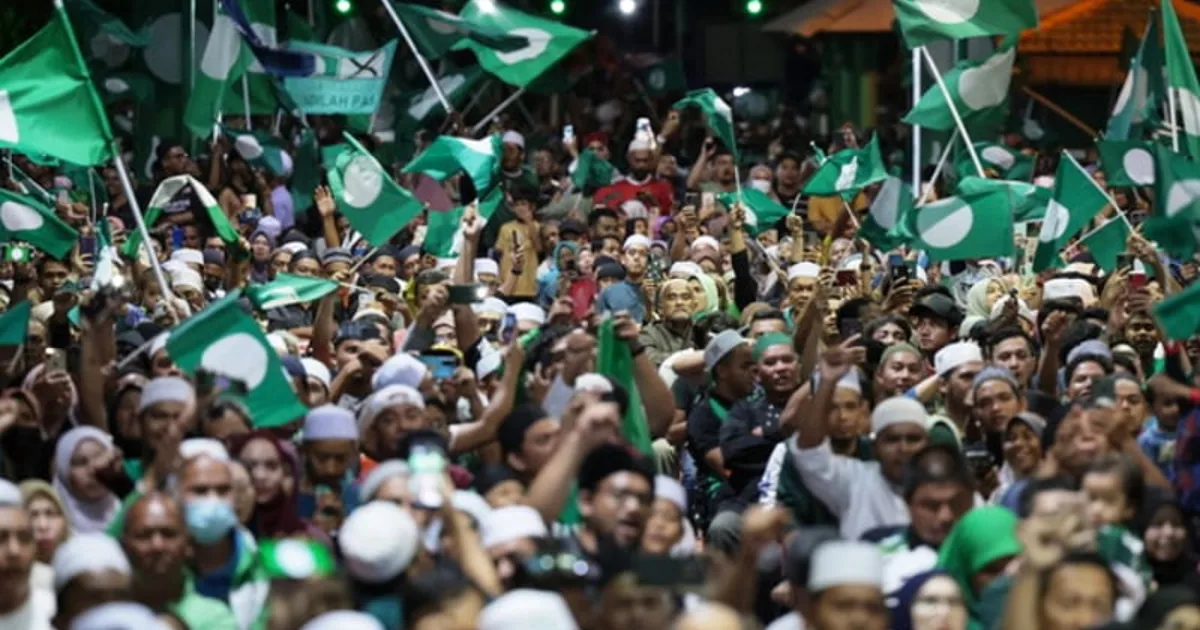
The Islamic Party of Malaysia has made a strategic decision to reallocate its campaign machinery from electoral contests where Bersatu is fielding candidates, signalling a deliberate restructuring of how Perikatan Nasional is deploying its resources across the country's constituencies. This move reflects the coalition's broader effort to avoid internal competition and maximize vote efficiency by concentrating party efforts in areas where individual members already hold legislative seats or where partner organisations are positioned to gain ground.
Under this reorganization, PAS is redirecting its organisational capacity and campaign support toward constituencies where the Islamic party itself is contesting or where allied Perikatan Nasional components are running candidates. The strategy appears designed to prevent the wasteful duplication of campaign machinery across seats and to strengthen the coalition's collective electoral performance by ensuring each area receives focused support from the component party best positioned to capture votes there.
This recalibration represents a significant moment in Perikatan Nasional's internal coordination ahead of electoral contests. Unlike campaigns where multiple parties might deploy overlapping machinery in the same constituency—potentially diluting each organisation's messaging and dividing volunteer labour—this arrangement concentrates resources more efficiently. For constituencies where Bersatu is putting forward candidates, PAS workers and campaign apparatus that might otherwise have been deployed there will now be redirected to strengthen Islamic party performance elsewhere.
The decision carries implications for how Malaysia's political coalitions have evolved in their sophistication. Perikatan Nasional, which comprises PAS, Bersatu, and other smaller components, has historically struggled with coordination challenges that its rival Pakatan Harapan sometimes exploited during campaigns. This machinery reallocation suggests the coalition is learning from past experiences and implementing more disciplined seat-allocation practices that reduce internal cannibalization of votes.
For Malaysian voters in constituencies where both Bersatu and PAS might have previously competed or where PAS campaign workers previously operated, this reorganisation could alter the intensity and nature of political outreach they experience. Constituencies designated as Bersatu battlegrounds will now see the blue machinery focus exclusively on that party's candidate, rather than potential overlap from PAS efforts. Conversely, voters in PAS strongholds and assigned constituencies will benefit from the full deployment of Islamic party resources previously stretched thinner across a wider geographic footprint.
The coalition's move also reflects pragmatic mathematics about electoral viability. In Malaysia's first-past-the-post system, concentrated party efforts in winnable seats generate better returns than dispersed campaigns across multiple constituencies. By having PAS focus exclusively on constituencies where it holds the seat or where the party's traditional support base is strongest, the machinery can conduct deeper community engagement, more frequent voter contact, and sustained presence in targeted areas. Bersatu gains similar advantages in its designated constituencies.
This arrangement requires significant coordination between PAS and Bersatu leadership to identify which constituencies each party will contest and defend. The process likely involved negotiated agreements about seat allocations, with PAS and Bersatu likely conducting internal assessments of each party's electoral prospects in specific areas. Constituencies where Bersatu polled strongly in previous contests would logically fall to the party, while areas with entrenched PAS support or where the Islamic party has administrative advantages would be reserved for Perikatan's Islamic component.
The implications extend to smaller Perikatan Nasional component parties, which also benefit from concentrated PAS support in their assigned constituencies. Rather than PAS machinery operating universally across all coalition-held and coalition-contested seats, the party now calibrates its help to specific constituencies where smaller components are competitive. This targeted approach potentially strengthens smaller parties' chances in constituencies where they face genuine opportunities, compared to scenarios where support was more diffuse.
From a Southeast Asian perspective, this machinery reallocation mirrors coalition management strategies employed elsewhere in the region. Thai and Filipino coalition partners regularly negotiate seat-sharing arrangements to avoid wasteful internal competition, and Malaysia's Perikatan Nasional appears to be adopting comparable discipline. Such arrangements typically require trust between coalition partners and sophisticated internal communication networks to avoid misunderstandings about who campaigns where.
The strategy does carry risks, particularly if initial seat allocations prove miscalculated. Should Bersatu's designated constituencies prove unexpectedly competitive, PAS machinery unavailable in those areas cannot pivot to assist. Similarly, if PAS candidates underperform in their assigned territories despite concentrated support, the machinery commitment becomes wasteful. The arrangement's success ultimately depends on accurate assessment of each party's electoral positioning and voter preferences across Malaysia's diverse constituencies.
Looking forward, this machinery reallocation demonstrates that Perikatan Nasional has evolved beyond loose coalition arrangements toward more integrated campaign planning. The decision reflects lessons learned from both successful and unsuccessful previous electoral campaigns, where overlapping party efforts sometimes cancelled each other out. By creating clear geographic assignments and concentrating resources accordingly, the coalition aims to maximise combined electoral returns and present a more unified face to voters across its designated battlegrounds and strongholds.

