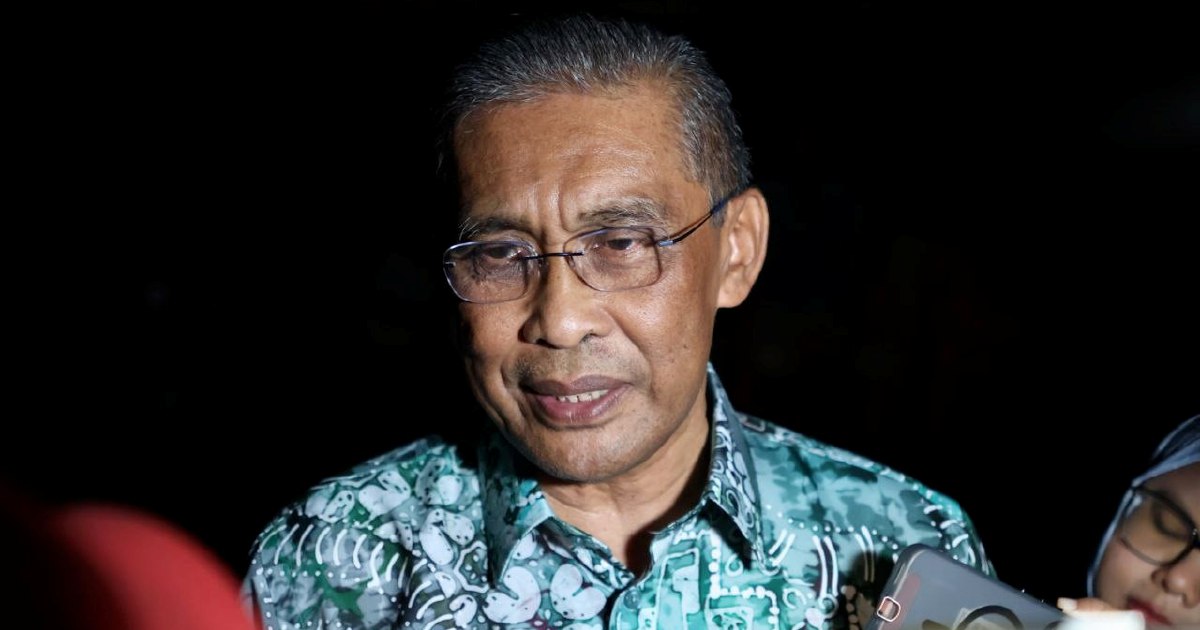
The Islamic party PAS moved to counter growing perceptions that it has relegated the Tabung Haji crisis to a secondary position within its political agenda, reaffirming at its base in Kota Baru that the matter remains a substantive priority despite increased attention to international affairs. The party's clarification comes as observers have questioned whether external diplomatic engagements may have drawn resources and political capital away from domestic scrutiny of the pilgrimage fund's troubled operations and governance failures.
The Royal Commission of Inquiry established to examine Lembaga Tabung Haji's management has become a focal point of public concern, given the institution's historic role as custodian of savings for Malaysian Muslims performing the Hajj pilgrimage. The fund has faced mounting questions about investment decisions, administrative accountability, and the adequacy of protections for the millions of ringgit accumulated by individual account holders. These issues have resonated deeply across the Malaysian Muslim community, which depends on Tabung Haji's financial security for a deeply significant religious obligation.
PAS, as a partner in the current federal coalition and a governing force in several states, holds considerable responsibility in demonstrating that religious welfare institutions command serious political attention. The party's need to issue such a denial suggests that its recent diplomatic activities—whether at international forums or bilateral discussions—have created an optics problem, at least among constituents and observers who view Tabung Haji's governance as non-negotiable. The pilgrimage fund, with hundreds of thousands of active accounts representing generations of familial savings, represents both a spiritual and financial anchor for Malaysian Muslim households.
The timing of PAS's statement reflects broader anxieties about institutional governance in Malaysia. Tabung Haji's operations have previously generated controversies over investment choices, including ventures that yielded disappointing returns or exposed the fund to unnecessary risks. The RCI process represents an opportunity to identify systemic weaknesses, establish accountability mechanisms, and restore public confidence in an institution that operates almost as a national trust. Any suggestion that political leadership is not fully invested in this process could undermine the inquiry's perceived legitimacy and public receptiveness to its eventual findings.
For Malaysian policymakers and the broader electorate, the question of whether Tabung Haji commands sustained political engagement reflects deeper concerns about institutional priorities. A pilgrimage fund crisis does not generate international headlines, nor does it typically feature in grand geopolitical discussions, yet its implications for ordinary Malaysians' financial security and religious practice are profound. The fact that PAS felt compelled to publicly reaffirm its commitment suggests the party recognises how easily governance issues affecting religious institutions can lose political traction when overshadowed by other concerns.
The relationship between domestic institutional oversight and international diplomatic responsibilities presents an ongoing tension for Malaysian policymakers. International relations and bilateral negotiations certainly matter for the nation's strategic interests, yet citizens rightly expect that matters affecting national institutions and public trust remain firmly within the government's active portfolio. The challenge for PAS, and by extension any political organisation balancing multiple portfolios, is demonstrating that neither dimension of governance is sacrificed for the other.
Tabung Haji's institutional standing in Malaysian society is distinctive. Unlike commercial investment funds, it carries religious and cultural significance that extends into family planning, personal finances, and spiritual aspirations. Millions of Malaysians view their Tabung Haji accounts as manifestations of faith as much as financial instruments. This cultural dimension makes governance failures or perceptions of political inattention particularly damaging, as they affect not only economic confidence but also community trust in Islamic institutions stewarding collective welfare.
The RCI process itself demands substantive ongoing engagement. Investigations into complex institutional operations require continuous political will to ensure recommendations are implemented, witnesses are appropriately examined, and findings translate into genuine reform. Without visible, sustained commitment from political leadership, RCI processes can become perfunctory exercises that satisfy procedural requirements without delivering meaningful change. PAS's statement thus carries practical implications beyond public relations—it signals, or should signal, a commitment to ensuring the inquiry produces actionable outcomes.
Looking forward, the critical measure of PAS's commitment will not be rhetorical reaffirmations but concrete actions: ensuring timely completion of the RCI, supporting robust implementation of recommendations, and demonstrating through resource allocation and legislative action that Tabung Haji reform remains a governing priority. For Malaysian voters and account holders, particularly those in states where PAS holds influence, such actions will ultimately determine whether the party's words align with its priorities. The pilgrimage fund's future governance and accountability will thus serve as a meaningful barometer of whether Malaysia's political leadership can simultaneously pursue international engagement while maintaining focus on institutions that directly affect millions of citizens' lives.

