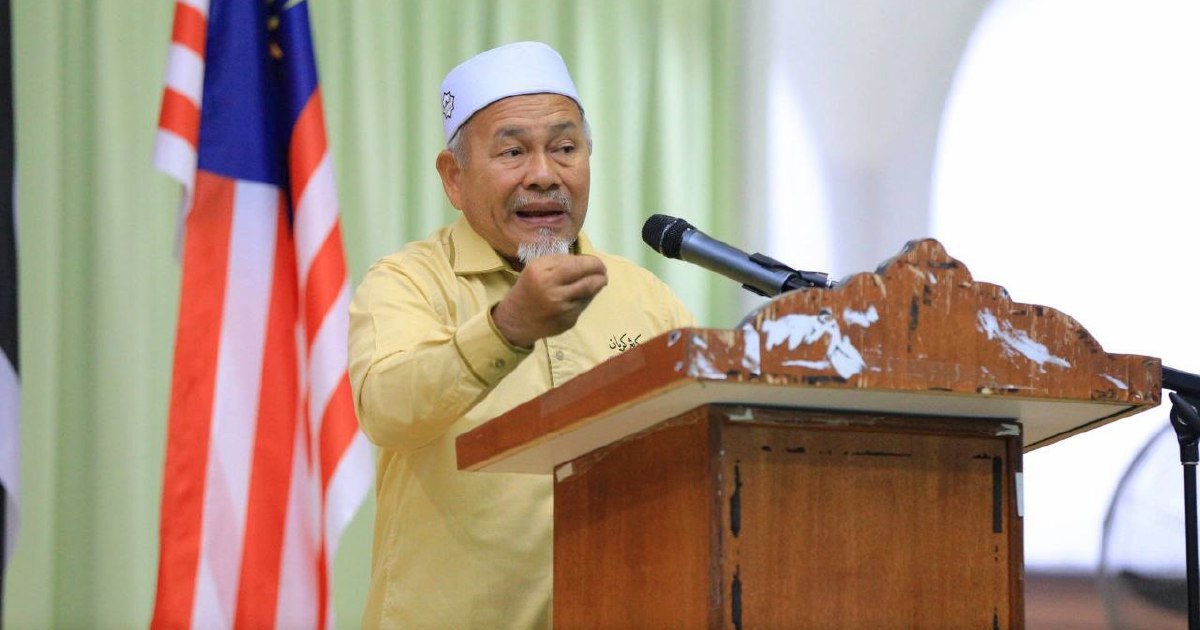
The political landscape across Malaysia's peninsular states may be poised for significant realignment after PAS signalled openness towards a seat-swapping arrangement with UMNO ahead of the next general election. At a gathering in Temerloh, the party's deputy president Datuk Seri Tuan Ibrahim Tuan Man underscored that while PAS maintains several incumbent constituencies at both state assembly and federal parliamentary levels, discussions around redistributing these holdings between the two Barisan Nasional allies remain negotiable.
This development carries substantial implications for Malaysia's already fragmented political ecosystem. Since the 2022 general election, PAS has progressively strengthened its representation in several eastern Malaysian states, most notably in Terengganu where it has consolidated significant electoral dominance. The party's willingness to consider surrendering certain seats suggests a calculated strategy to consolidate strength in other constituencies where it perceives stronger potential for electoral victory or where UMNO's presence might be more advantageous to the broader coalition.
The conditional nature of PAS's openness merits closer examination. Datuk Seri Tuan Ibrahim's remarks deliberately left unspecified what prerequisites the party would impose before agreeing to any arrangement. These conditions could encompass various considerations: guarantees regarding campaign support, assurances of ministerial positions, protection of PAS's Islamic agenda at state level, or commitments regarding policy direction. For coalition unity, both parties must navigate these negotiations carefully to avoid internal friction or accusations of marginalisation.
UMNO's strategic position has evolved considerably since its electoral struggles in 2020. The party has been working to reassert itself as the dominant force within Barisan Nasional, and a formal seat-swapping agreement with PAS would represent mutual recognition of their respective electoral strengths in particular regions. This arrangement could prove particularly consequential in states where both parties contest, where vote-splitting has historically benefited opposition coalitions like Pakatan Harapan.
For Malaysian voters, such electoral pacts require careful scrutiny. While seat arrangements between coalition partners are common political strategy, they can reduce voter choice and effectively predetermine contest outcomes in certain areas. The electorate in constituencies affected by any PAS-UMNO agreement would essentially be choosing between a predetermined candidate and opposition alternatives, rather than evaluating candidates from both major coalitions.
Regionally, this development reflects broader patterns of political consolidation across Southeast Asia. As polarisation increases and voters fragment among numerous parties, larger coalitions are moving toward formalised power-sharing arrangements to prevent electoral fragmentation. PAS's willingness to negotiate demonstrates pragmatic recognition that electoral success increasingly requires strategic coordination rather than competition among ideologically aligned parties.
The timing of this announcement is also significant. With no immediate election call, both parties are laying groundwork for eventual negotiation without appearing desperate or eager. This measured approach allows space for discussions to develop quietly before public commitment becomes necessary. For UMNO, engagement with PAS on seat arrangements strengthens its coalition credentials and demonstrates that the alliance remains vibrant and negotiable.
Historically, PAS has held parliamentary seats in constituencies spanning multiple states, and several state assembly positions concentrated particularly in the East Coast. Any comprehensive seat swap would require detailed analysis of which constituencies represent genuine trading opportunities where one party can yield ground without strategic loss. The complexity lies in identifying equivalent exchanges where both parties genuinely benefit.
Ministerial representation poses another nuanced consideration in any eventual agreement. Historically, seat numbers translate into cabinet positions, and any party relinquishing seats would expect corresponding assurances regarding government roles. For PAS, this means any seat surrender must be accompanied by guarantees that its influence within government remains proportionate to its electoral contribution.
The Temerloh location of Datuk Seri Tuan Ibrahim's remarks holds additional significance. Temerloh is a Pahang parliamentary seat, a state where both PAS and UMNO maintain substantial presence. The choice of venue signals that discussions may particularly concern constituencies in Pahang, Terengganu, and Kelantan, where seat-swapping arrangements could meaningfully impact the electoral arithmetic.
Looking forward, both parties must balance coalition loyalty against internal party cohesion. Rank-and-file members in either organisation may object to surrendering marginal seats or defending seats against coalition partners. Party leaders therefore face the delicate task of explaining seat-swapping arrangements to their respective grass roots as strategically necessary rather than as abandonment of electoral territory.
The broader implication for Malaysian democracy centres on whether coalition partners can manage internal competition whilst maintaining electoral cooperation. If successfully negotiated, a PAS-UMNO seat arrangement could prove a template for how Barisan Nasional renews itself and competes against a reinvigorated Pakatan Harapan. However, if negotiations falter over conditional disagreements, both parties risk recrimination and deepened mistrust heading into electoral contests.

