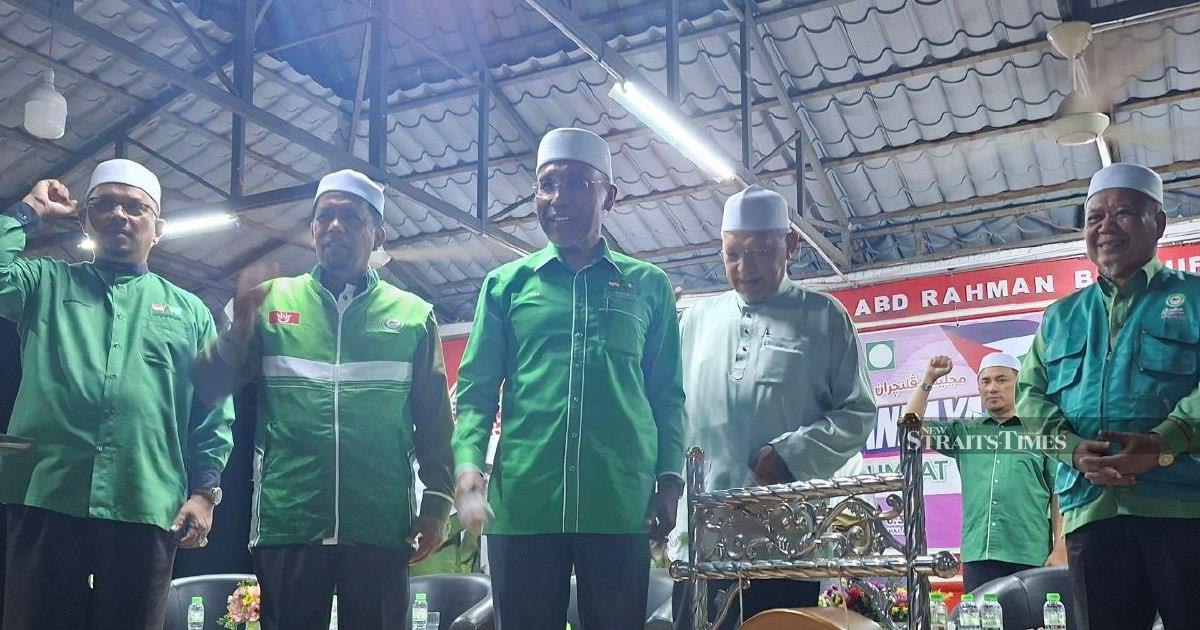
PAS leadership has flagged the possibility of an early general election, pointing to mounting political instability at both state and federal levels that could precipitate a snap poll. Speaking in Tumpat, party officials outlined several converging circumstances that might force Prime Minister Anwar Ibrahim's government to dissolve Parliament, triggering the 16th General Election sooner than the constitutionally mandated five-year cycle suggests.
The Islamic party's assessment reflects deepening fissures within Malaysia's ruling coalition architecture. While Pakatan Harapan and Barisan Nasional have governed in tandem since late 2022, the partnership has always been characterised as a marriage of convenience rather than genuine ideological alignment. PAS, which commands considerable Malay-Muslim voter bases across the peninsula, appears positioned to capitalise on any breakdown of this uneasy arrangement. The party's analysis suggests that deteriorating relations between the two blocs could create conditions where parliamentary mathematics becomes untenable for the incumbent government.
A more immediate catalyst for electoral speculation centres on Melaka's state political calendar. The Melaka state assembly's current term approaches expiry, and fresh state elections must be held before the deadline arrives. In Malaysian politics, state polls frequently trigger broader questions about federal stability, particularly when they occur in states with mixed electoral performance. The potential timing of Melaka's ballot—and its likely outcome—could fundamentally alter the parliamentary balance that currently sustains Anwar's government. Should the results prove damaging to either PH or BN, the coalition's fragile equilibrium could collapse, forcing a recalibration through federal elections.
The political temperature has risen noticeably in recent months as both coalition members jostle for advantage ahead of what many analysts expected to be scheduled elections in 2025 or 2026. PAS, despite not sitting in the federal cabinet, holds substantial influence through its state governments and grassroots machinery. The party's public commentary about election timing often serves as both strategic signalling and genuine tactical assessment. By highlighting the possibility of imminent elections, PAS prepares its party machinery, energises supporters, and positions itself as a serious political force regardless of which way parliamentary winds shift.
BN's return to coalition politics after the traumatic 2022 election defeat has proven complicated. The bloc lost significant ground and public trust, and its decision to prop up Anwar's government rather than mount fierce opposition reflected weakness as much as pragmatism. Within BN, particularly among UMNO stalwarts, there persists genuine frustration about playing second fiddle to PH. This underlying tension occasionally surfaces in public disputes over ministerial positions, parliamentary committee assignments, and policy direction. An election triggered before the scheduled term would conceivably reset these calculations and potentially allow BN to campaign on grievance platforms it has struggled to articulate while governing.
For Pakatan Harapan, early elections present both opportunity and risk. The coalition has consolidated authority more effectively than many observers predicted, implementing policy initiatives and rebuilding institutional credibility after the chaotic PH 1.0 period under Mahathir. However, economic headwinds including inflation and cost-of-living pressures have eroded some of the goodwill the government enjoyed during its first eighteen months. PH would approach any snap election with real popularity advantages but without certainty regarding the outcome.
Regional observers across Southeast Asia watch Malaysian coalition politics closely, recognising that how Kuala Lumpur manages multiracial, multi-party democracy influences broader democratic norms across the region. The possibility of elections being triggered through breakdown rather than constitutional process underscores underlying fragility in Malaysia's political equilibrium. Unlike Westminster systems with clear votes of no confidence, Malaysia's complex mathematics of coalition viability can suddenly shift without formal parliamentary mechanisms clearly signalling the transition.
The Melaka situation carries particular significance because recent state elections have proven unpredictable and occasionally incongruent with federal polling trends. Should Melaka elections produce surprising results in either direction, downstream effects on coalition confidence could prove dramatic. PAS's readiness to highlight these scenarios suggests the party is actively gaming multiple pathways and preparing for contingencies that would have seemed implausible merely months ago.
For Malaysian voters and businesses, this elevated uncertainty introduces new variables into planning and decision-making. General elections consume resources, distract government attention from implementation priorities, and introduce temporary policy stasis as campaigns dominate political discourse. The possibility of elections arriving earlier than the planned 2025-2026 window means preparations must accelerate and campaign machinery must remain activated longer than previously anticipated. The Malaysian economy, facing inflation and global uncertainty, would likely suffer from an extended pre-election period characterised by political manoeuvring rather than policy focus.

