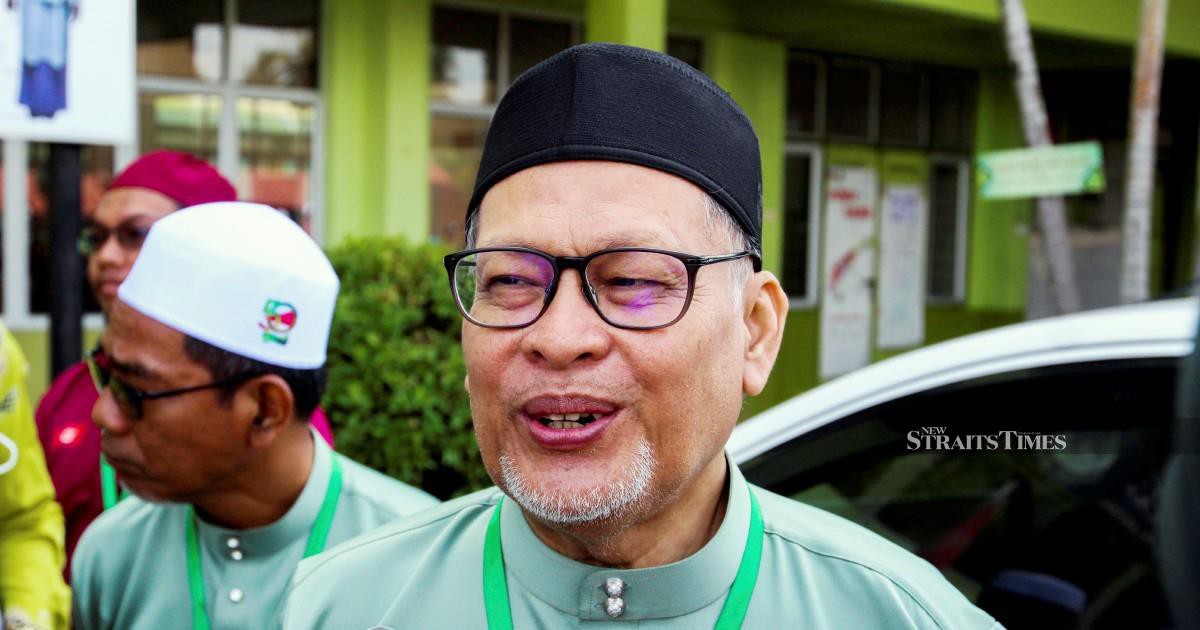
The Islamic party PAS has expressed considerable optimism about its electoral prospects in the forthcoming Negri Sembilan state election, declaring it expects to capture all five constituencies where it has fielded candidates. This confidence stems largely from a recently concluded understanding between Perikatan Nasional, the political coalition of which PAS is a principal component, and Barisan Nasional, the long-governing federal alliance. The arrangement, which essentially carved out territories for each bloc to contest without internecine conflict, represents a significant development in Malaysian coalition politics and signals shifting dynamics ahead of crucial state-level polls.
The understanding between PN and BN carries particular weight in Negri Sembilan, a state where electoral fortunes have remained volatile in recent years and where voter preferences have swung decisively between competing blocs. By avoiding triangular contests that would fragment support across multiple camps, PAS benefits from a clearer field in which to mobilise its base. The pact effectively eliminates a scenario where BN candidates might have split the non-opposition vote, potentially allowing candidates from other parties to slip through the middle. For PAS specifically, this means that voters sympathetic to its Islamic-focused agenda and economic policies can concentrate their ballots without tactical concerns about vote-splitting.
Negri Sembilan holds particular strategic importance to both PN and BN as a battleground state. The five seats that PAS is contesting represent a meaningful portion of the state assembly, and a clean sweep would substantially amplify PAS's bargaining power within PN's leadership councils. The state has historically been sensitive to messaging around Islam, governance competence, and development distribution, themes that align closely with PAS's political identity and organisational strengths. The party's statement of confidence, made from its power base in Kota Baru, underscores how seriously the leadership views these contests.
The PN-BN understanding itself marks a striking reversal from the fierce antagonism that characterised their relationship during the 2022 general election campaign, when both coalitions competed head-to-head across virtually every constituency. The shift reflects pragmatic calculations that neither bloc benefits from exhausting itself through mutually destructive campaigns in states where one coalition has natural advantages. Barisan Nasional, despite losing federal power in 2018 and again in 2022, retains deep-rooted machinery in several states including Negri Sembilan, where traditional BN strongholds remain influential among rural and older voters. Conversely, PN's Islamist and reform credentials appeal to younger voters and urban constituencies disenchanted with established governance patterns.
For PAS, winning all five seats would constitute a triumph that extends beyond Negri Sembilan itself. The party has long sought to shed its image as an opposition-only force and to demonstrate that it can govern effectively in partnership with other coalitions. A decisive victory in a state where it faces a genuine electoral test would provide compelling evidence of its electoral appeal and administrative capacity. Furthermore, it would strengthen PAS's voice within PN discussions about power-sharing arrangements and policy directions, particularly on matters relating to Islamic affairs, economic development, and federal-state relations.
The implications for Malaysian politics extend beyond this single state election. The PN-BN understanding potentially foreshadows a longer-term reconfiguration of national coalition politics. If both blocs discover that selective cooperation produces better electoral outcomes than all-out confrontation, subsequent state elections and the next federal election might witness similar arrangements. This could fundamentally alter how Malaysian voters cast ballots and which coalitions emerge from future contests. It also raises questions about the role of PKR and other components of the Pakatan Harapan alliance, which might find themselves increasingly marginalised in states where PN and BN have negotiated territorial divisions.
For Negri Sembilan voters specifically, the PN-BN understanding means that the forthcoming state election will present a clearer choice between two distinct coalitional blocs rather than a fractured competition where multiple camps fragment the field. This may enhance voting clarity but could also limit options for those dissatisfied with both major coalitions. The state's economic development trajectory, which has hinged on balanced growth between manufacturing, agriculture, and services sectors, may depend partly on which coalition captures the state assembly and whether its chosen policies complement or diverge from federal directions.
PAS's confidence in sweeping all five seats also reflects its organisational capacity within the state. The party has invested considerably in grassroots structures, particularly among Malay-Muslim communities that form the bulk of Negri Sembilan's population. Its social welfare networks, religious activities, and community engagement programmes have created durable linkages that translate into electoral support. The party's messaging around Islamic governance, economic justice, and resistance to secular liberalism appeals to segments of voters who feel their values and interests are better represented by an Islamic-oriented rather than secular-oriented administration.
However, PAS's electoral confidence should be tempered by recognition that voters in Negri Sembilan, like all Malaysian constituencies, remain responsive to performance-based governance metrics. Residents voting in these five seats will consider factors including local service delivery, unemployment rates, educational quality, and infrastructure development. A promise of clean sweeps must be backed by credible proposals addressing these tangible concerns, particularly as economic pressures weigh on middle and lower-income households throughout Malaysia and the region.

